Back to School Ideas: Your Complete Guide for an Organized, Stress-Free School Year
The week before school starts always feels shorter than it actually is. One day you’re still in summer mode, and the next you’re trying to remember whether the desk needs fixing, whether the backpack from last year still has a working zipper, and whether anyone in the house actually has a plan for getting out the door on time.
Back to school ideas prep isn’t really one task. It’s six or seven smaller ones happening at once — setting up a workspace, organizing supplies, building a routine, shopping the checklist, maybe rethinking the whole aesthetic of a room, and if you’re a teacher, getting a classroom ready too.
This guide walks through each piece in order, with enough detail to actually get started in every category, plus links to a full deep-dive if you want to go further on any one of them. Think of it as the starting point — the place you come back to when you’re not sure what to tackle first.
When to Start Your Back to School Ideas Prep
Most of the stress around back to school comes from cramming everything into the final week. Spreading it out changes the whole experience.
About four to six weeks out is a good time to start thinking through workspace and organization changes — desks, closets, and storage systems take a little more time and sometimes a small budget. Two to three weeks out is when supply shopping and checklists come into play, once school lists are usually published. The final week is really just for routine — practicing wake-up times, testing outfits, and getting everyone’s body clock adjusted before the actual first day.
None of this needs to happen on a rigid schedule. But knowing roughly what belongs in which window makes the whole process feel a lot less like everything is due at once.
Set Up the Workspace
A workspace is usually the first thing people think of when they picture back to school ideas, and it’s a reasonable place to start — everything else tends to build around it.
Choosing the Right Desk Setup for Your Space and Budget
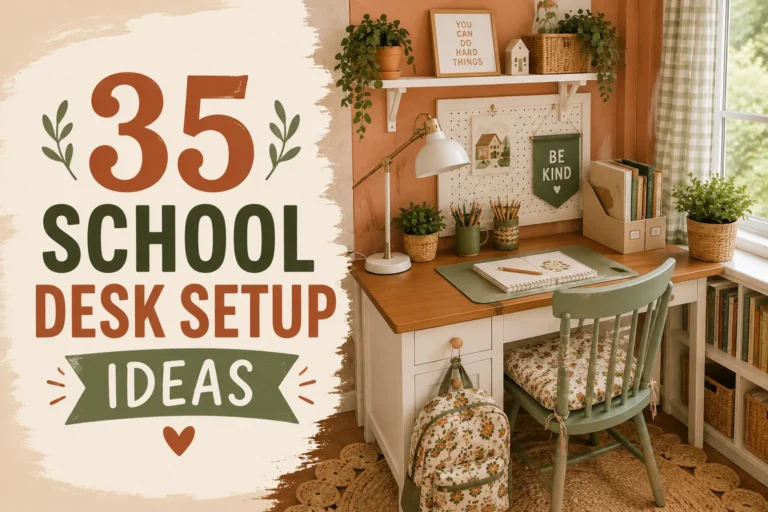
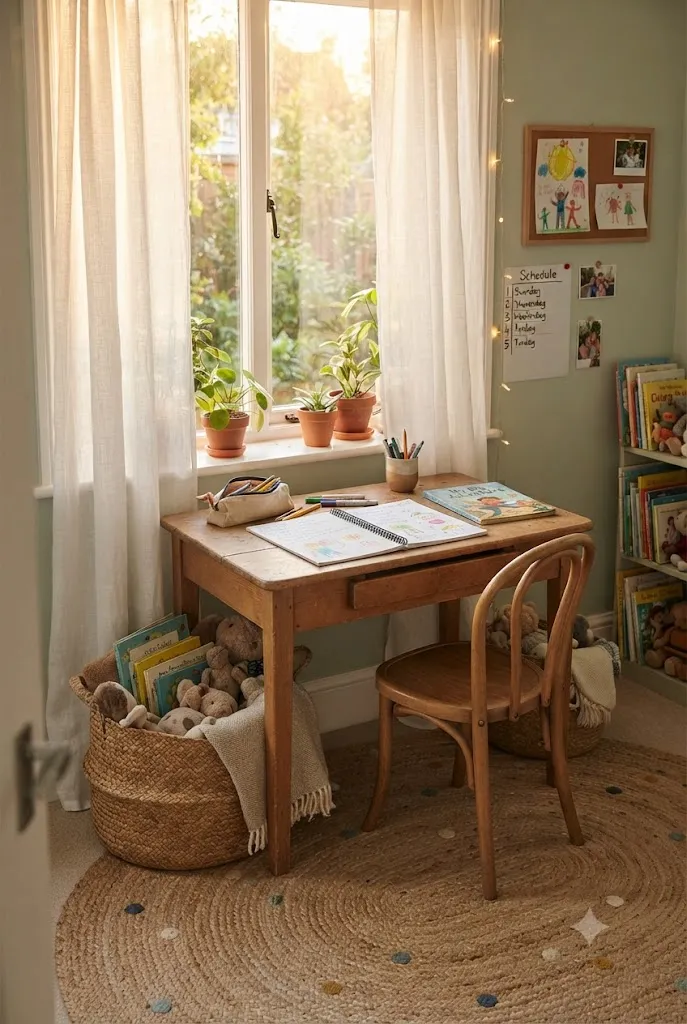
The right desk depends far more on your space and your kid’s age than it does on what looks best in a photo. A closet nook works well for a bedroom with no floor space to spare. A wall-mounted floating desk solves the same problem in a different way, keeping the floor completely clear. And if you’re working with almost no budget at all, a secondhand table with a fresh coat of paint can do the job just as well as anything bought new.
Shared rooms need their own approach entirely — a long desk split into two zones, or two matching desks in different accent colors, tends to work better than trying to squeeze in separate furniture for each child.
For the full range of small-space, budget, and shared-room setups — plus how to adjust for different ages — see the complete “School Desk Setup Ideas”.
Making the Space Feel Cozy and Focused
A desk is only half the equation. The room around it matters just as much for whether a kid actually wants to sit down and use it.
Natural light does more for focus than most people expect, so positioning a desk near a window is worth prioritizing when you can. Soft textiles — a rug, a throw blanket, a cushion — make a space feel warm instead of clinical, and layered lighting, like a desk lamp plus something ambient such as string lights, keeps the room comfortable once the sun goes down.
Small nooks — under stairs, inside a closet, in a corner — can become genuinely charming study spots with the right styling, even when they started out as wasted space.
For a full list of cozy, pinnable setups organized by style and space size, check out “Cozy Study Space Ideas”.
Organize the School Year
Once the physical space is sorted, the next layer is making sure everything that flows through that space — papers, supplies, assignments — has somewhere to go.
Whole-Home Organization Systems
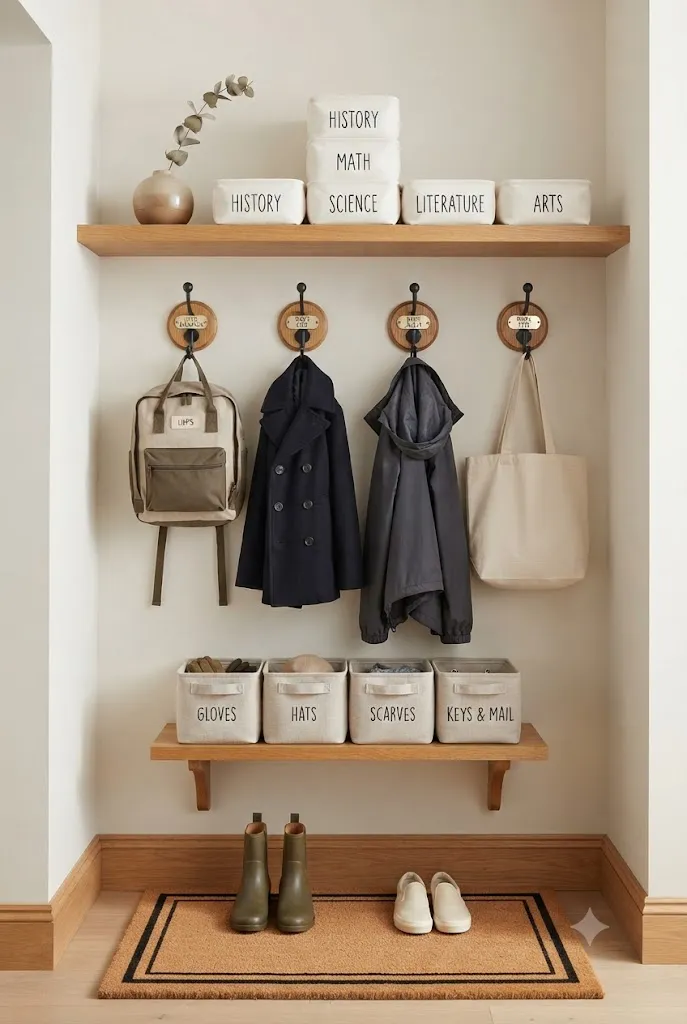
School generates a steady stream of paper and stuff, and without a system, it all ends up in the same pile on the kitchen counter. A dedicated spot for backpacks by the door, a labeled bin for each subject, and a weekly reset routine to clear out finished worksheets all go a long way toward keeping that pile from forming in the first place.
The goal isn’t a perfectly organized house — it’s a few consistent habits that keep the chaos contained. For a full breakdown of storage systems and organization habits that hold up past the first week of school, see “School Organization Ideas”.
Planners and Tracking Assignments
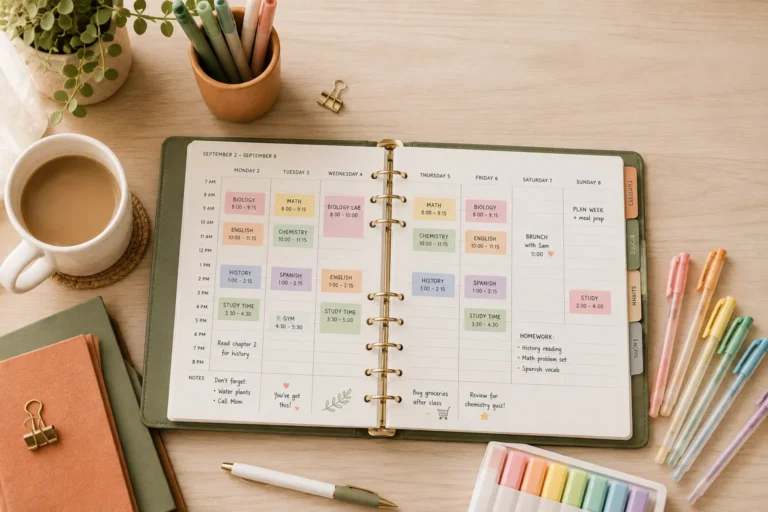
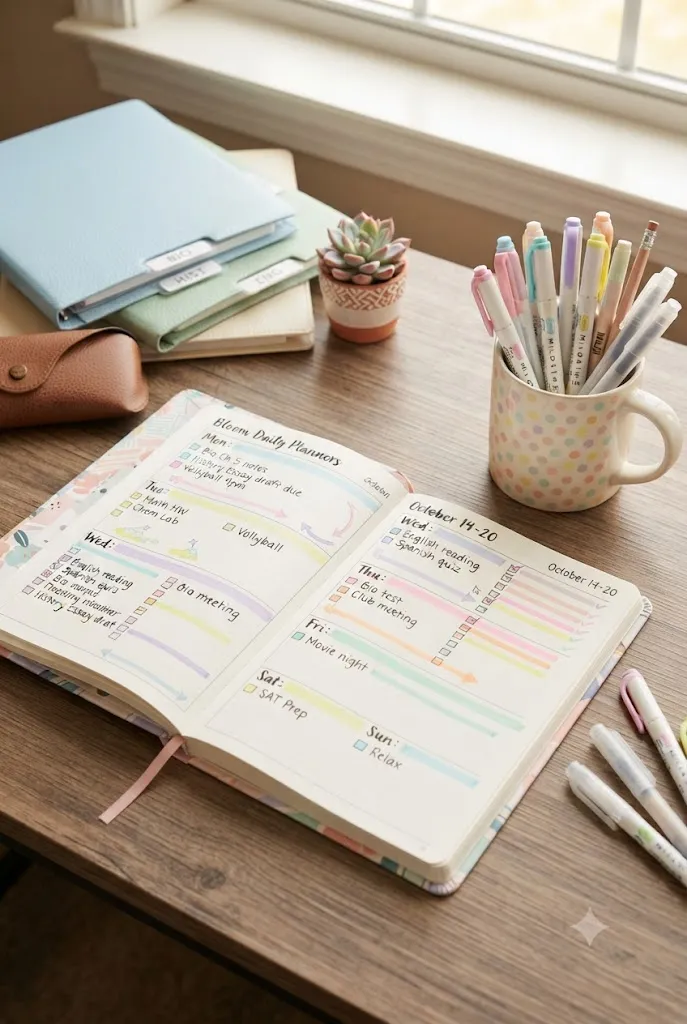
Younger kids mostly need a visual way to track what’s due when, while older kids benefit from something they manage themselves — a written planner, a wall calendar, or a simple weekly spread they fill in on Sundays.
The right planner format really does depend on age and how independent your child already is. For planner styles and systems suited to different grade levels, take a look at “Student Planner Ideas”.
Build a Routine That Sticks
Even the most organized workspace won’t help much if mornings still fall apart every day. A routine is what turns a good setup into something that actually functions long-term.
Morning Routine Strategies
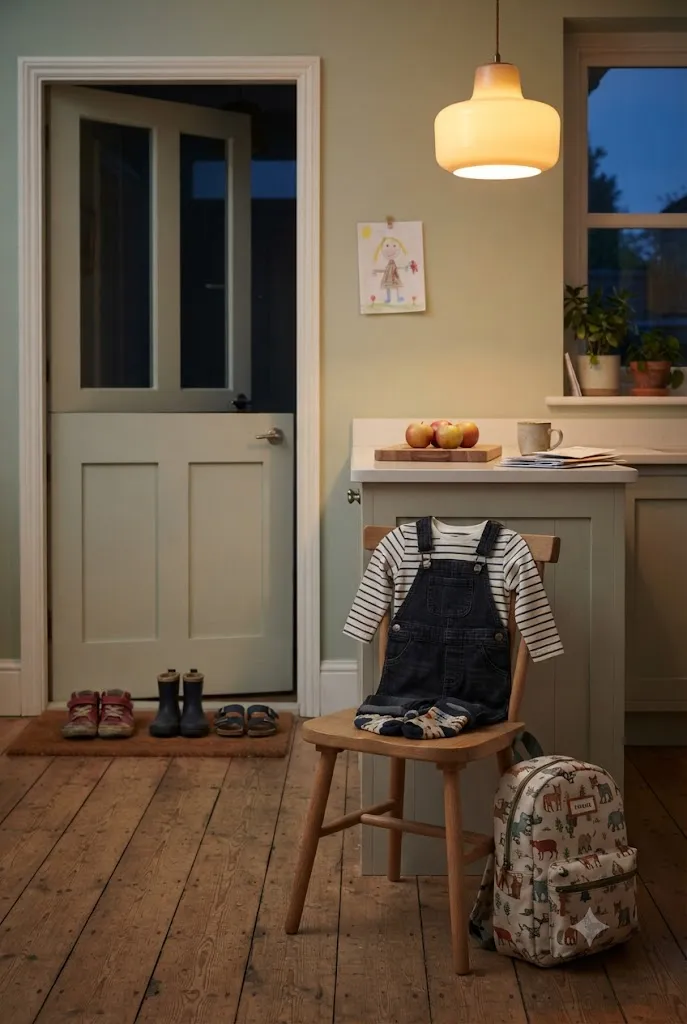
The most reliable fix for a chaotic morning is almost always something that happens the night before — outfits picked out, backpacks packed, lunches prepped. From there, small systems like a visual chart for younger kids, a written checklist for older ones, or a simple timer for getting dressed can remove a surprising amount of daily friction.
It’s also worth having a backup plan for the mornings that fall apart anyway. Knowing which two or three things are truly non-negotiable keeps one rough morning from turning into a rough week.
For a full set of routine strategies by age and family size, see “School Morning Routine Ideas”.
Shop Smart: Supplies and Checklists
With the workspace, organization, and routine in place, the last practical piece is making sure the house actually has what it needs before day one.
Fun, Functional School Supplies
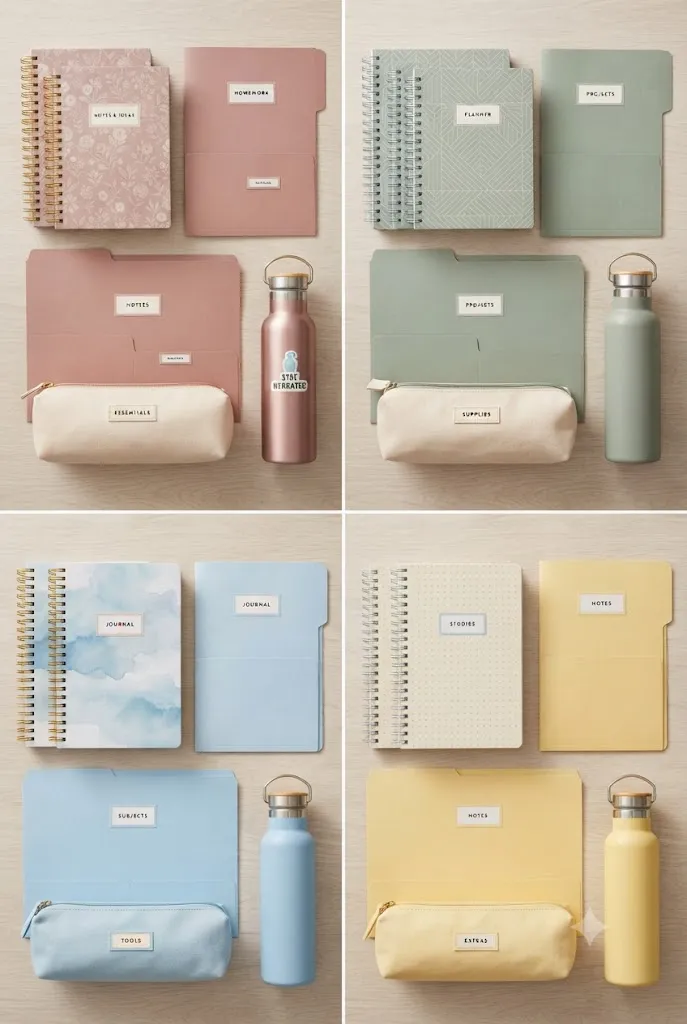
Supplies do more than fill out a list — the right ones can make a kid genuinely excited to use them. Coordinating a color scheme across folders and notebooks, choosing supplies that match a chosen aesthetic, or picking out a few fun extras alongside the basics all help turn a chore into something kids look forward to.
For supply ideas that balance function with a bit of personality, browse “Cute School Supplies”.
The Complete Shopping Checklist
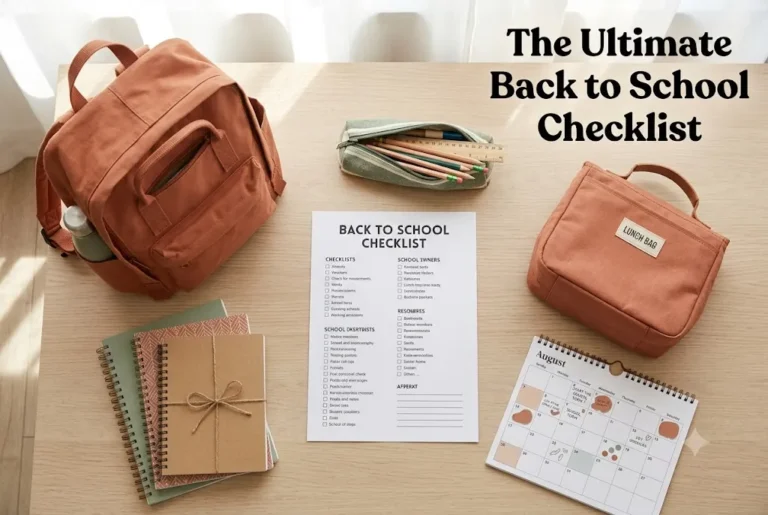
Every school has different requirements, but most families end up needing the same broad categories: core supplies, clothing and shoes, backpack and lunch gear, and anything specific to the classroom or grade level.
Working from a full checklist rather than trying to remember everything from memory is the easiest way to avoid a last-minute store run the night before school starts. For the complete list broken down by category, see “The Ultimate Back to School Checklist”.
Style It: Back to School Aesthetic Ideas
Function matters most, but style is what makes a space or a stack of supplies feel like it belongs to your kid specifically.
Finding Your Back-to-School Aesthetic
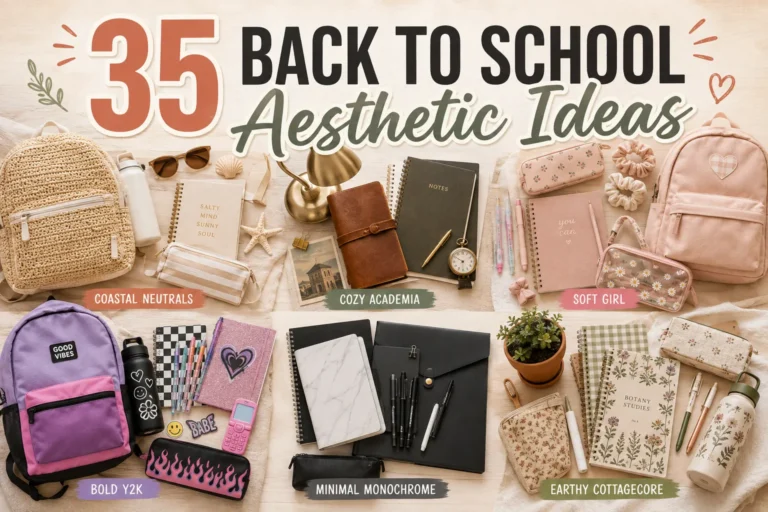
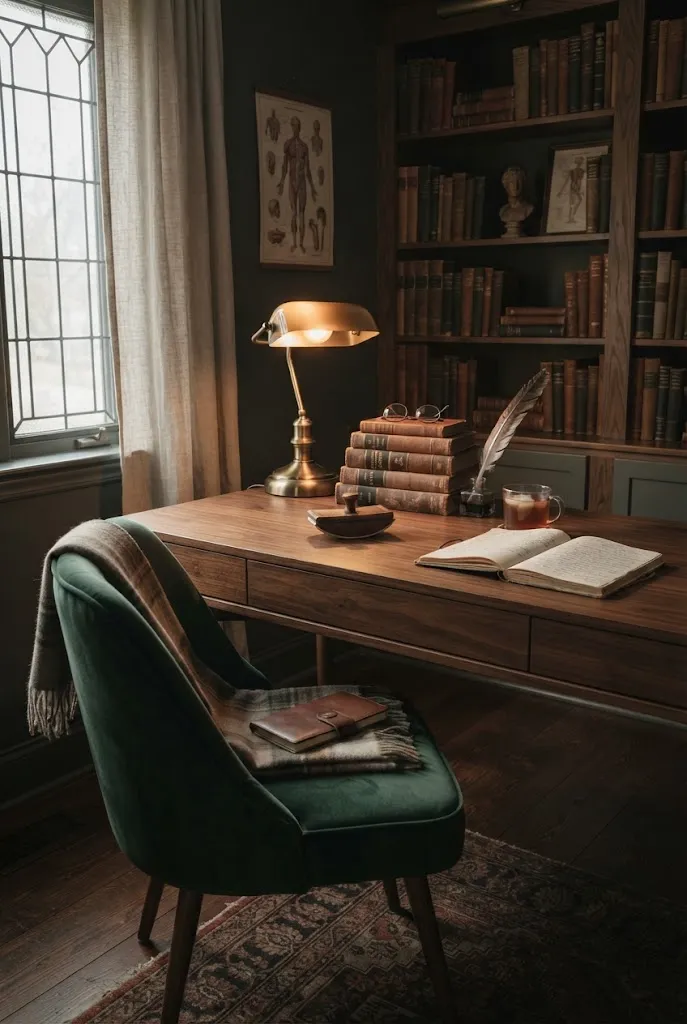
Aesthetic has become its own part of back-to-school prep — a consistent look across a desk, a set of supplies, even an outfit, built around a specific style like pastel, boho, minimalist, or moody academic tones. It’s a fun way to tie the workspace, supplies, and room decor together into something that feels cohesive rather than mismatched.
Picking a direction early also makes shopping easier, since it narrows down colors and styles instead of choosing item by item. For a full range of styles to choose from, see “Back to School Aesthetic Ideas”.
For Teachers: Classroom and Gifting Ideas
Back to school isn’t only a home project — it’s a classroom one too, for the teachers preparing rooms and the families thinking about how to thank them.
Classroom Decoration
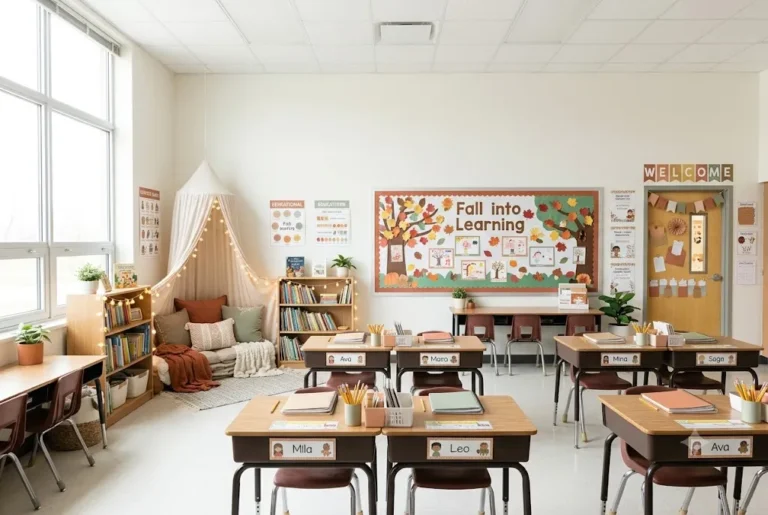
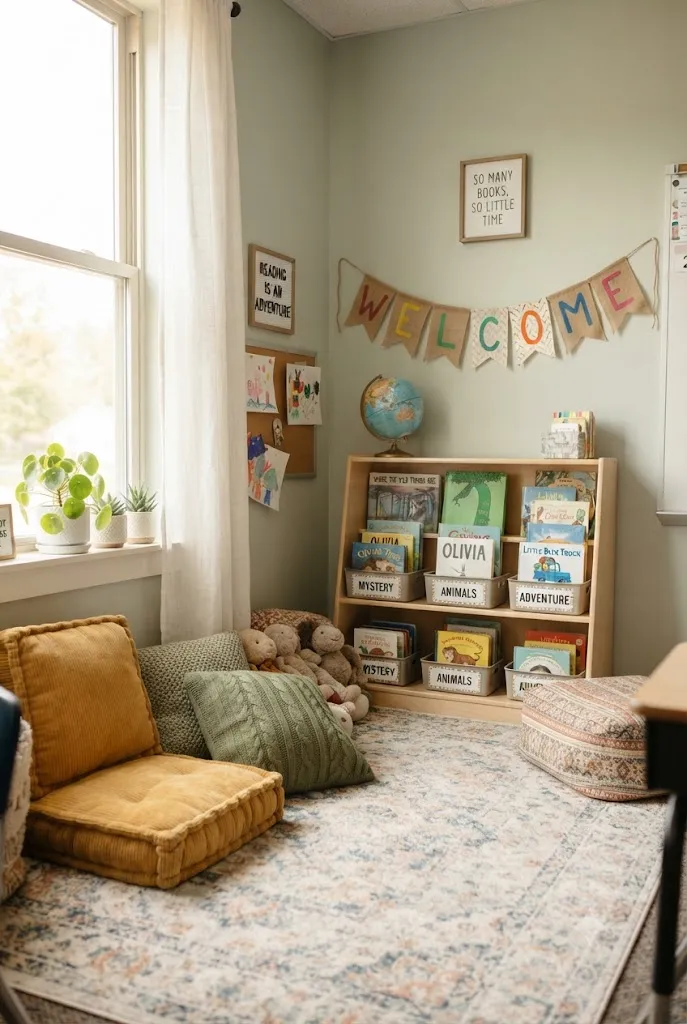
A classroom’s first-day setup sets the tone for the entire year, long before a single lesson is taught. Thoughtful decor doesn’t need to be elaborate — a welcoming reading corner, a clear system for turning in work, and a few personal touches go further than a fully themed room.
For ideas that balance a warm first impression with a functional layout, see “Classroom Decoration Ideas”.
Teacher Appreciation Gifts
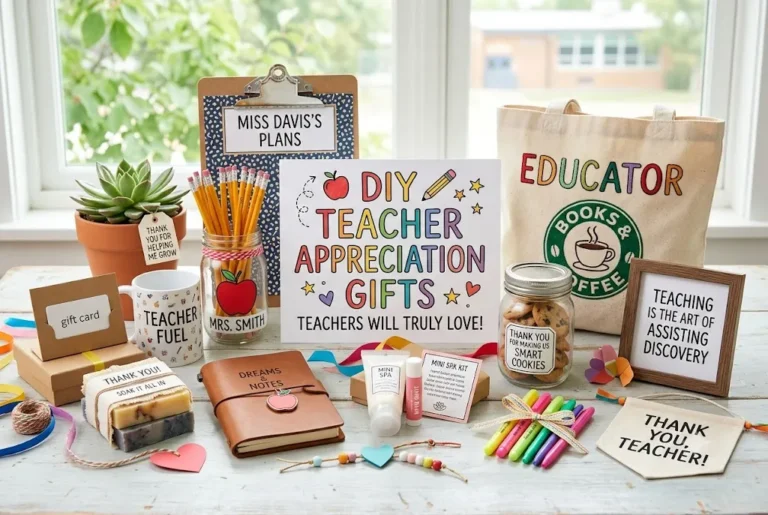
Whether it’s a first-day welcome gift or an end-of-year thank-you, a thoughtful handmade or budget-friendly gift tends to mean more than anything store-bought and generic. For gift ideas that fit a range of budgets and effort levels, browse “Teacher Appreciation Gift Ideas”.
Frequently Asked Questions
What are good back to school ideas?
The most useful ideas fall into a few categories: setting up a functional workspace, building simple organization systems, establishing a morning routine, shopping from a complete checklist, and adding a bit of personal style to tie it all together.
How do I prepare my house for back to school?
Start with the physical spaces first — a desk and study area — then layer in organization systems, a morning routine, and finally the supply shopping. Spreading these out over several weeks makes the process far less overwhelming than tackling everything at once.
What should I buy before school starts?
Beyond the basic supply list, prioritize anything tied to daily routine — a backpack that fits your child’s age, a lunch system that’s easy to pack, and any organizational tools like bins or a planner that will get regular use.
How early should I start back to school prep?
Workspace and organization changes are easiest to tackle four to six weeks out, supply shopping fits best two to three weeks before school starts, and routine practice works well in the final week.
How do I organize my child’s school supplies?
Give supplies a consistent home — labeled bins by subject, a designated backpack spot by the door, and a simple weekly reset to clear out anything that’s piled up during the week.
What’s a good back to school checklist?
A solid checklist covers core supplies, clothing and shoes, backpack and lunch gear, and any classroom-specific items, organized so you can shop it in one or two trips instead of several last-minute ones.
How do I make mornings easier during the school year?
Most of the improvement comes from what happens the night before — outfits and backpacks ready to go — paired with a simple morning system like a visual chart, checklist, or timer suited to your child’s age.
How do I set up a study space at home?
Focus on natural light, a comfortable chair, and minimal clutter first. Everything else — rugs, lighting, decor — is what turns a functional desk into a space your kid actually wants to use.
Conclusion
Getting ready for school doesn’t have to mean doing everything at once. Workspace, organization, routine, supplies, and style are separate projects that build on each other, and tackling them in that order tends to make the whole process feel manageable instead of overwhelming.
Start with whichever category feels most urgent in your house right now — a desk that needs a rework, a morning that’s been chaotic all summer, or a checklist you haven’t started yet — and use the guides above to go deeper on that one piece. The rest can follow as you have time before the first bell rings.