15 School Organization Ideas Every Student Needs This School Year
Most school organization advice is written for teachers setting up a classroom. Bins for the reading corner, labeled shelves for math manipulatives, a command center for lesson plans — all great, and none of it helps with the actual chaos most families deal with at home.
The real breakdown usually doesn’t happen at school. It happens at your kitchen table at 7 PM when nobody can find the permission slip that was due yesterday, or in the backpack that’s somehow eaten three library books and a snack wrapper since Monday.
This list skips the classroom entirely and focuses on home — the backpack, the homework routine, the paperwork, the supplies, and the systems that actually need to survive a real family’s week. Fifteen ideas, each one solving a specific piece of the puzzle.
How to Build a School Organization System That Actually Sticks
Before jumping into the list, it helps to think about why some systems work and others quietly fall apart by October.
Starting with your child’s actual daily routine
The best organization system is the one that matches how your family actually moves through a day, not the one that looks best on Pinterest. If mornings are rushed and chaotic, a system with five steps is going to get skipped every single time.
Watch your current routine for a week before changing anything. Notice where things actually go wrong — that’s where a new system will help the most.
Keeping systems simple enough for kids to maintain alone
A system only works long-term if your child can use it without you standing over their shoulder. That usually means fewer categories, bigger labels, and one clear “home” for each type of item.
If a system needs constant parental enforcement to function, it’s not really a system yet — it’s a chore you’ve added to your own list.
Backpack & Daily Carry School Organization
The backpack is ground zero for school chaos, since it travels between home and school every single day and collects everything along the way.
1. Backpack Zone System
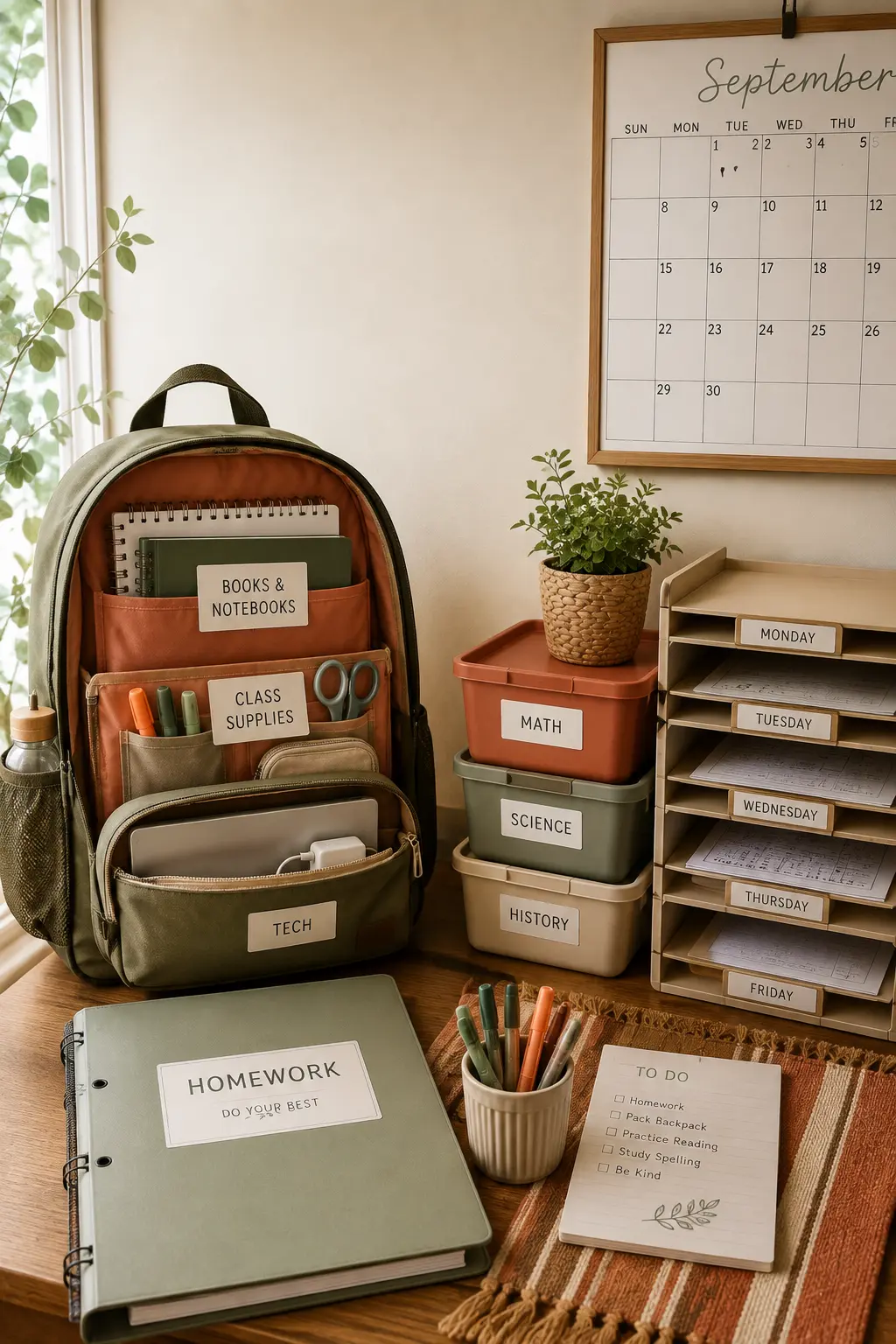
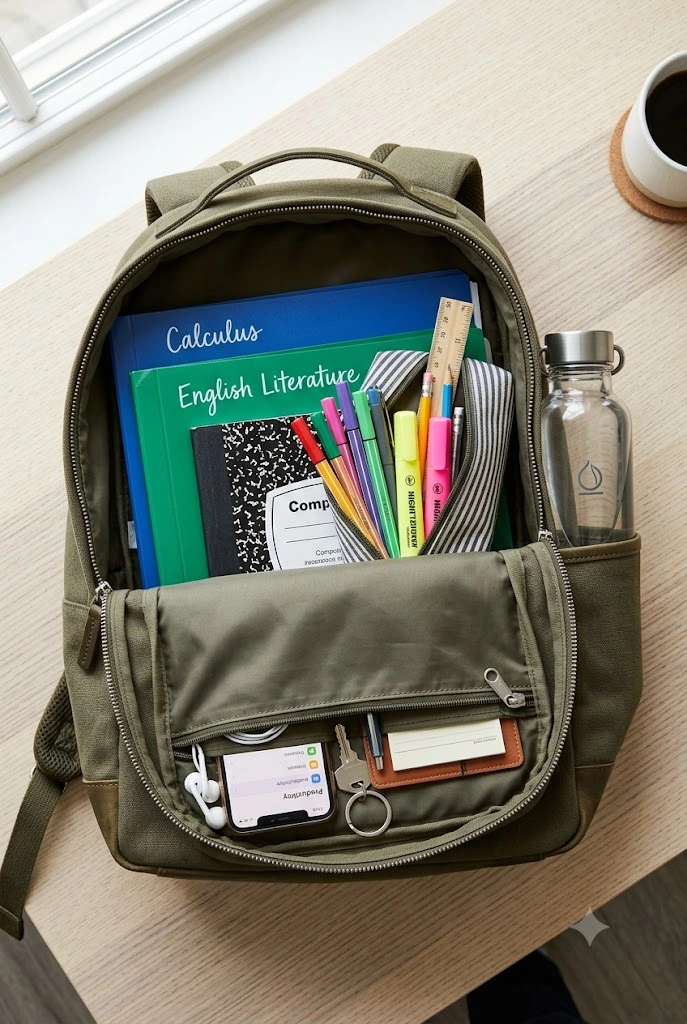
Assign each section of the backpack a specific job — front pocket for small items, main compartment for binders and folders, side pocket for a water bottle — so your child always knows where something belongs. Stick with the same zones all year so the system becomes automatic instead of something to relearn each week.
This is especially helpful for younger kids who tend to shove everything into whichever pocket opens first.
2. Weekly Backpack Reset Routine
Pick one consistent day, like Sunday evening or Friday afternoon, to fully empty the backpack and sort through what’s actually still needed. Toss the wrappers and old worksheets, return library books, and restock anything running low, like pencils or hand sanitizer.
A five-minute weekly reset prevents the slow buildup that turns into a backpack nobody wants to dig through.
Related : Back to School Ideas: Your Complete Guide for an Organized, Stress-Free School Year
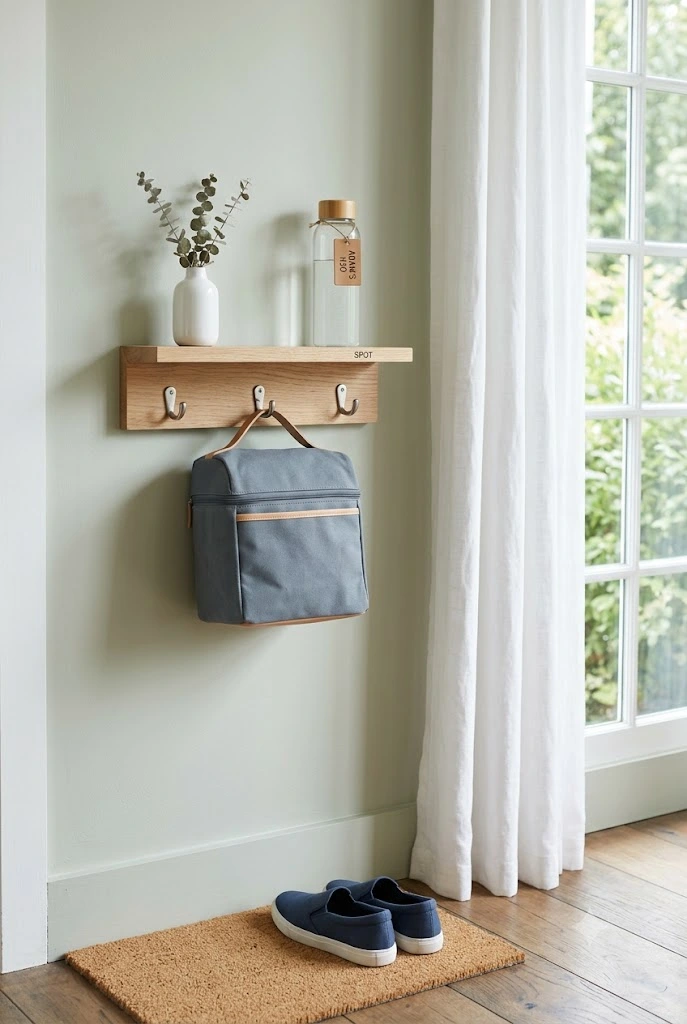
3. Lunch & Water Bottle Docking Station by the Door
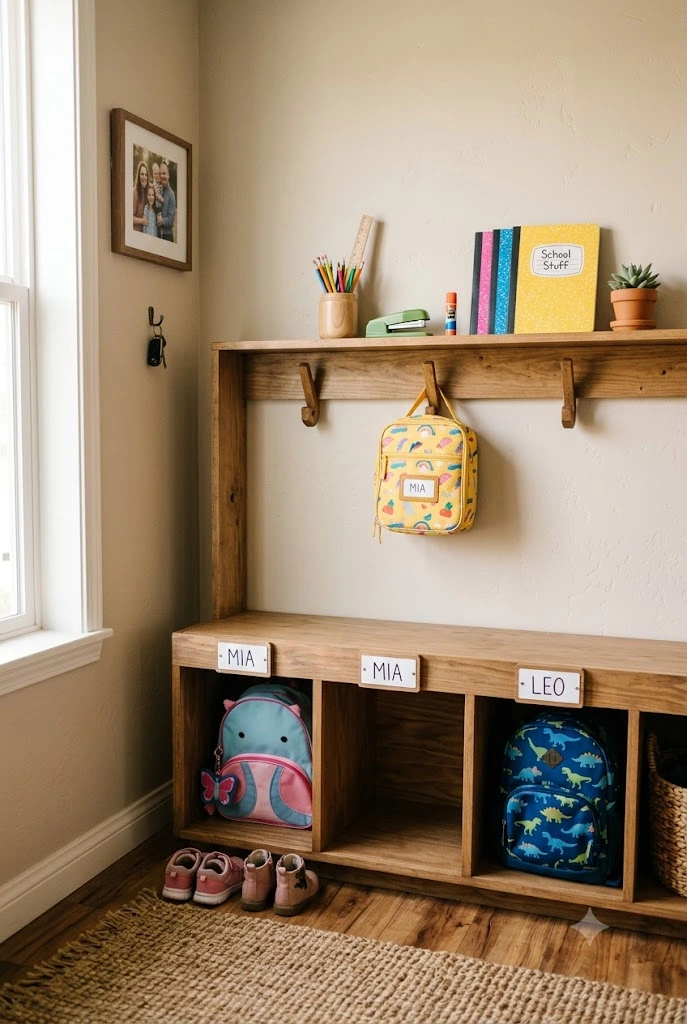
Set up a small shelf, hook, or basket near the door specifically for the lunch bag and water bottle, so they’re never the reason for a last-minute scramble. Pack lunches the night before when possible and place them directly at the docking station, ready to grab on the way out.
This one small station eliminates a surprising number of rushed mornings.
4. Labeled Pouches for Loose Small Items
Small items — hair ties, extra masks, band-aids, a spare key — tend to sink to the bottom of a backpack and disappear. A labeled zippered pouch keeps these together and easy to find without digging through binders and folders first.
Clear pouches work especially well here, since you can see what’s inside without opening every zipper.
Homework & Paperwork School Organization
Once the backpack is under control, the next major source of chaos is almost always paper — worksheets, permission slips, and the assignments that get lost somewhere between school and the kitchen table.
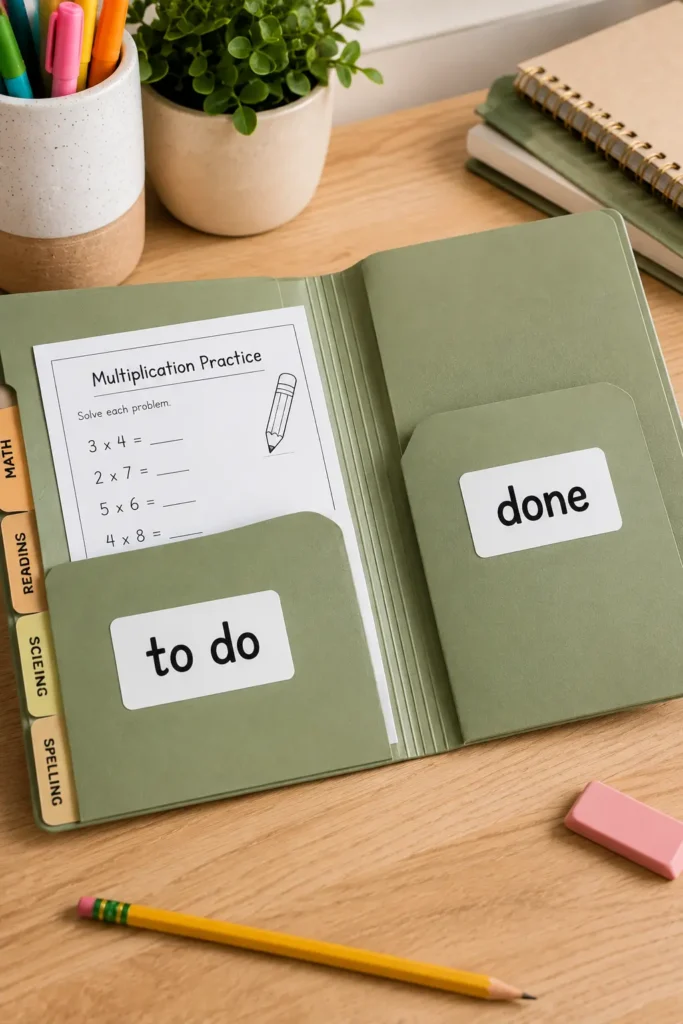
5. Daily Homework Folder System
A single, dedicated homework folder — separate from subject folders — gives every assignment one consistent home between school and home. One side for work to complete, the other side for work that’s finished and ready to turn in.
This system removes the guesswork of hunting through a backpack for a specific worksheet the night before it’s due.
6. Weekly Paper Sorter for Permission Slips & Handouts
A small desktop or wall-mounted sorter with slots labeled “sign & return,” “keep for reference,” and “recycle” keeps school paperwork from turning into a pile on the counter. Sort papers into it the moment they come out of the backpack, rather than letting them collect first.
This is one of the simplest ways to stop missing permission slip deadlines.
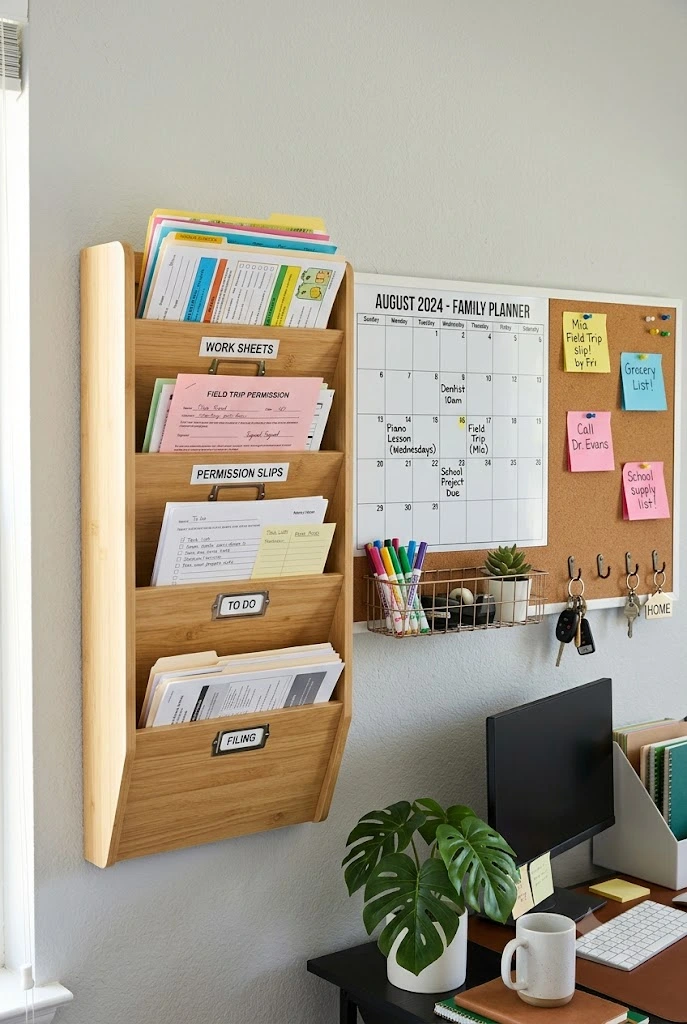
7. Command Center Wall for Family Schedules
A dedicated wall space with a calendar, a whiteboard, and a spot for upcoming due dates keeps school deadlines visible to the whole family, not just buried in a backpack. Update it together once a week so everyone, including your child, knows what’s coming up.
Placing it somewhere high-traffic, like near the kitchen or the door, means nobody has to go looking for it.
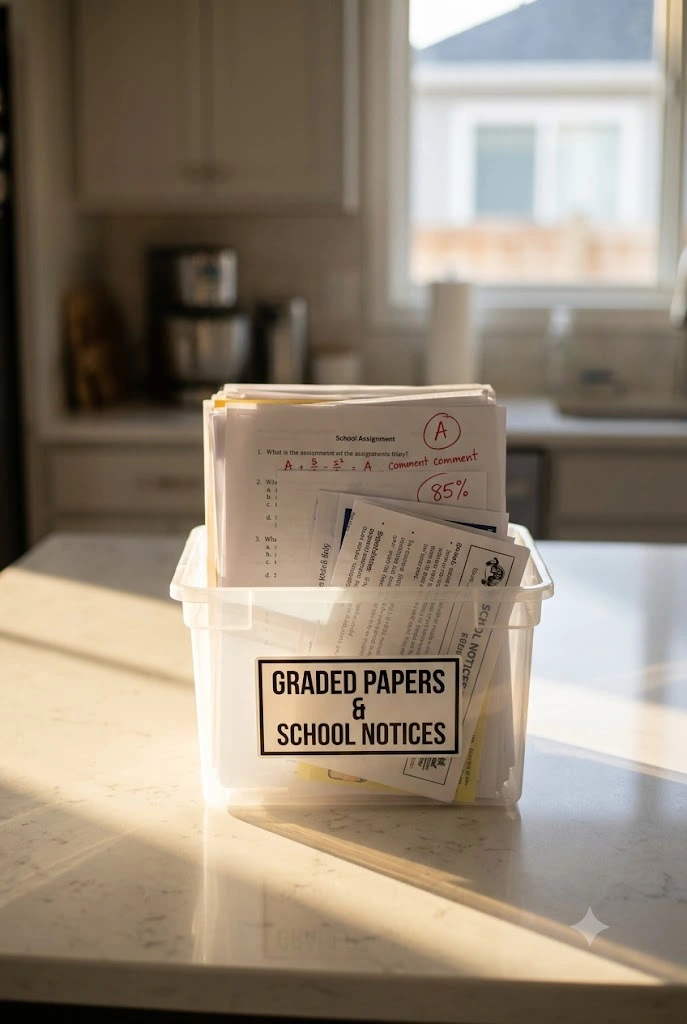
8. Completed Work Bin for Parent Review
A small labeled bin or tray gives your child a place to drop finished assignments, graded papers, and school notices for you to look over, rather than leaving them scattered across the house. Check it on a consistent schedule, like every evening or every other day, so nothing sits too long.
This also teaches kids an early habit of separating “needs review” from “already handled.”
9. Take-Home Folder Checkpoint Routine
Build a two-minute checkpoint into the daily routine — right after school or right before dinner — where your child empties their take-home folder and sorts the contents into the right systems already in place. This turns an easy-to-skip task into a predictable, expected part of the day.
Pairing it with something else already happening, like right after a snack, makes it much easier to stick to.
Study Space & Supply School Organization
With paperwork and backpacks under control, the last piece is making sure supplies are easy to find and easy to put back — wherever your child actually does their homework.
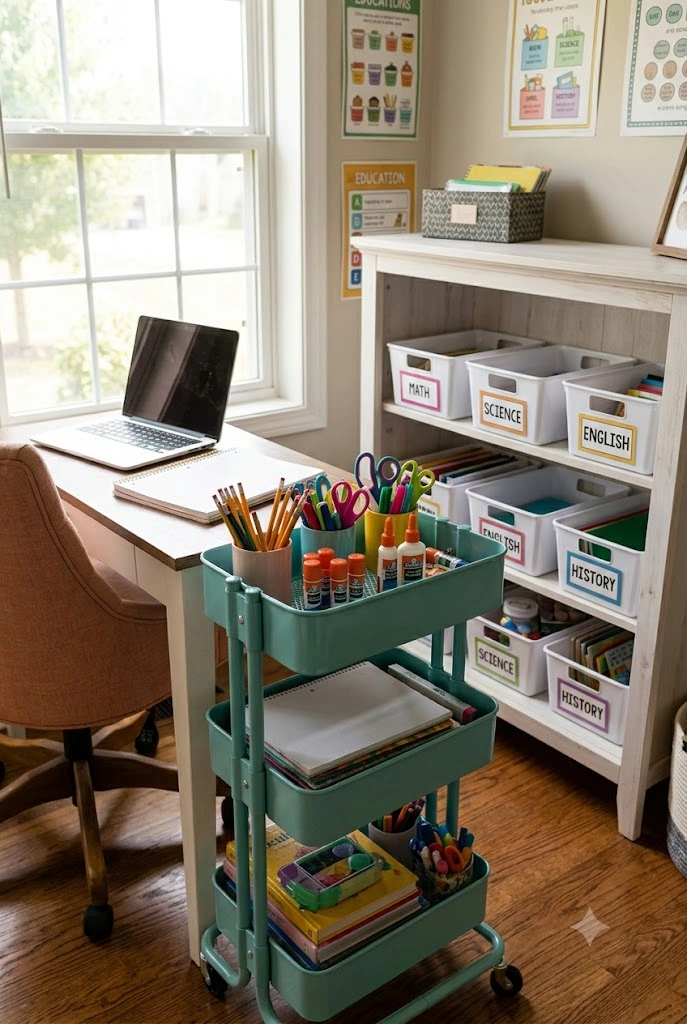
10. Rotating Supply Caddy for Shared Spaces
If your child doesn’t have a dedicated desk, a portable caddy with pencils, erasers, and a pair of scissors can move to the kitchen table, the living room, or wherever homework happens that day. This solves the biggest challenge of a shared space: supplies that need a home even without a permanent spot.
Store the caddy in the same cabinet or closet every time so it’s just as easy to put away as it is to grab.
11. Labeled Bin System by Subject
Whether your child works at a desk or a shared table, sorting supplies and materials into bins labeled by subject makes it faster to gather exactly what’s needed for a specific assignment. This pairs especially well with the homework folder system, since both use the same subject categories.
Clear or open bins work best for younger kids who need to see contents at a glance.
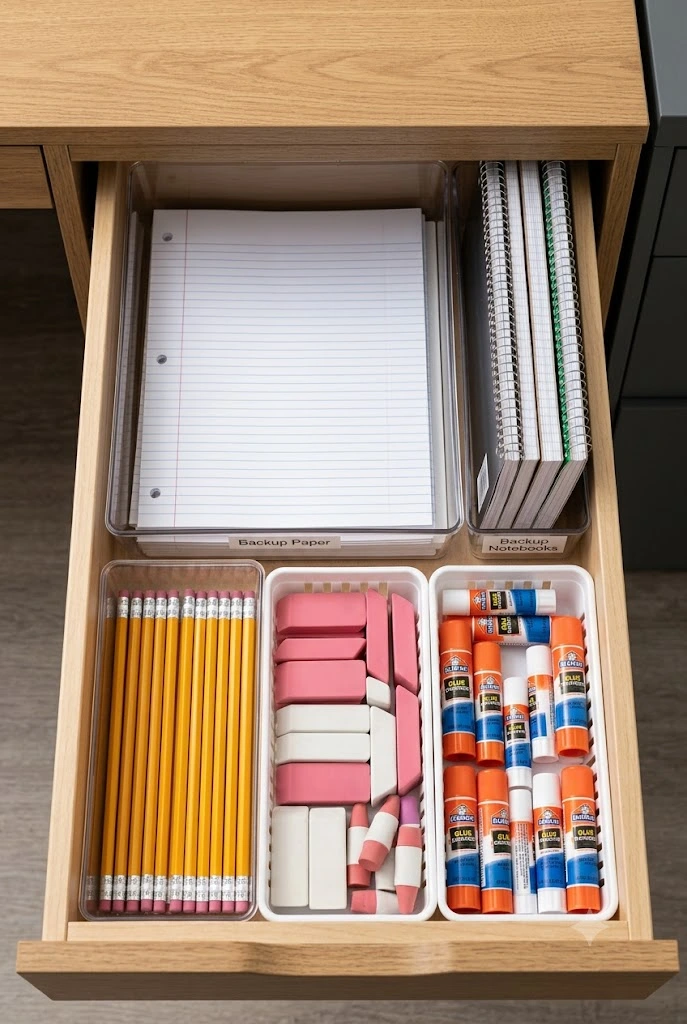
12. Backup Supply Drawer (Restock Station)
Keep a small drawer or bin stocked with backup pencils, erasers, glue sticks, and loose paper so you’re never scrambling at 9 PM the night before a project is due. Check it once a month and restock anything running low, especially before big testing periods or project seasons.
This single drawer saves more last-minute store runs than almost anything else on this list.
Digital & Schedule Organization
School organization isn’t just physical anymore — most families are also juggling online portals, digital assignments, and shifting schedules that don’t fit neatly into a paper folder.
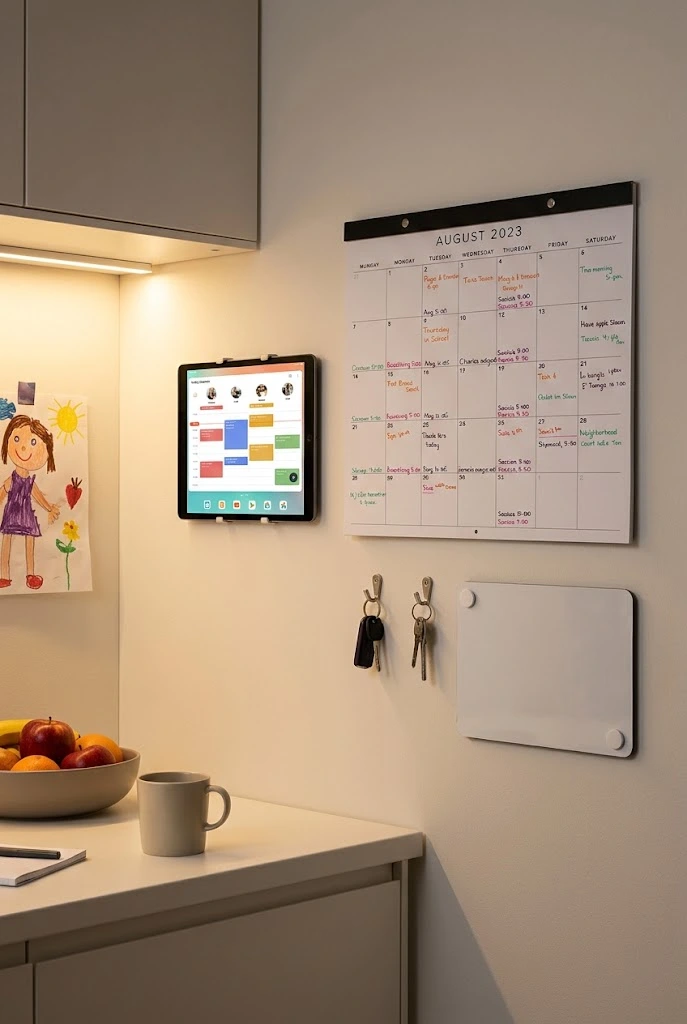
13. Shared Family Calendar for School Deadlines
A shared digital calendar, whether it’s on a family phone plan or synced across devices, keeps school deadlines, early dismissals, and project due dates visible to every adult involved. Color-code by child if you’re managing more than one kid’s schedule at once.
This prevents the common problem of one parent knowing about a deadline the other has no idea exists.
14. Digital Assignment Tracker Routine
For older kids using an online portal or learning app, a five-minute daily check-in — reviewing what’s due and what’s upcoming — prevents digital assignments from getting lost the way paper ones sometimes do. Pair this with the physical homework folder system so nothing falls through the gap between digital and paper.
This routine also builds independence, since it’s a habit your child can eventually manage entirely on their own.
Morning Routine & Seasonal Reset
The last piece of school organization isn’t a system at all — it’s a habit of stepping back and resetting everything else on this list before it quietly falls apart.
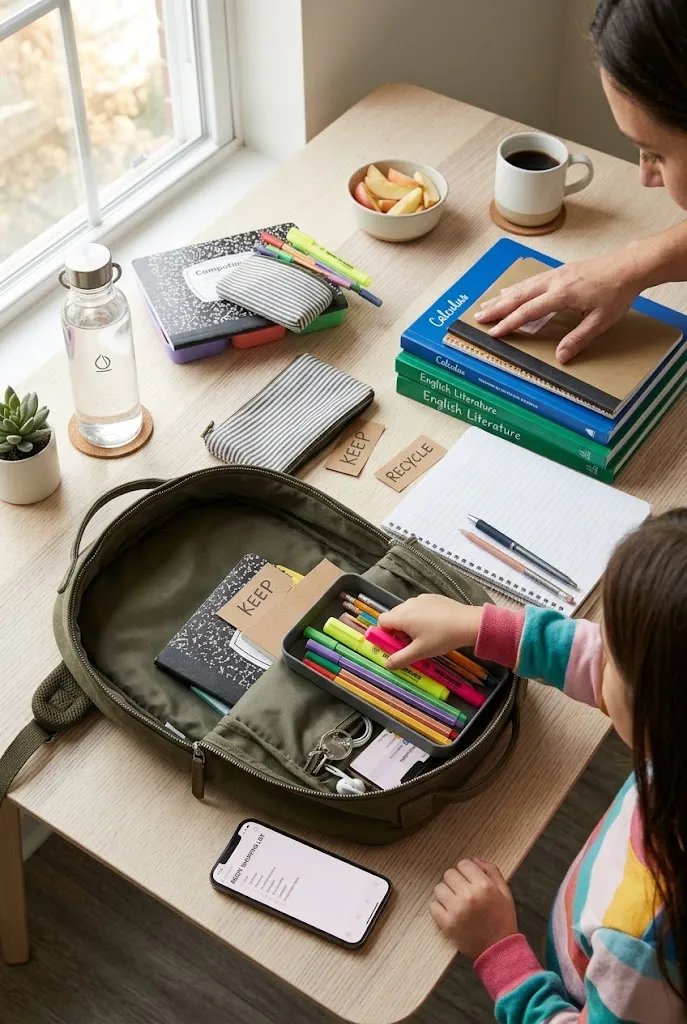
15. End-of-Season Declutter & Reset Checklist
At the end of each grading period or season, walk through every system on this list together: empty the backpack completely, clear out the homework folder, restock the supply drawer, and reset the command center wall. This prevents small pileups from becoming a total overhaul later in the year.
A quick 20-minute reset every few months keeps every other system on this list actually working, instead of slowly falling apart by winter break.
Frequently Asked Questions
What’s the difference between classroom organization and school organization at home?
Classroom School Organization focuses on how a teacher manages materials for an entire class of students, while school organization at home is about how one family manages a single child’s backpack, homework, paperwork, and supplies. The systems and tools look different because the goals are different — a classroom needs to serve many students at once, while a home system just needs to work for your specific routine.
How do I get my kid to actually maintain an School Organization system?
Systems stick best when they’re simple, consistent, and built into a routine your child already follows, rather than an extra task layered on top. Involve your child in setting up the system from the start, since kids are far more likely to maintain something they helped create.
What are the best organization tools for a small home without a dedicated study space?
A portable supply caddy, a rotating homework folder, and a small wall-mounted command center all work well without needing a permanent desk or study room. The goal in a small space is portability — tools that can move with your child wherever homework happens that day.
How often should we reset or declutter school supplies and paperwork?
A quick weekly backpack reset paired with a bigger seasonal reset every few months covers most families’ needs without feeling overwhelming. Waiting until systems completely break down usually means a much bigger cleanup than staying ahead of it in small, regular steps.
What age should kids start managing their own school organization?
Even young elementary students can start with simple tasks, like emptying their own backpack or sorting papers into a labeled bin, with guidance. As kids get older, gradually hand off more responsibility — by upper elementary or middle school, most kids can manage a homework folder and digital assignment tracker with minimal oversight.
Final Thoughts
School organization that actually works isn’t about buying the prettiest bins or building the most elaborate system — it’s about matching simple tools to your family’s real routine. The backpack, the paperwork, the supplies, and the schedule all connect to each other, which is why tackling them together makes such a difference.
Start with whichever area causes the most stress in your house right now, whether that’s the backpack black hole or the paper pile on the counter, and build outward from there. The rest of the systems on this list will fall into place as your routine settles in.