15 School Morning Routine Ideas for a Stress-Free Start to Every Day
Mornings set the tone for everything that comes after them.
If your house feels like a fire drill every school day — missing shoes, half-eaten breakfast, someone crying about socks — you’re not doing anything wrong. Most families just haven’t found the system that actually fits how their mornings really go.
The good news is you don’t need one perfect routine. You need a handful of small, repeatable strategies you can mix and match based on your kids’ ages and what tends to fall apart most.
Here are 15 real ideas to try, from what happens the night before to what to do when a morning goes sideways anyway.
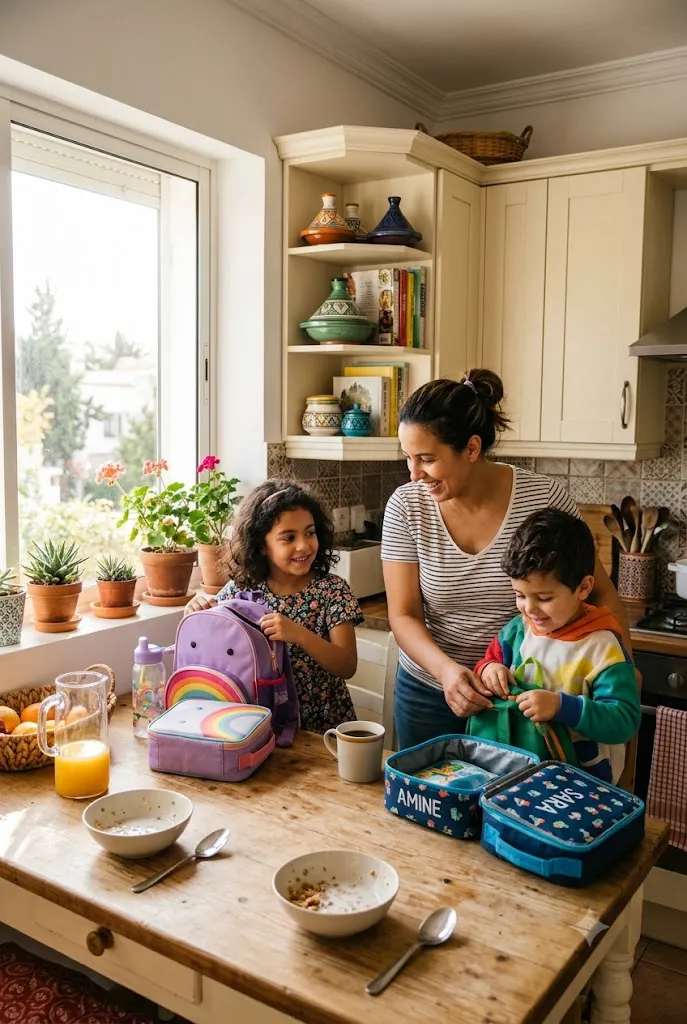
What Makes a School Morning Routine Actually Stick
Before we get into the ideas, it helps to know why some routines work and others quietly fall apart by week two.
Consistency, Simplicity, and Buy-In From Your Kid
Routines work when they happen the same way, in the same order, most days. Kids thrive on predictability, even when they act like they don’t.
Simplicity matters just as much. A routine with twelve steps is hard for anyone to remember — let alone a seven-year-old who’s still half-asleep.
And buy-in is the piece people skip. A routine your child had a hand in creating gets followed. One that’s only imposed on them gets resisted.
Keep those three things in mind as you pick which ideas below to try first.
15 School Morning Routine Ideas for a Stress-Free Start to Every Day
These ideas move from what to prep the night before, to morning-of systems, to tools that build independence, to strategies for multiple kids, and a few ways to keep the whole thing feeling calm instead of rushed.
1. The Night-Before Reset
Related : 20 Student Planner Ideas to Stay Organized and Productive
Almost every rough morning traces back to something that didn’t get done the night before.
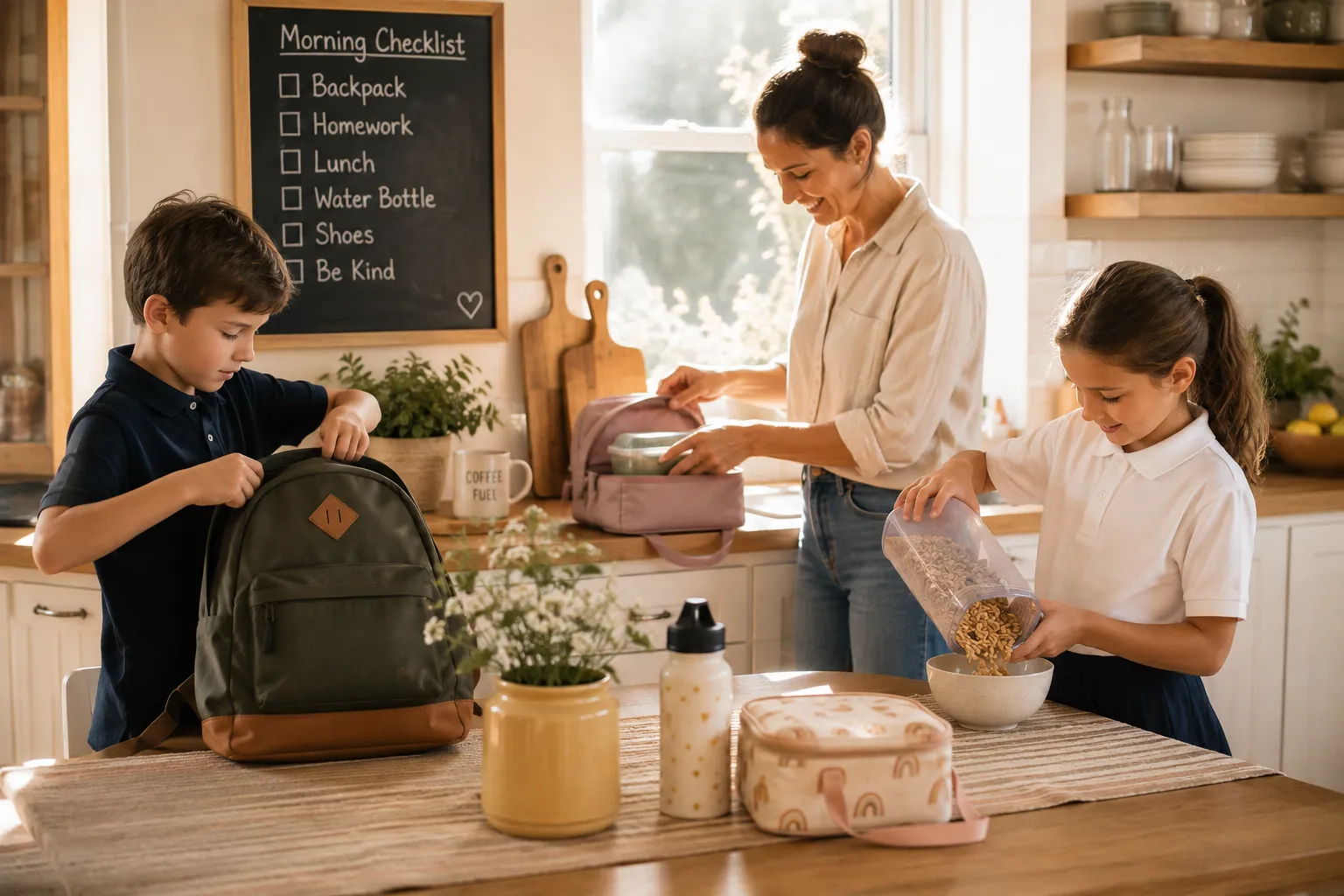
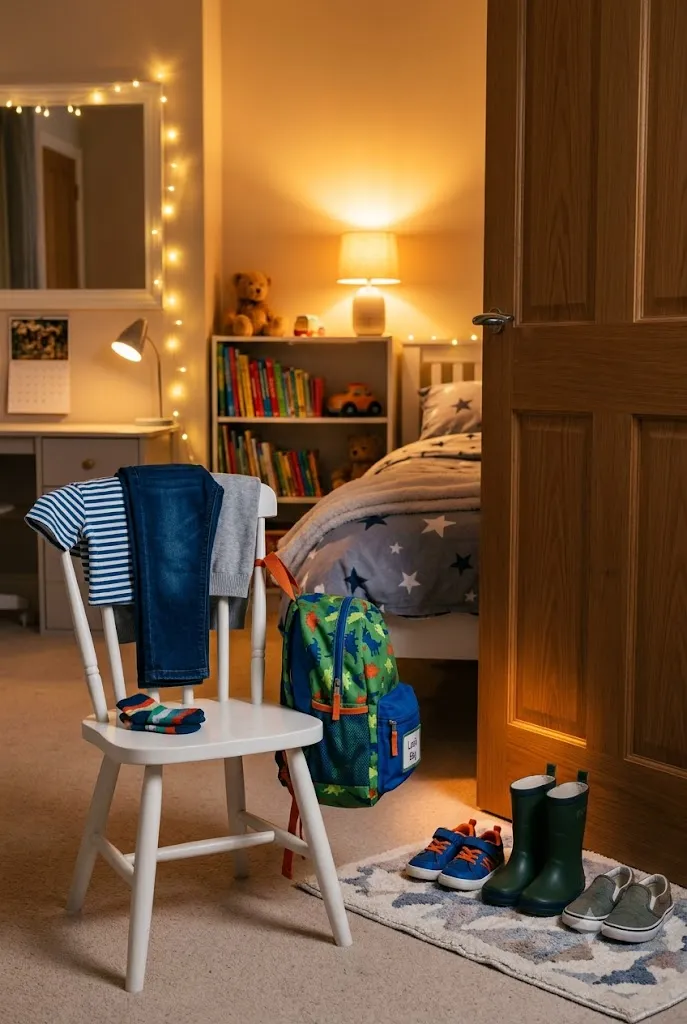
Set out tomorrow’s outfit, pack the backpack, prep the lunch (or at least stage it in the fridge), and set shoes by the door — all before bed. This one habit alone can cut a chaotic 40-minute morning down to 20.
Make it a five-minute family ritual right after dinner, not a last-minute scramble at 9 p.m.
2. The 10-Minute Wind-Down Countdown
A rushed bedtime almost always leads to a rushed morning. Kids who go to bed overtired wake up groggy, slow, and resistant to every single step.
Build in a genuine 10-minute wind-down before lights out — dim the lights, put screens away, and let their body actually settle. It sounds unrelated to mornings, but a calmer bedtime is one of the most overlooked morning-routine fixes there is.
3. The Zone-Based Morning Station System
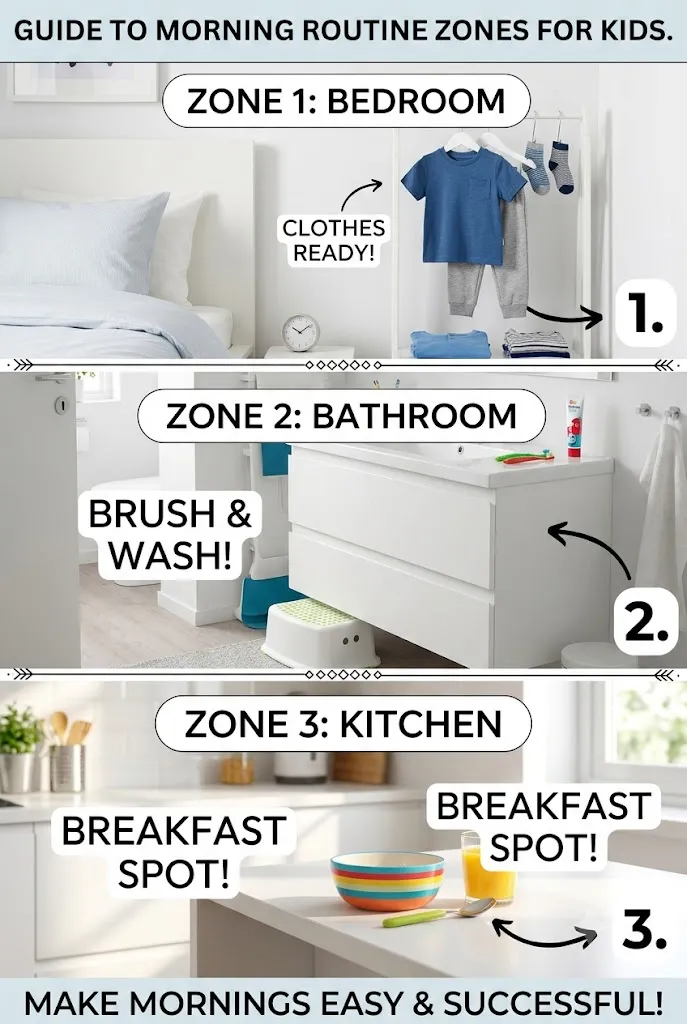
Instead of one long checklist, break the morning into physical zones your child moves through: the bedroom (get dressed), the bathroom (teeth and hair), and the kitchen (breakfast and backpack check).
Each zone has one or two tasks max, so nothing feels overwhelming. Kids also start to associate each room with what happens there, which builds routine faster than a list ever could.
4. The Visual Step-by-Step Chart
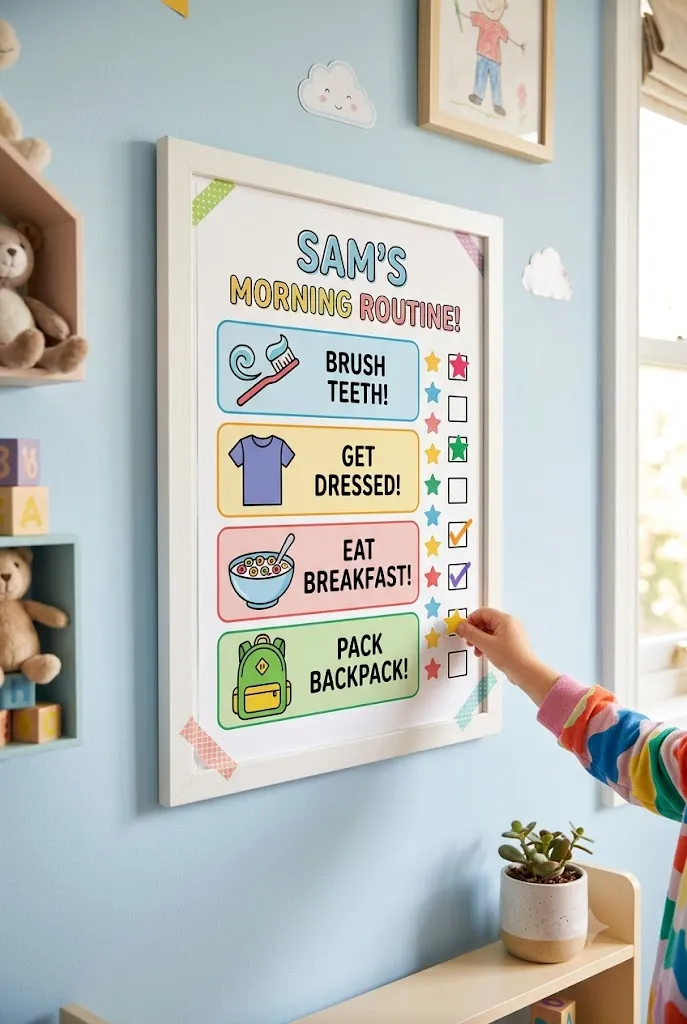
For preschoolers and early elementary kids, pictures work better than words. A simple chart with icons — a toothbrush, a shirt, a bowl of cereal, a backpack — lets a child follow the routine without needing to read or be told twice.
Velcro or magnet pieces they can flip or move as they finish each step add a small sense of accomplishment that keeps them motivated through the whole sequence.
5. The Written Checklist for Older Kids
Tweens and older elementary kids don’t need pictures — they need ownership. A simple written checklist taped inside a closet door or posted by the mirror gives them something to manage themselves instead of being managed.
Let them check off each item with a marker or pen. It’s a small shift, but it moves the routine from “Mom’s list” to “my list,” which tends to reduce pushback significantly.
6. The Kitchen Timer Challenge
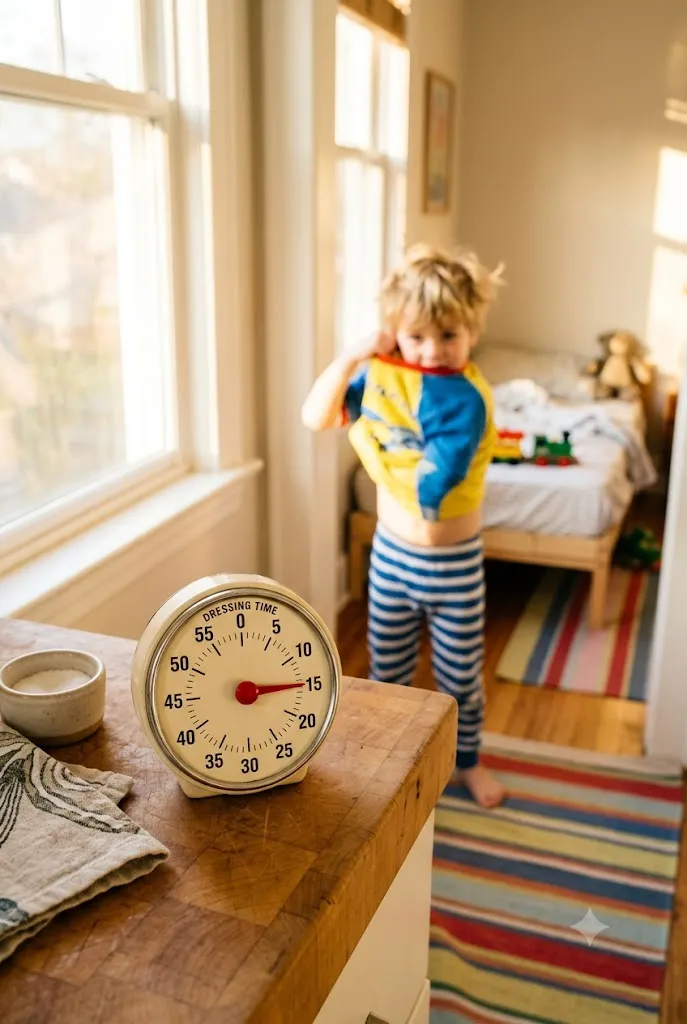
Turning the routine into a light game can defuse a lot of morning resistance. Set a timer for each step — five minutes to get dressed, three minutes to eat — and treat it as a friendly challenge rather than a countdown to punishment.
This works especially well for kids who respond to a bit of playful pressure but shut down under yelling or nagging. Keep the tone light and it becomes something they actually enjoy racing against.
7. The One-Basket Breakfast Station
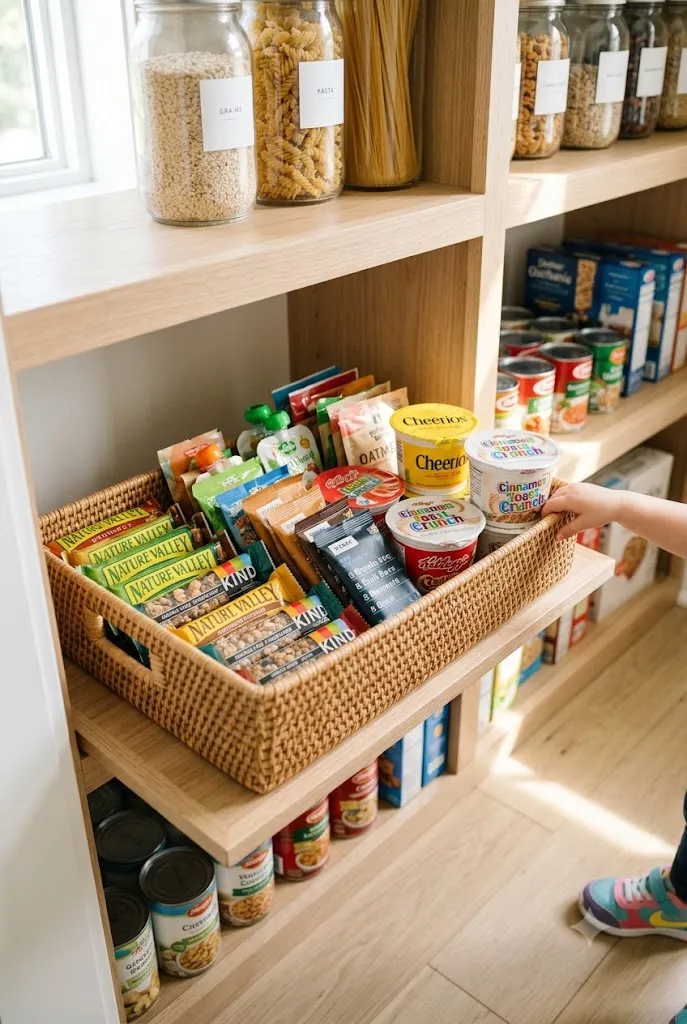
A dedicated breakfast basket or bin in the pantry — filled with grab-and-go options like granola bars, individual cereal cups, or pre-portioned snacks — lets kids serve themselves without you managing every bite.
Rotate a few options each week so it doesn’t get boring, and keep it at a height your child can reach without help. This one small station removes an entire category of morning back-and-forth.
8. The Capsule Closet Method
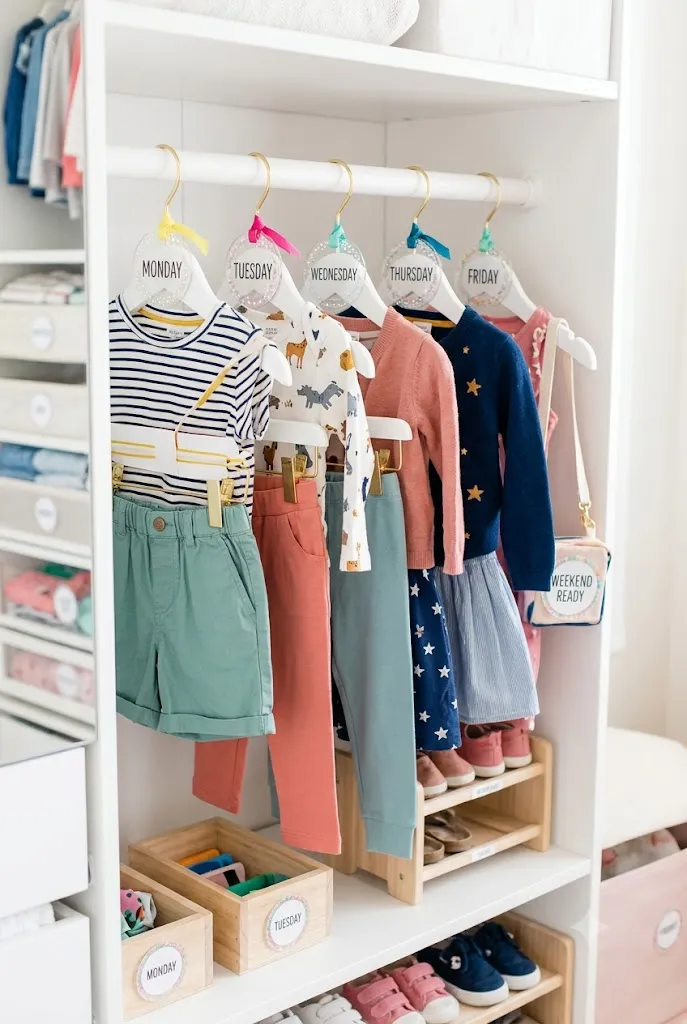
Decision fatigue is real, even for kids. Staring at a full closet every morning can eat up ten minutes on its own.
Pre-select five or six weekday outfits at the start of each week (or let your child do it on Sunday) and hang them together, in order, on a designated section of the rod. Mornings become “grab the next one” instead of a debate about what to wear.
9. The “No Screens Until Ready” Rule
A television or tablet turned on before the routine is finished is one of the fastest ways to derail an entire morning. Once a screen is on, everything else stops.
Set a firm rule that screens stay off until every task — dressed, teeth brushed, backpack packed — is done. If your child wants that morning show or five minutes of a game, it becomes the built-in motivation to move quickly through the rest.
10. The Backpack Launch Pad
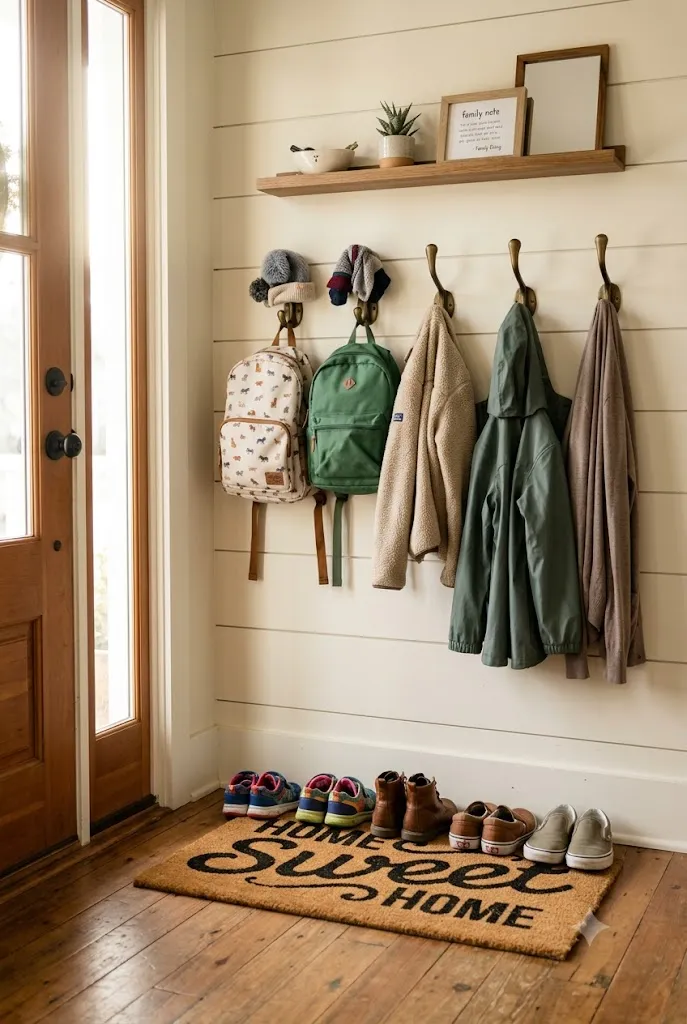
Designate one specific spot near the door — a hook, a bench, a small shelf — where backpacks, shoes, and coats live and nothing else. The moment your child finishes with any of those items, it goes there, not wherever they happen to be standing.
This single habit eliminates the classic “where are my shoes” scramble that eats up precious minutes right when you’re trying to walk out the door.
11. The Sibling Relay System
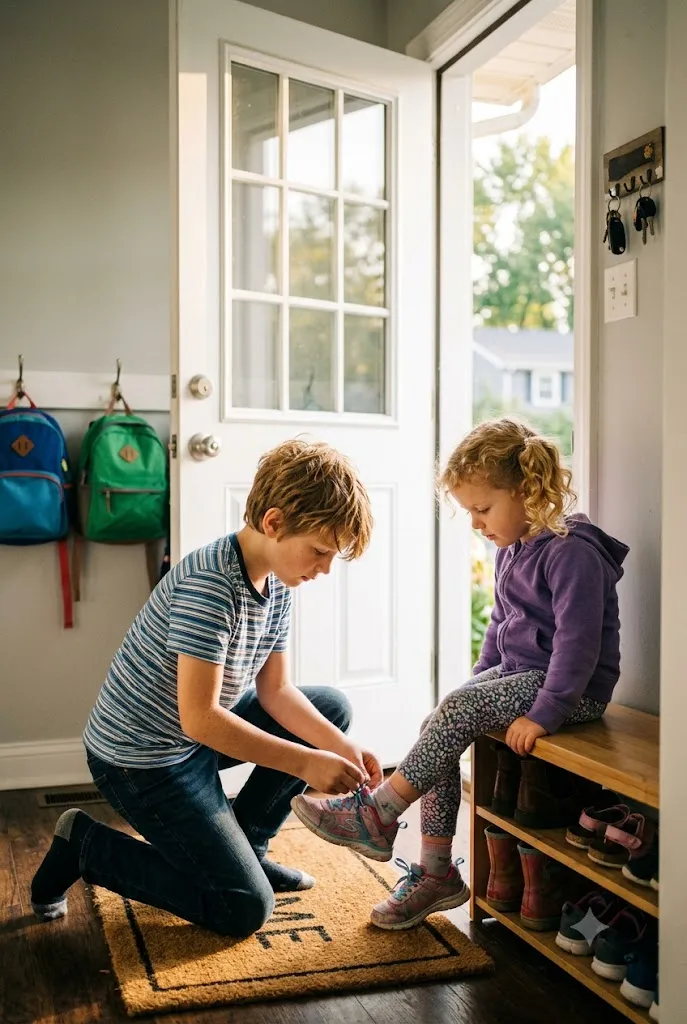
In households with more than one child, older kids can take on small supporting roles — helping a younger sibling find their shoes, double-checking a lunch box, or reminding a brother or sister what’s next on the chart.
Frame it as a job, not a chore, and rotate who’s “on duty” each week if it helps keep things fair. It builds responsibility in the older child and takes a little pressure off you.
12. The Reward Chart for Motivation
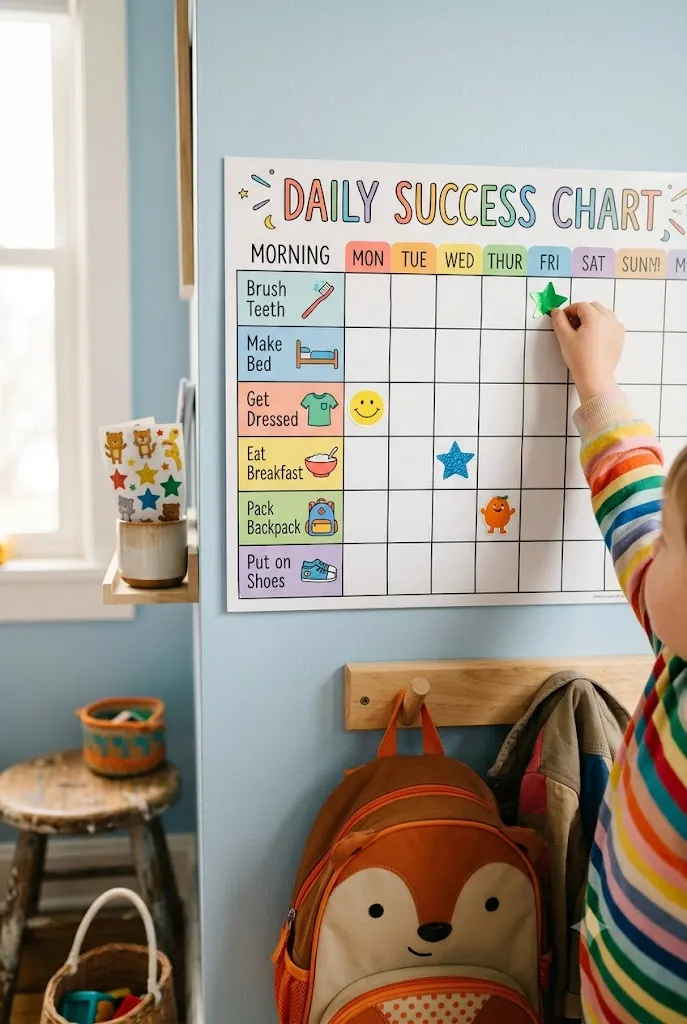
A simple sticker or token chart tied to routine completion gives younger kids a visual reason to stay on track. Each finished step earns a sticker, and a full week might add up to a small reward — an extra bedtime story, a choice of Friday breakfast, or a fun outing.
Keep the rewards small and consistent rather than big and occasional. The chart itself, watching it fill up, is often more motivating than the prize at the end.
13. The Calm Morning Playlist
Instead of a stream of reminders and “hurry up,” let a playlist do some of the pacing for you. Pick three or four upbeat songs that roughly match how long the routine should take, and play them in the same order every morning.
Kids start to internalize the rhythm — by the time the second song ends, they know they should be dressed. It replaces nagging with something closer to background structure.
14. The Weekend Practice Run
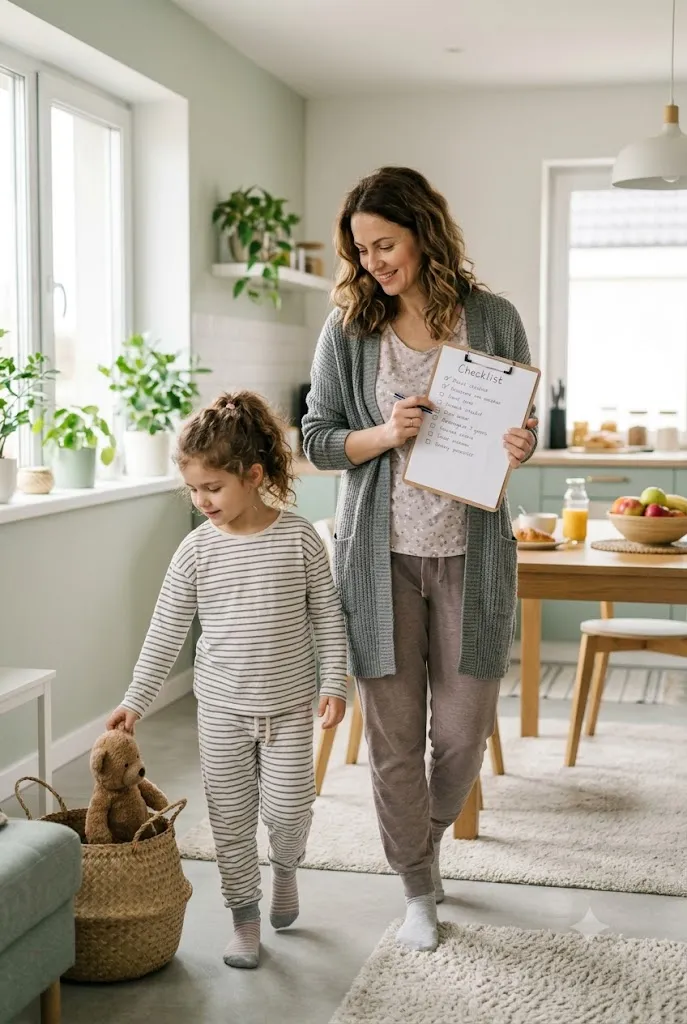
The week before school starts, run a full dress rehearsal on a Saturday or Sunday morning — same wake-up time, same steps, same order. It feels low-stakes since there’s nowhere to actually be, which makes it a great time to work out kinks.
This is especially useful for kids starting a new grade, a new school, or a new routine for the first time. By the actual first day, the steps already feel familiar instead of brand new.
15. The Backup Plan for Rough Mornings
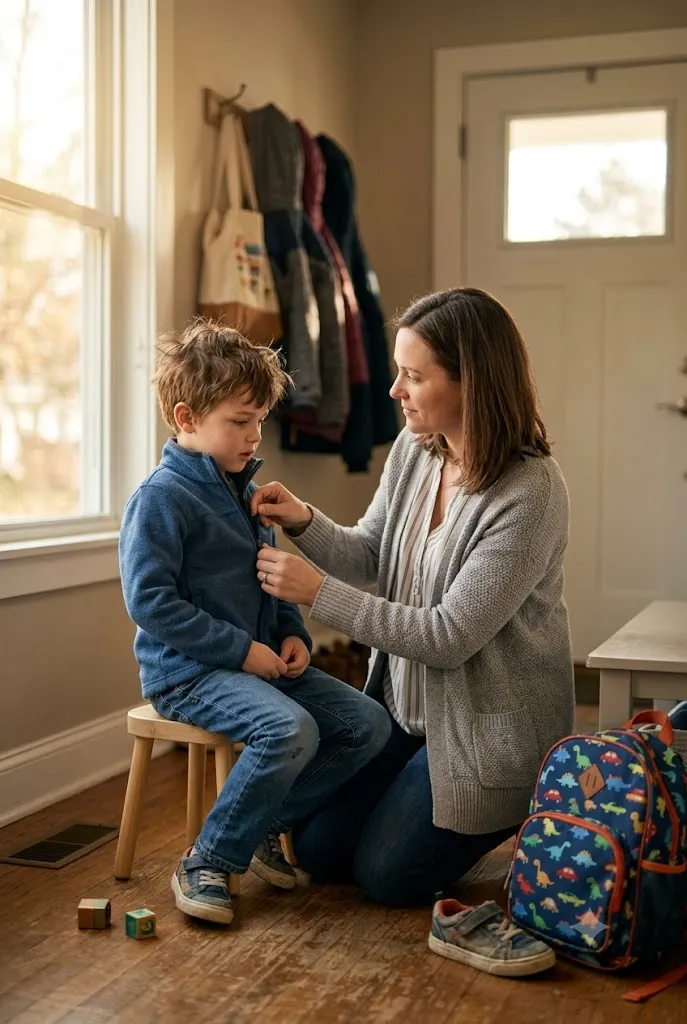
Some mornings are just going to fall apart — a late wake-up, a meltdown, a lost shoe five minutes before you need to leave. Having a stripped-down “minimum viable routine” ready for those days keeps things from spiraling further.
Know in advance which three or four steps are truly non-negotiable (dressed, teeth, backpack, out the door) and let everything else slide without guilt. Having a plan B keeps one bad morning from turning into a bad week.
Quick Tips to Make Any Morning Routine Easier

Related : Back to School Ideas: Your Complete Guide for an Organized, Stress-Free School Year
Wake Up Before Your Kids
Even ten quiet minutes to yourself before the house wakes up changes how you show up for the rest of the morning. A rushed parent tends to create a rushed household, even unintentionally.
Keep a Small Buffer of Extra Time
Build in five or ten minutes of slack beyond what you think you need. That cushion is what keeps a spilled cup of milk or a missing shoe from turning into being late for school.
Frequently Asked Questions
How do I create a school morning routine that actually works?
Start with a short, consistent sequence of steps in the same order every day, prep as much as possible the night before, and involve your child in building the routine so they feel ownership over it.
What time should kids wake up for a stress-free school morning?
Aim for enough time that the routine never feels rushed — most families do well waking up 45 to 60 minutes before they need to leave, with extra buffer for younger kids who move slower.
How do I get my child to follow a morning routine without nagging?
Use visual charts, timers, or a playlist to create structure that doesn’t rely on you repeating instructions, and let natural motivators like screen time or a reward chart do some of the work.
How can I make mornings easier with multiple kids?
Give each child clear, individual tasks, use a sibling relay system so older kids help younger ones, and stagger start times for shared spaces like the bathroom whenever possible.
What should be prepped the night before school?
Outfits, backpacks, lunches, and anything that needs to be signed or returned to school should all be ready before bed, along with shoes and coats set by the door.
How do I handle a morning when the routine falls apart?
Fall back on a short list of true non-negotiables — getting dressed, brushing teeth, grabbing the backpack — and let everything else go without stress. One off morning doesn’t undo the routine.
Final Thoughts
A stress-free school morning isn’t about running a flawless routine every single day. It’s about having enough small systems in place that most mornings go smoothly, and a backup plan for the ones that don’t.
Pick two or three ideas from this list that feel realistic for your family right now, and build from there. Pin this for the first week of school, and let the routine grow with your kids as the year goes on