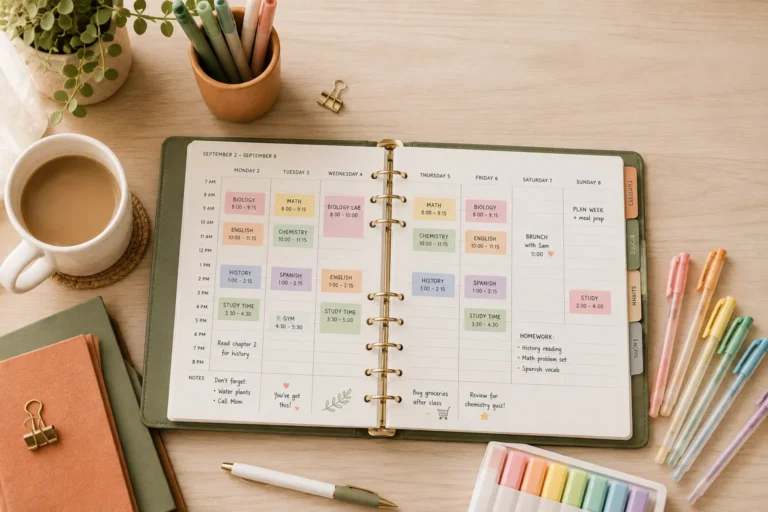
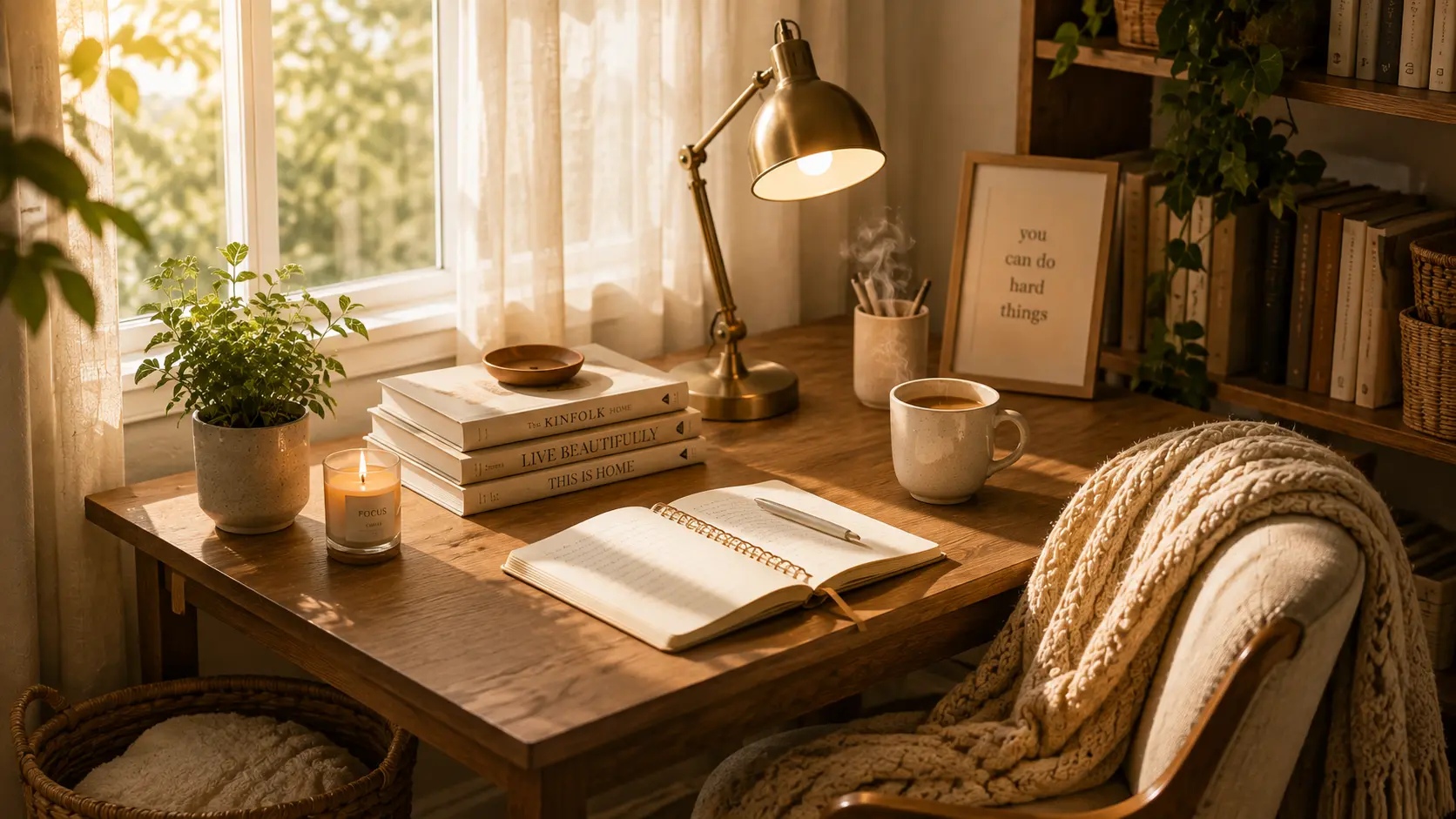
+19 Cozy Study Space Ideas to Boost Focus and Productivity
Back-to-school season has a way of making everyone want a fresh start — new notebooks, new routines, and yes, a new corner of the house to actually get things done in.
If your current “study space” is a laptop balanced on your knees or a desk buried under last semester’s clutter, this is your sign to change that.
A good Study Space Ideas isn’t about spending a fortune or having a spare room to dedicate to it. It’s about creating a spot that feels calm, looks inviting, and makes you want to sit down and focus — even on the days you’d rather not.
Whether you’re working with a dorm room, a tiny bedroom corner, a shared space for two kids, or a whole home office you get to design from scratch, there’s an idea on this list for you.
Let’s get into it.
What Makes a Study Space Actually Work
Before we jump into the ideas, it helps to know what separates a study space that gets used from one that becomes a glorified junk shelf.
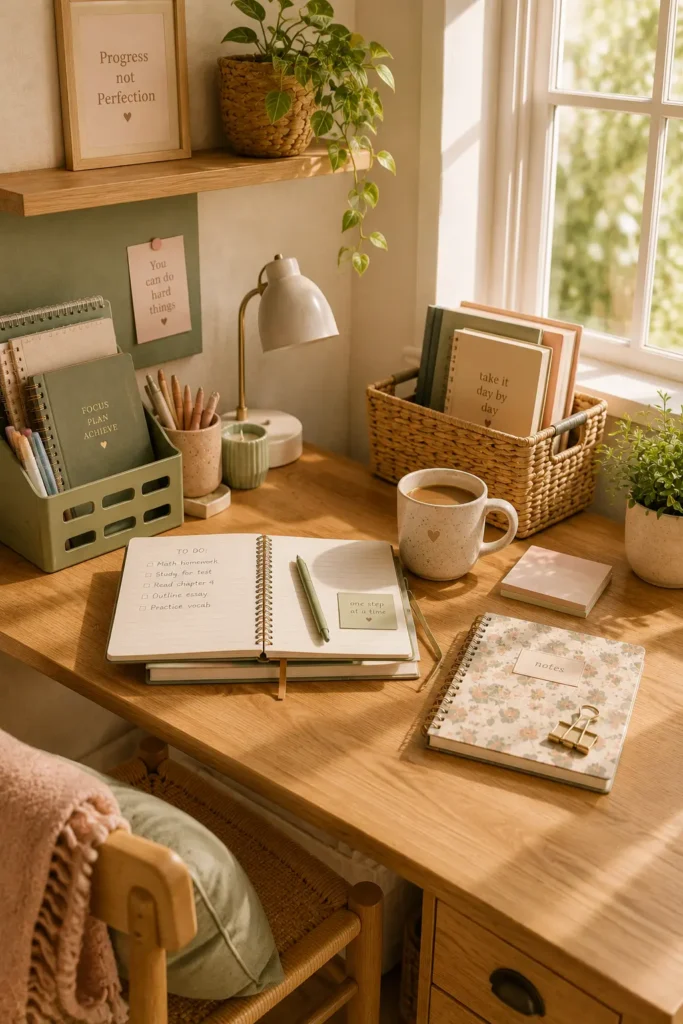
Light, Comfort, and Minimal Distraction
Good lighting matters more than almost anything else. A dim, harsh, or flickering light source makes your brain want to leave the room within minutes.
Comfort is next. A chair that hurts your back after twenty minutes will quietly sabotage even the best-looking setup.
And finally, keep visual noise low. A space crammed with clutter and knickknacks pulls your attention in ten directions at once — even if it looks cute on camera.
Keep those three things in mind as you go through the ideas below, and pick the ones that fit your actual space and budget.
Related : Back to School Ideas: Your Complete Guide for an Organized, Stress-Free School Year
19 Cozy Study Space Ideas to Boost Focus and Productivity
These ideas move from general cozy setups, to small-space and budget fixes, to dorm-specific solutions, kid-friendly options, aesthetic-driven looks, and a few finishing touches to tie it all together.
1. The Window Nook Study Corner
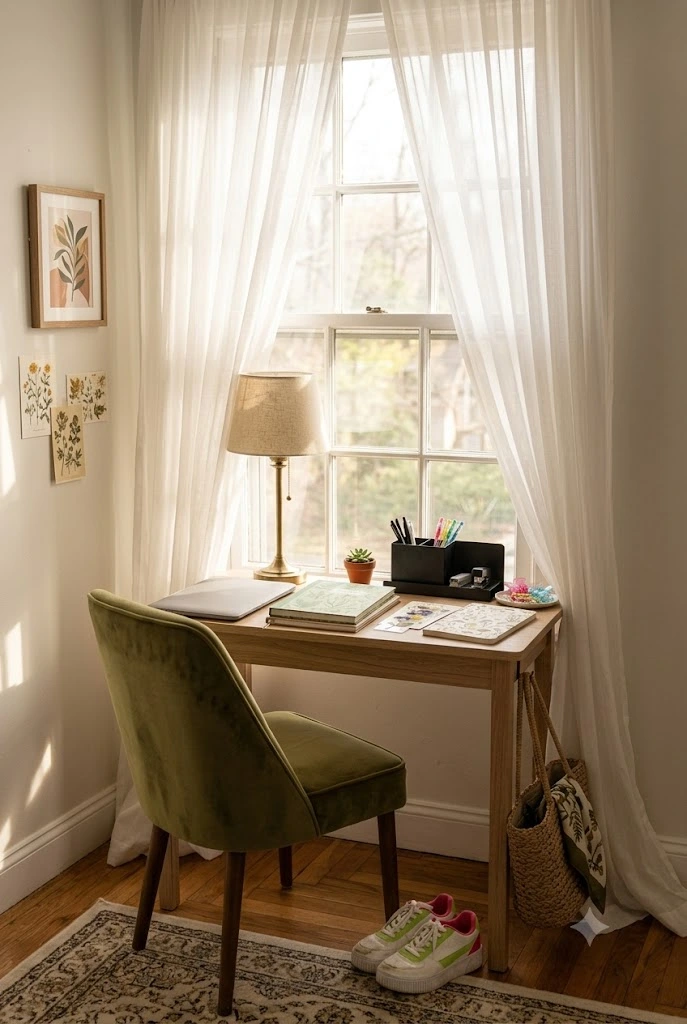
If you have a window with even a little bit of floor space beneath it, use it. Natural light does more for focus than any desk lamp ever could.
Push a small desk or table right up against the window, add a comfortable chair, and let the daylight do the heavy lifting. On gray days, a simple sheer curtain keeps the light soft instead of glary.
2. Warm Layered Lighting
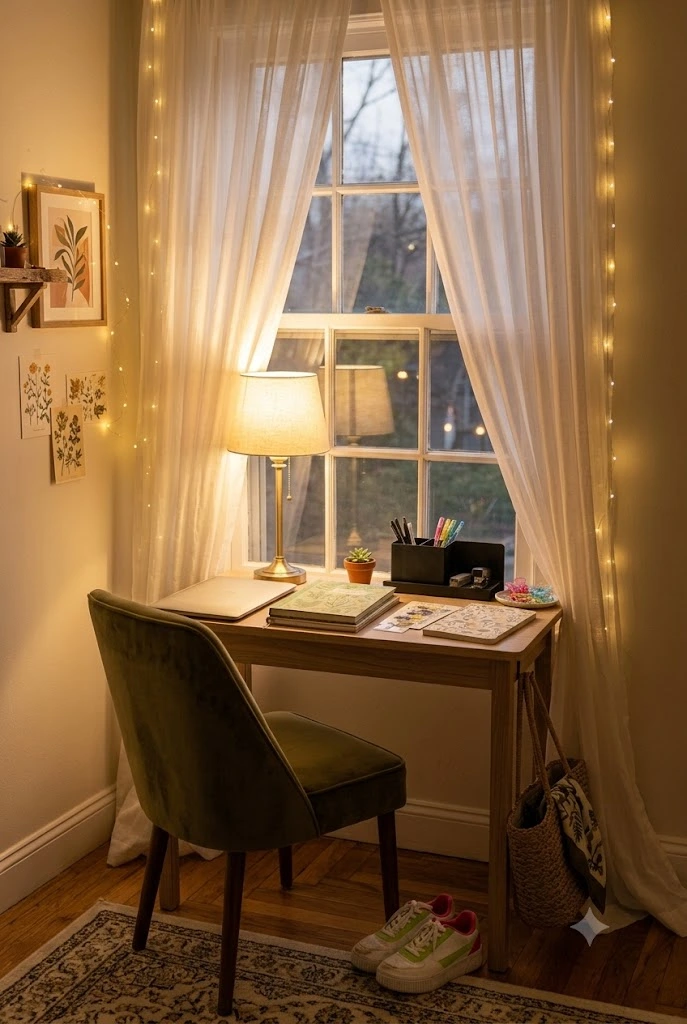
One overhead light isn’t enough, and it’s usually not doing your mood any favors either.
Layer your lighting instead: a warm-toned desk lamp for close work, a string of fairy lights along a shelf or headboard for ambience, and if possible, a small plug-in sconce for extra glow in the evening. The mix keeps the room feeling cozy after dark instead of clinical.
3. The Cozy Textile Corner
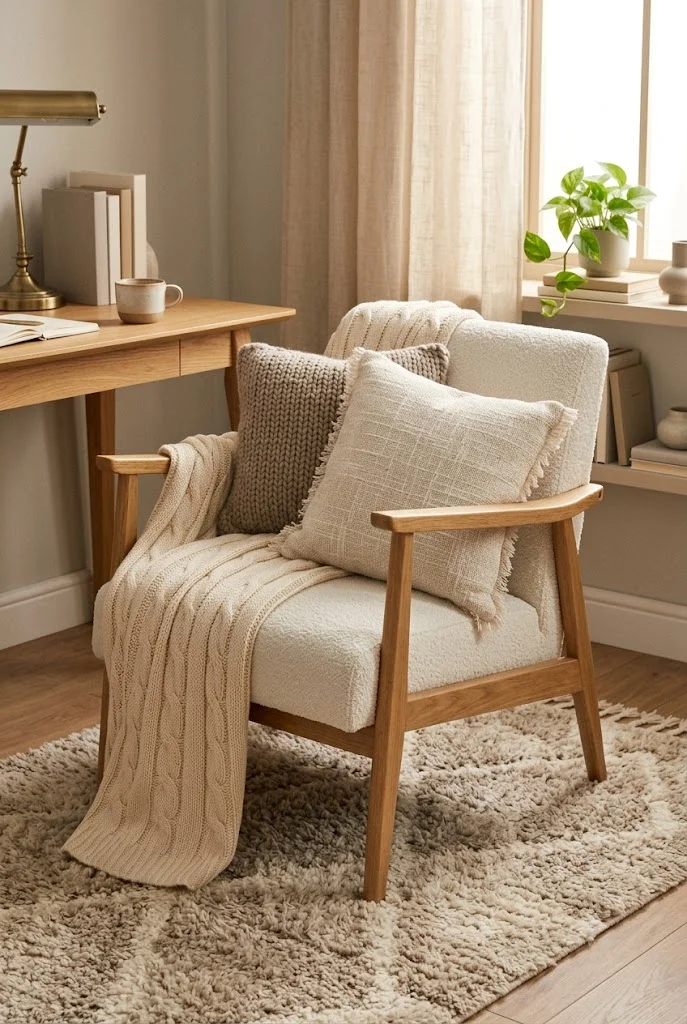
Textiles are the fastest, cheapest way to make any study space feel warm instead of sterile.
A soft area rug under your feet, a folded throw blanket on the back of your chair, and one or two cushions in a warm tone instantly change the feel of the room. This is a great starting point if you’re not ready to commit to furniture changes yet.
4. Closet-to-Study-Nook Conversion
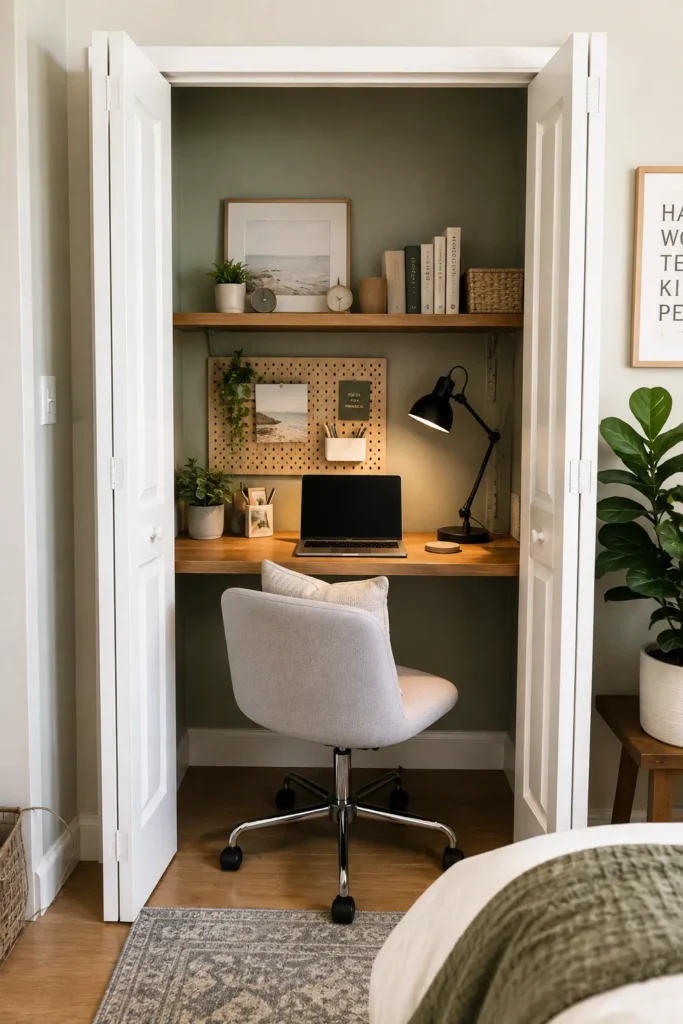
An unused reach-in closet can become a surprisingly great “cloffice.” Remove the doors (or leave them off the track and lean them elsewhere), pull out the hanging rod, and add a small desk or a wall-mounted shelf as a work surface.
The advantage here is that you can close the doors when you’re done for the day and the mess disappears from view — great for shared living spaces or small apartments.
5. Under-the-Stairs Study Nook
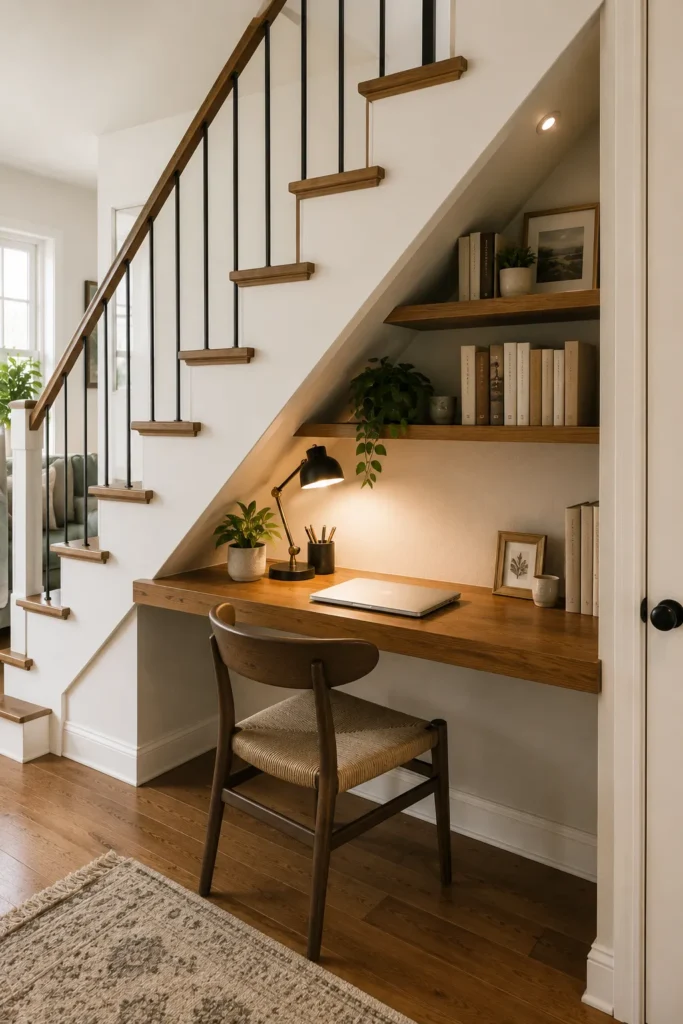
If your home has a staircase with unused space underneath, this is one of the most satisfying ways to reclaim it.
A slim desk that follows the slope of the stairs, a task lamp, and a few floating shelves tucked into the lower part of the slant turn dead space into a genuinely charming spot to study. It also tends to feel naturally tucked-away and quiet, which helps with focus.
6. The Floating Desk for Tiny Rooms
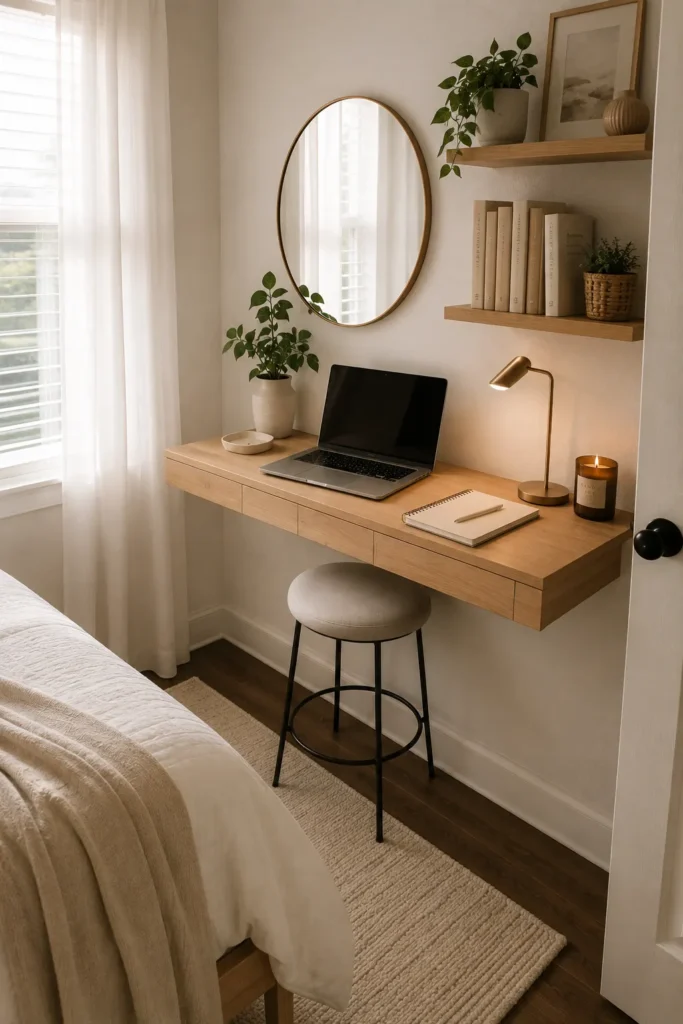
When floor space is tight, a wall-mounted floating desk is a game-changer. It holds a laptop, a lamp, and a notebook without eating into walking room, and it makes a small bedroom feel noticeably less crowded.
Pair it with a slim stool or a chair that tucks fully underneath when it’s not in use.
7. Budget-Friendly Thrifted Desk Makeover
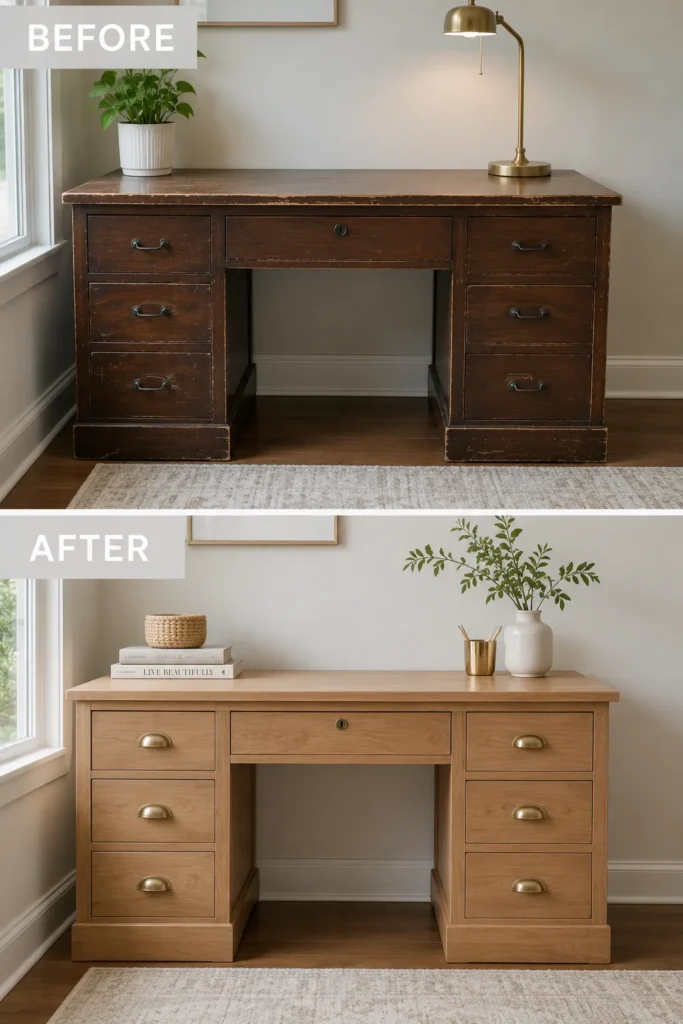
You don’t need a brand-new desk to have a nice one. Secondhand shops, marketplace listings, and even curbside finds are full of solid wood desks that just need a little love.
A light sand, a coat of paint or stain, and new drawer pulls can turn a $20 thrift find into the centerpiece of your setup — for a fraction of retail price.
8. The Corner Bookshelf + Desk Combo
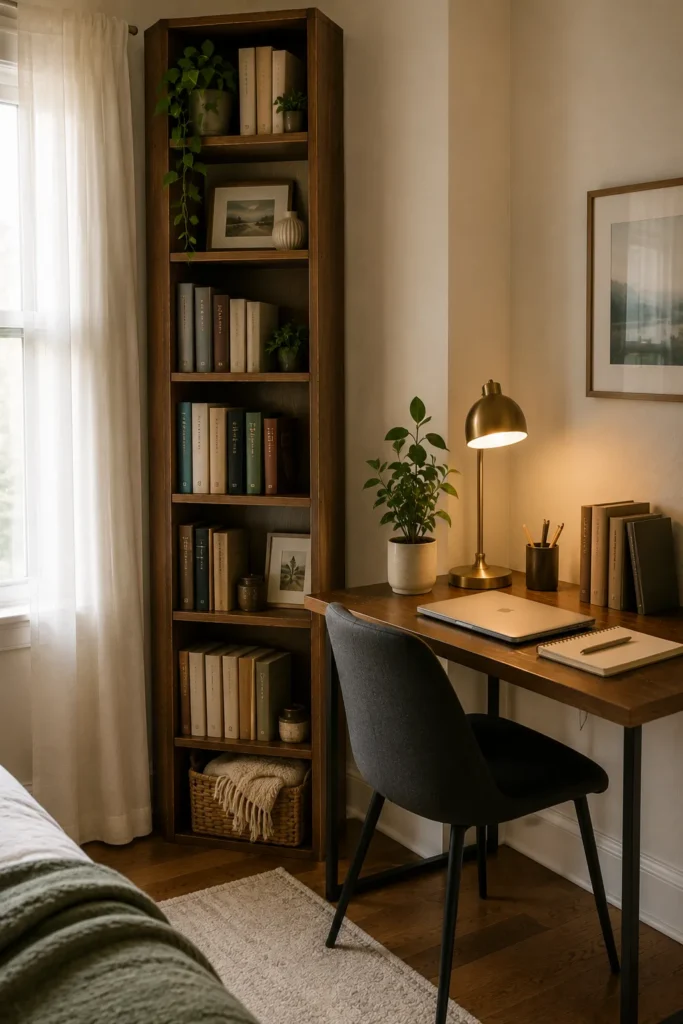
Corners are some of the most underused real estate in any room. A tall, narrow bookshelf placed at an angle in the corner, paired with a small desk tucked beside it, gives you storage and workspace without taking over the room.
This setup works especially well for textbooks, binders, and reference materials you want within arm’s reach.
9. Pegboard Wall Organization System
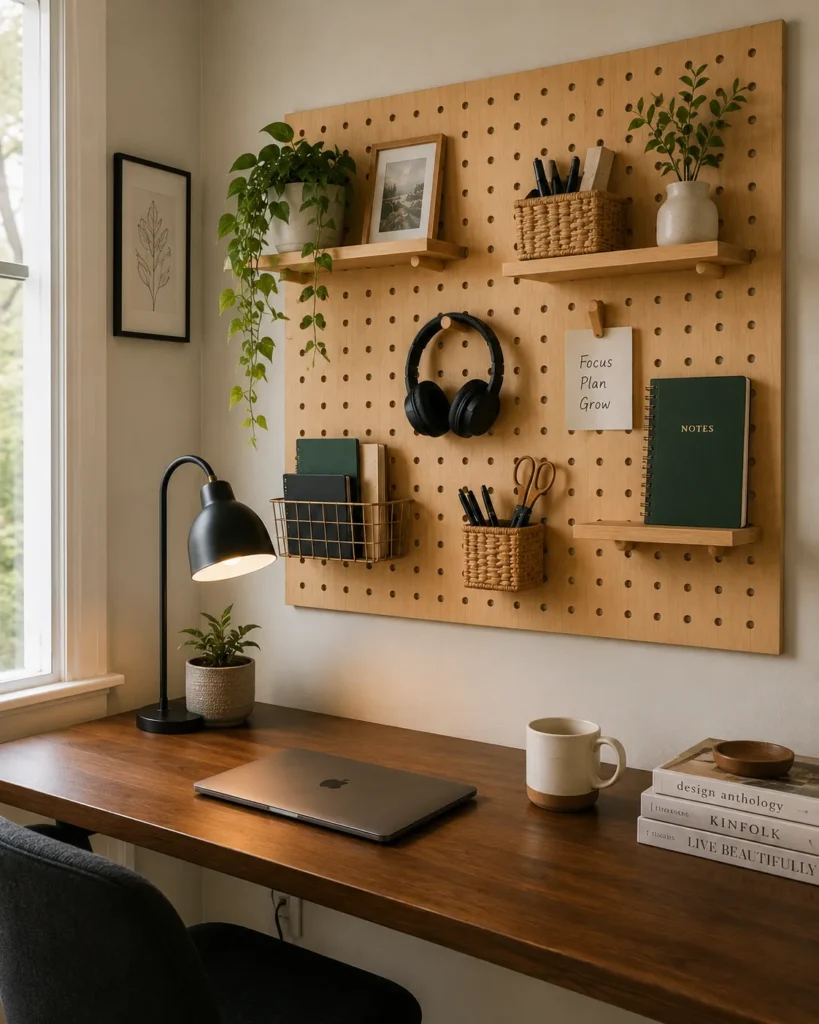
A pegboard mounted above your desk is one of the most flexible organization tools you can add to a study space, and it’s completely renter-friendly since it only needs a few small anchor points.
Hang small shelves, hooks for headphones or bags, and baskets for pens and supplies. You can rearrange it in minutes as your needs change.
10. The Dorm Room Desk Zone
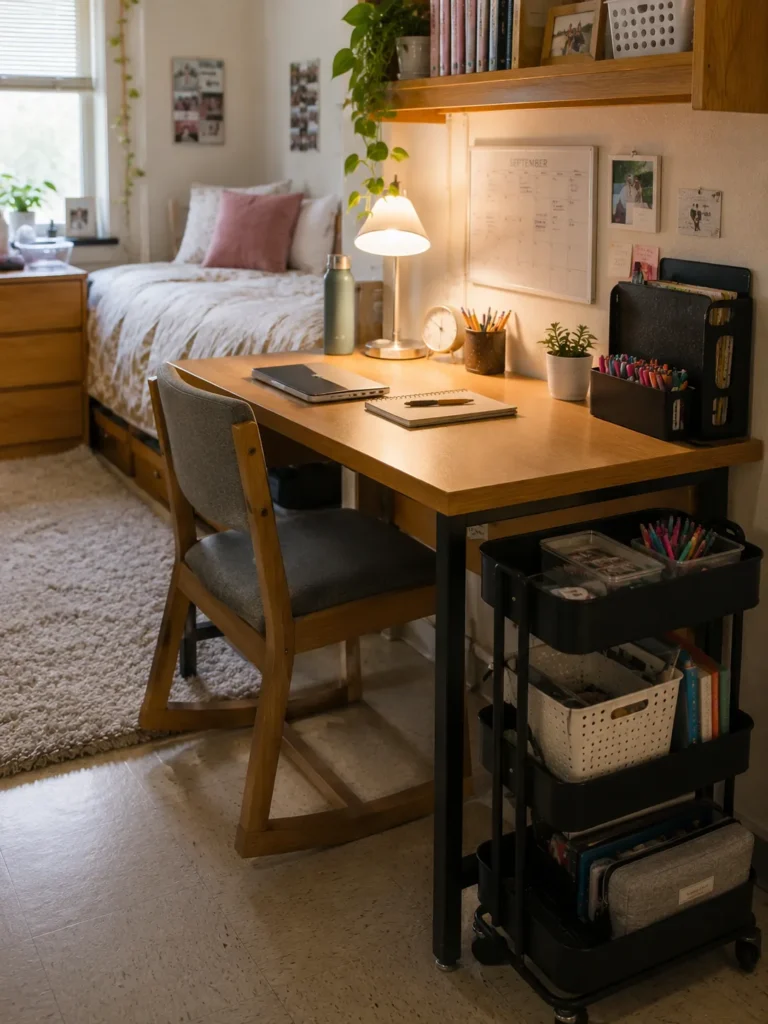
Dorm rooms come with one fixed reality: barely any square footage. Make the most of the desk you’re given by keeping it strictly for studying — not for snacks, laundry, or general overflow.
A rolling under-desk cart adds extra storage without needing extra floor space, and a desk-mounted lamp frees up surface area compared to a bulky freestanding one.
11. Command-Hook Decor for Rentals
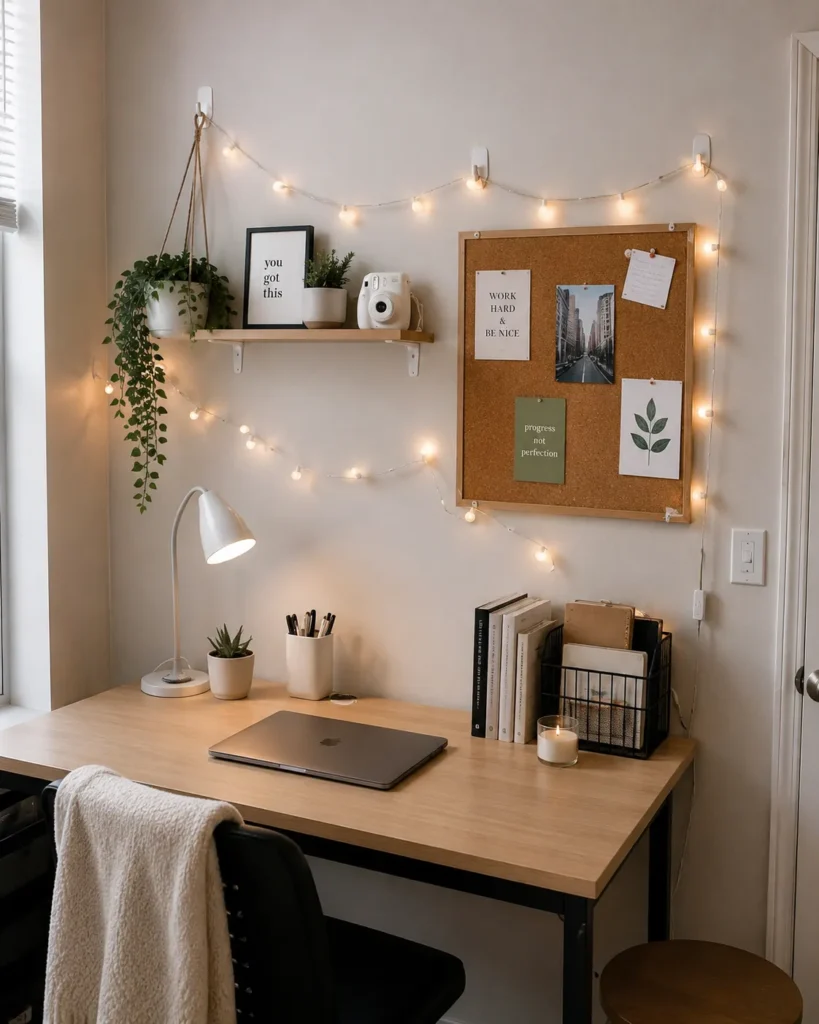
If you’re renting — a dorm, apartment, or shared house — damage-free decorating is non-negotiable. Command hooks and strips let you hang string lights, small shelves, a corkboard, or even lightweight wall art without a single nail hole.
It’s a small detail, but it means your cozy setup can move with you when your lease ends.
12. The Shared Sibling Study Table
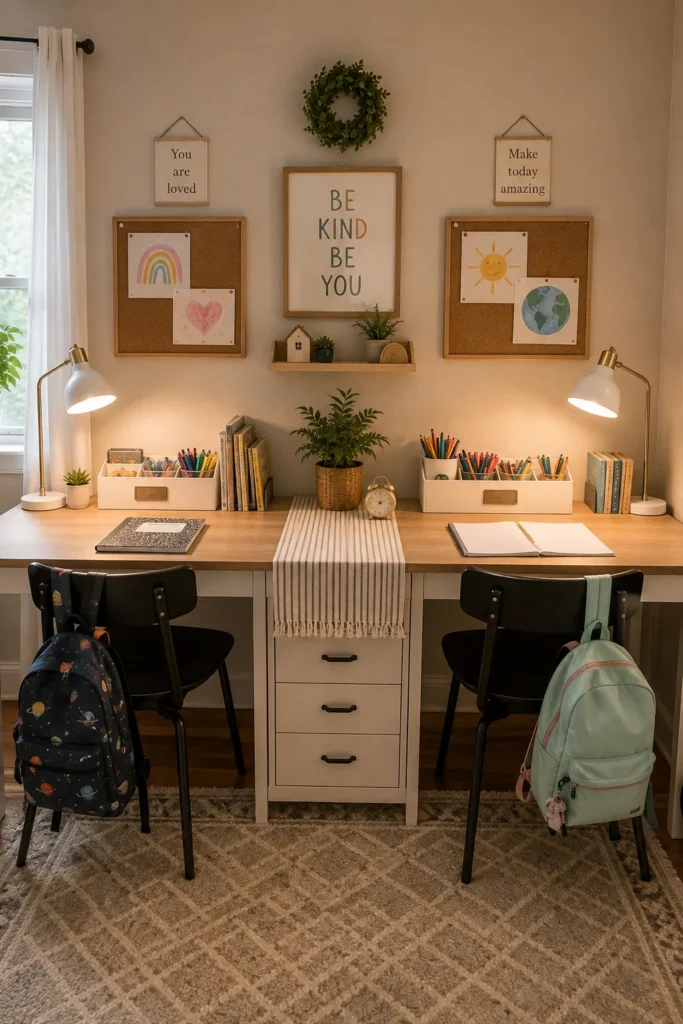
For families with two (or more) kids sharing a study space, a long table with individual zones works far better than trying to give each child a separate desk in a small room.
Use a table runner, a small divider, or even just two matching desk organizers to visually separate “his side” and “her side” — it cuts down on squabbles and keeps each kid’s supplies from migrating.
13. Chalkboard/Whiteboard Wall for Kids
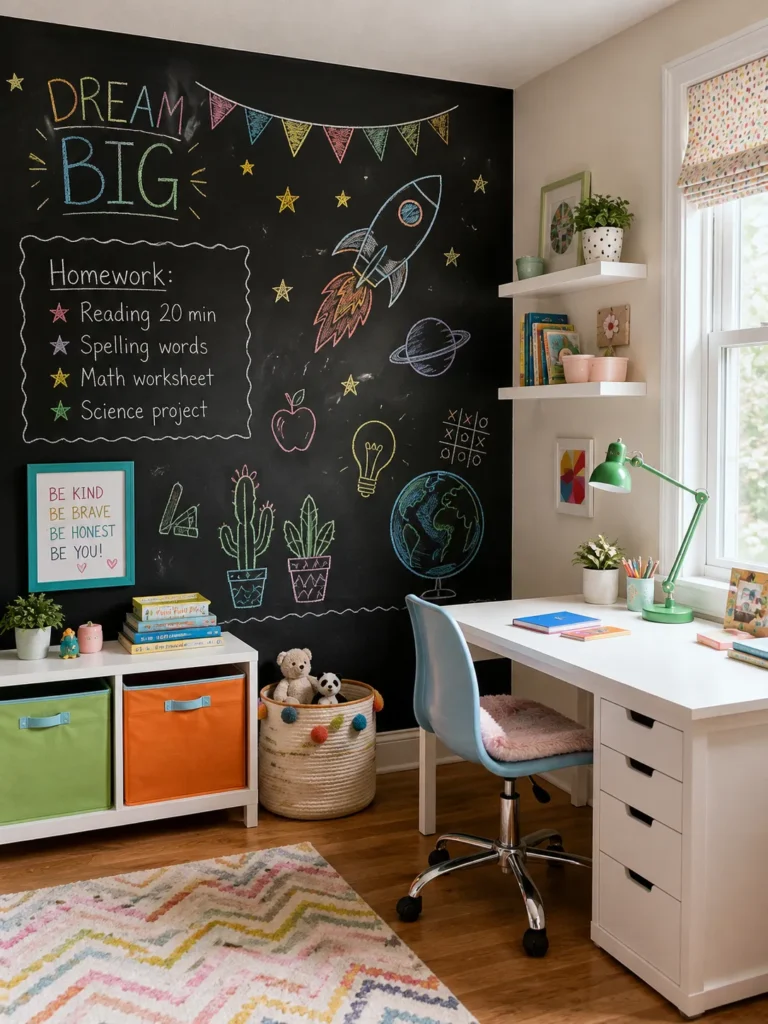
Paint one wall — or even just a large panel — with chalkboard or whiteboard paint, and you’ve created a spot for kids to work out math problems, doodle during breaks, or jot down their homework list for the week.
It also grows with them, since it’s just as useful for a first grader’s spelling words as it is for a teenager’s study notes.
14. The Reading-Break Corner
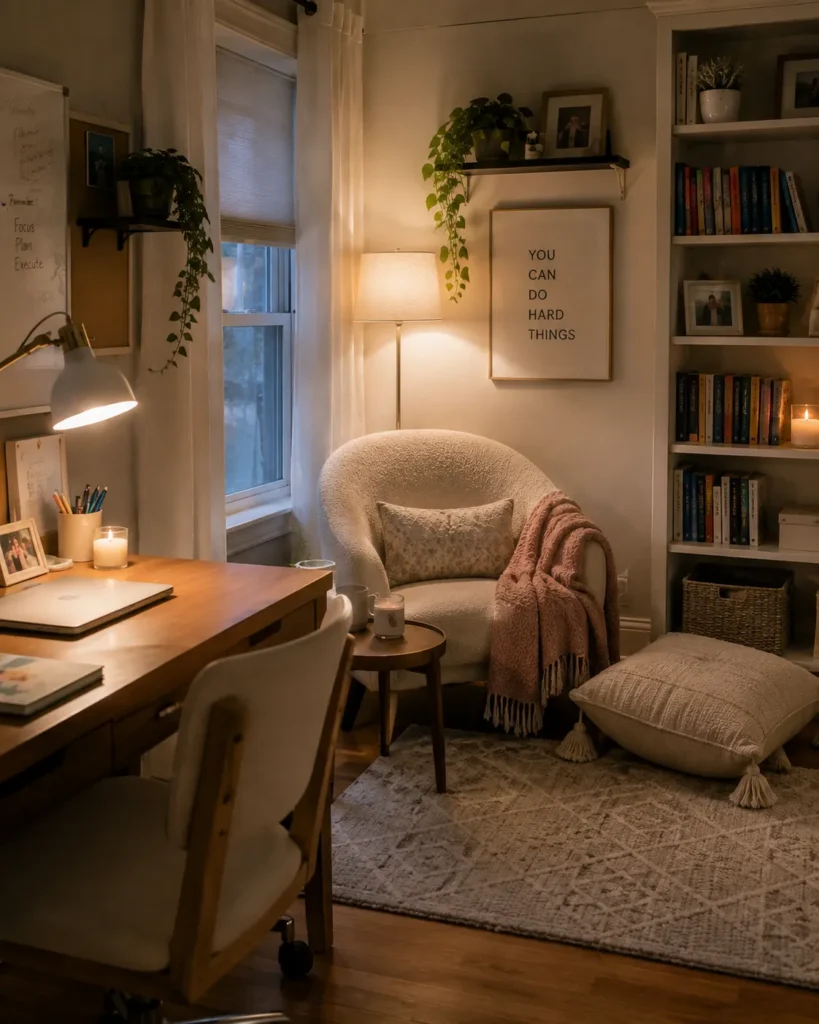
Studying in long, unbroken stretches isn’t sustainable for most people. Adding a small reading chair or a floor cushion near (but not at) the desk gives you a designated spot to step away for five or ten minutes without leaving the room entirely.
It keeps breaks intentional instead of turning into a scroll-on-the-couch situation.
15. Dark Academia Study Aesthetic
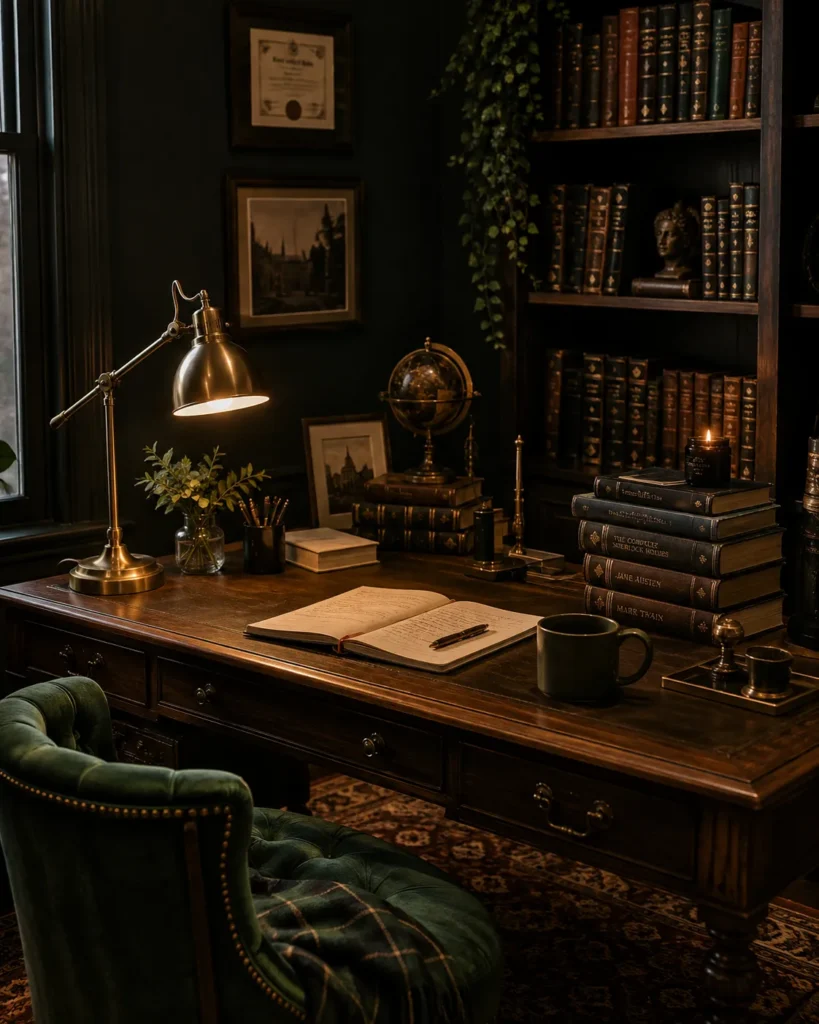
If you love a moody, book-lined, old-library feel, this aesthetic is built for you. Think deep green or burgundy accents, a wooden desk, warm brass lamp, and stacks of books used as both decor and storage.
It photographs beautifully and tends to feel instantly serious and focused — perfect if you’re someone who needs the room itself to set a “get to work” tone.
16. Japandi Minimalist Study Corner
Japandi blends Japanese minimalism with Scandinavian warmth — clean lines, neutral tones, and natural materials like light wood and linen.
Keep the desk surface nearly empty, choose one or two functional objects in muted colors, and let negative space do the work. This style suits anyone who finds visual clutter genuinely distracting.
17. Boho Study Nook with Plants
If you want your study space to feel alive, lean into greenery. A few potted plants of different heights — a trailing pothos on a shelf, a taller snake plant in the corner — bring warmth and texture without any real maintenance burden.
Pair the plants with a woven basket for storage and a rattan chair if you have the space, and you’ve got a nook that feels more like a retreat than a workstation.
18. The Pinboard Vision + Planning Wall
A cork board or pinboard above your desk isn’t just decorative — it’s functional motivation. Use it for a weekly planner printout, a calendar, a few goal cards, or even a small vision board of what you’re working toward.
It gives your eyes somewhere purposeful to land when you glance up, instead of staring blankly at a wall.
19. Cable & Charger Organization Station
Tangled cords are one of the biggest silent clutter culprits in any study space. A simple cable box or clip system routes chargers, monitor cords, and power strips out of sight.
It’s not the most exciting idea on this list, but it makes a bigger visual difference than almost anything else here — a desk with no visible cords instantly looks calmer.
Quick Tips to Personalize Your Study Space
Add a Scent Cue
A specific candle or diffuser blend used only while you study can become a mental trigger over time — your brain starts associating that scent with focus mode, which makes it easier to settle in.
Rotate Seasonal Decor
Swapping out a few small details — a cozy blanket in fall, brighter accents in spring — keeps the space feeling fresh throughout the year instead of static, without requiring a full redo.
Frequently Asked Questions
How do I make a small study space feel cozy, not cramped?
Stick to one or two furniture pieces that actually fit the footprint, use wall-mounted storage instead of floor furniture, and add texture through soft lighting and a rug rather than extra objects.
What’s the best lighting setup for a study area?
Combine natural light where possible with a warm-toned task lamp for close work, plus one ambient source like string lights or a small sconce so the room doesn’t rely on one harsh overhead bulb.
How can I create a study space in a dorm room?
Keep the assigned desk dedicated to studying only, add vertical or under-desk storage to save floor space, and use command hooks for any decor so you stay within lease rules.
What colors or aesthetics work best for focus versus comfort?
Cooler, muted tones like blue, green, and neutral wood generally support focus, while warm textiles, layered lighting, and soft textures add the comfort layer — most cozy study spaces blend both.
How do I set up a study space on a tight budget?
Start with a secondhand desk, use textiles and lighting to add warmth cheaply, and rely on command hooks and pegboards for organization instead of built-in storage.
How can I keep a shared study space organized for siblings?
Give each child a clearly defined zone with their own supplies and organizer, and use a visual divider like a table runner or small shelf to keep the space feeling fair and tidy.
Final Thoughts
You don’t need a full room, a big budget, or a total renovation to build a study space that actually works for you. Sometimes it’s as simple as adding a lamp, a plant, and a rug to a corner you already have.
Pick one or two ideas from this list that fit your space and your season of life right now, and start there. Pin your favorites, save this list for later, and build the rest as you go — your future focused self will thank you.