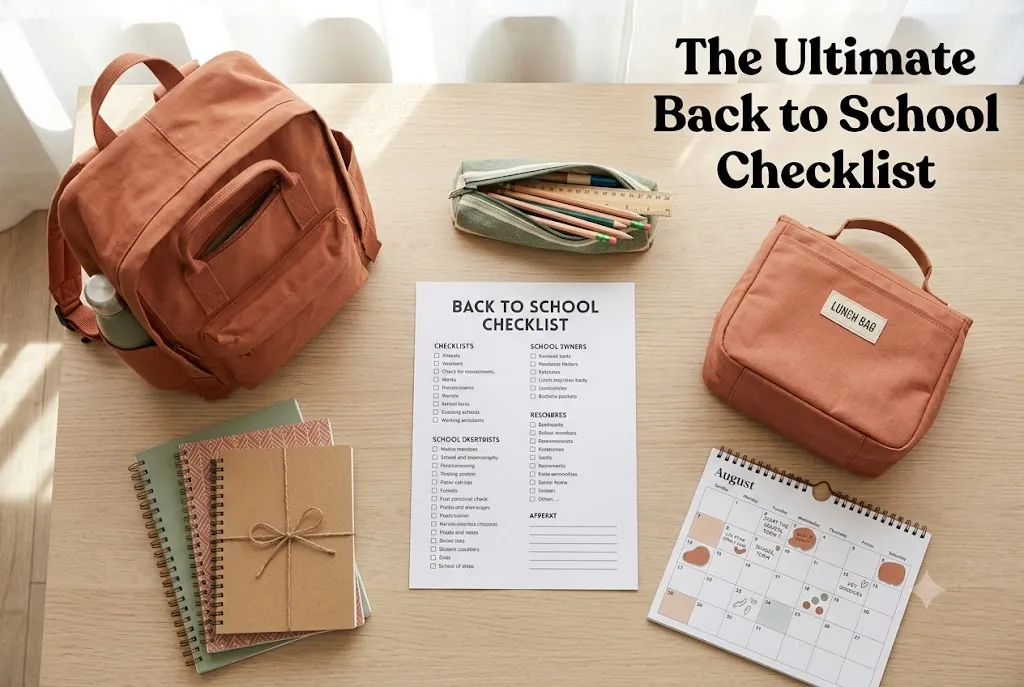
The Ultimate Back to School Checklist: Everything You Need Before Day One
Back to school season has a way of sneaking up even when you swear you saw it coming. One week you’re still in summer mode, and the next you’re standing in a school supply aisle trying to remember if your kid needs a red folder or a blue one.
The stress usually isn’t about any single task being hard. It’s about a dozen small tasks all landing at once, with no clear order to tackle them in.
This checklist fixes that by breaking everything down by timeline — what to handle weeks out, what to knock out the week before, what happens the night before, and what actually matters on the first day itself. Twenty steps, in the order you’ll actually need them.
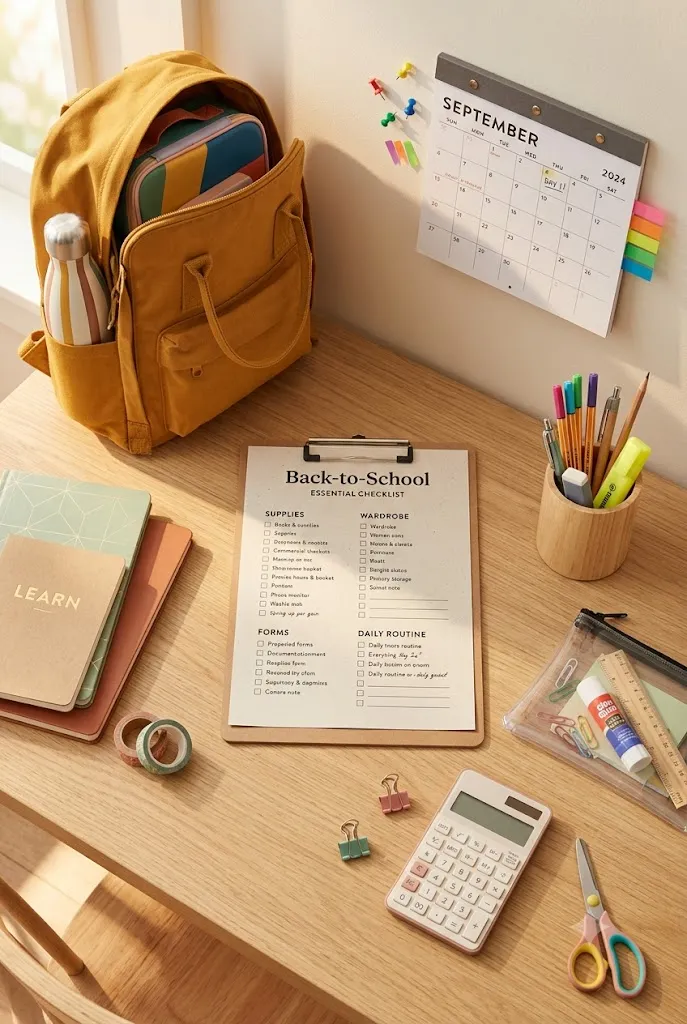
How to Use This Back to School Checklist
Before diving in, it helps to know how to actually use a checklist like this so it works with your family instead of adding more pressure.
Starting early vs. starting late — what actually matters
Starting early doesn’t mean doing everything early. It means spreading tasks out so nothing piles up into one overwhelming weekend right before school starts.
If you’re reading this later than planned, don’t panic — most of these tasks can be compressed into a shorter window if needed. The order matters more than the exact timing.
Involving your child in the process
Kids who help pack their own backpack or pick out their own folders tend to feel more prepared and less anxious about the first day. Even young kids can handle small, age-appropriate parts of the process, like placing pencils in a pencil case or choosing between two outfit options.
This isn’t just about saving you time — it genuinely builds a sense of ownership that carries into the school year.
3–4 Weeks Before School: Early Prep
This is the window for tasks that benefit from lead time — appointments, budgeting, and anything that would be stressful to rush.
Related : 15 School Morning Routine Ideas for a Stress-Free Start to Every Day
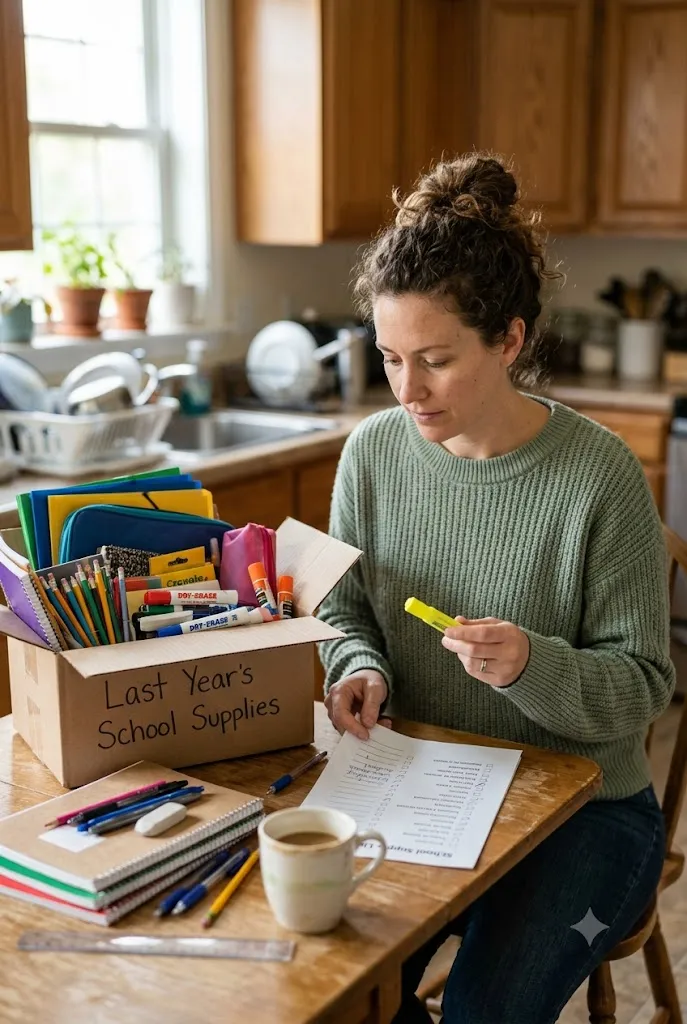
1. Review Last Year’s Supplies Before Buying New
Before adding anything to your shopping list, dig through last year’s supplies to see what’s still usable. Half-used glue sticks, barely-worn folders, and extra pencils often get forgotten and rebought unnecessarily.
This single step can meaningfully cut down your shopping list and your total spend.
2. Check the OfficialBack to School Checklist Supply List
Every school (and often every teacher) has slightly different requirements, so pulling the official list before shopping saves you from buying the wrong item twice. Cross-reference it against what you found in step one so you’re only shopping for genuine gaps.
If the list isn’t out yet, check your school’s website or ask the front office roughly when to expect it.
3. Schedule Physicals & Immunization Appointments
Doctor’s offices get busy fast once back-to-school season hits, so booking physicals and immunization appointments early avoids the scramble for a last-minute slot. This is also the window to request any paperwork your school requires, like updated vaccination records.
Booking now means you’ll have results and forms in hand well before the deadline, not the night before they’re due.
4. Start a Gradual Sleep Schedule Shift
Shifting bedtime and wake time by about 15 minutes every few days makes the transition to an early school schedule far less jarring than switching all at once. Starting this three to four weeks out gives your child’s body clock enough time to adjust naturally.
Pair the shift with a consistent wind-down routine so the earlier bedtime actually sticks.

5. Set a Back to School Checklist Budget
Deciding on a total budget before you start shopping helps you prioritize the essentials first and treat extras, like themed folders or a new backpack, as a separate decision. Breaking the budget down by category — supplies, clothing, shoes — makes it easier to see where costs are adding up.
This step also makes it much easier to say yes or no to in-store impulse buys once you’re actually shopping.
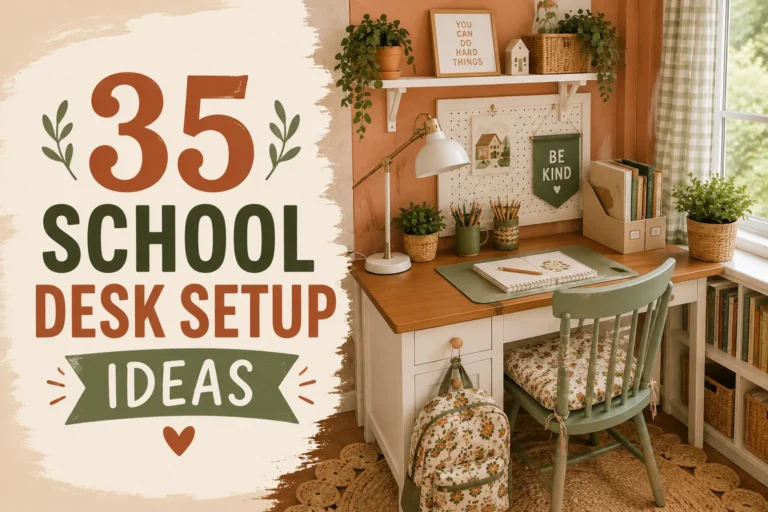
6. Refresh the Home Study Space
Before the school year gets busy, take a look at your child’s homework or study area and handle anything that needs attention — a burnt-out desk lamp, a chair that’s been outgrown, supplies that need restocking. A few weeks of lead time means you’re not scrambling to fix a broken chair the same week homework starts.
This is also a good moment to declutter the space so it’s ready to go from day one, rather than needing a reset a few weeks into the year.
1–2 Weeks Before School: Getting Closer
With the early prep handled, this window is about closing gaps and locking in the details that make the first week smoother.
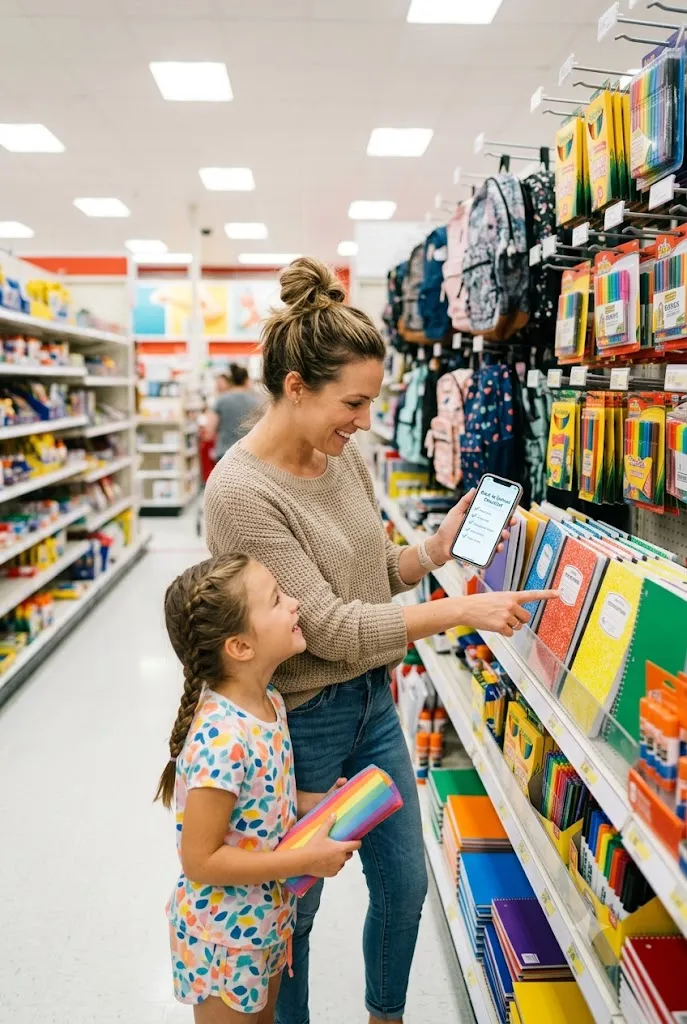
7. Shop the Remaining Supply Gaps
With your inventory and the official list both in hand, this is the time to shop for whatever’s actually still missing, rather than buying blind. Shopping slightly later than the very first back-to-school displays often means better stock of the exact items on your list, since early shoppers have cleared out popular picks.
Bring your list with you (or keep it on your phone) so you’re not relying on memory in a busy store.
8. Try On & Sort Clothing/Uniforms
Kids grow over the summer, so trying on last year’s clothes or uniforms before school starts catches sizing issues while there’s still time to shop for replacements. Sort into “still fits,” “needs replacing,” and “grown out of” piles to make shopping efficient.
This step also surfaces worn-out shoes or jackets before the first cold morning catches you off guard.
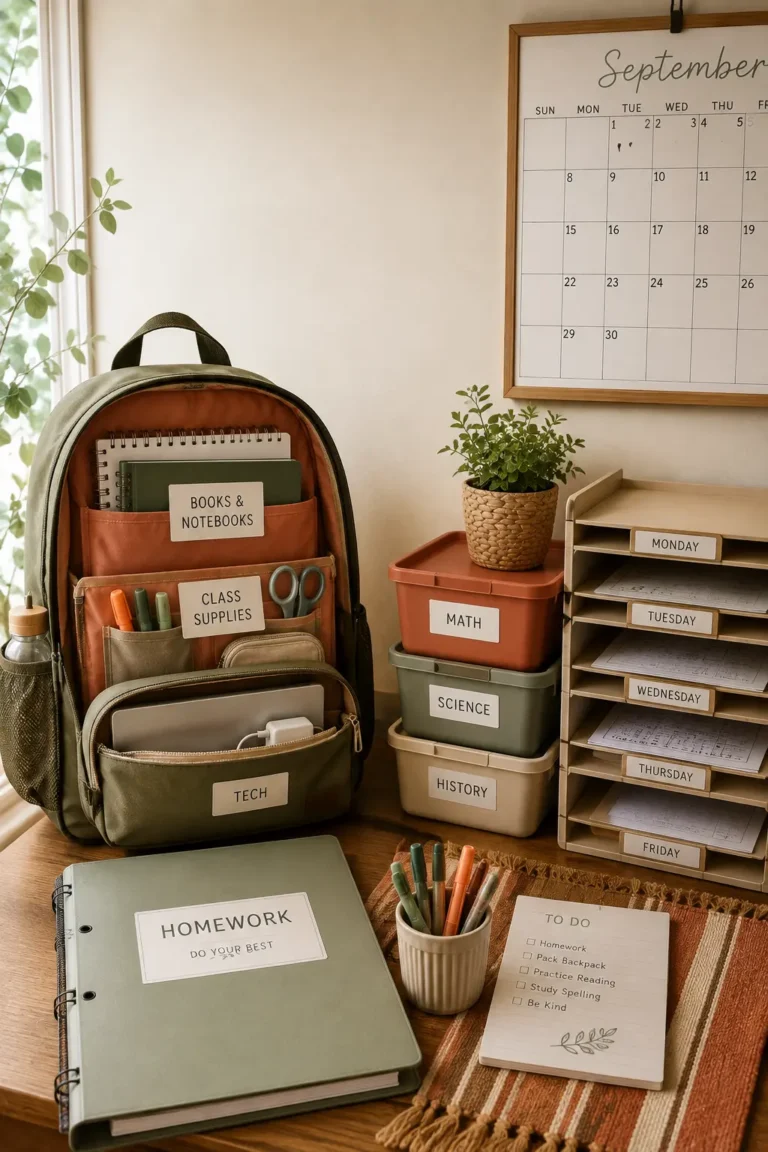
9. Label Backpacks, Lunch Gear & Supplies
Labeling backpacks, lunch boxes, water bottles, and even individual supplies like scissors or a calculator makes it far easier for lost items to find their way back to the right kid. This matters even more for younger kids or in classrooms where several students have identical supplies.
Iron-on labels, sticker labels, or simply writing directly on items all work — the goal is just making ownership obvious.
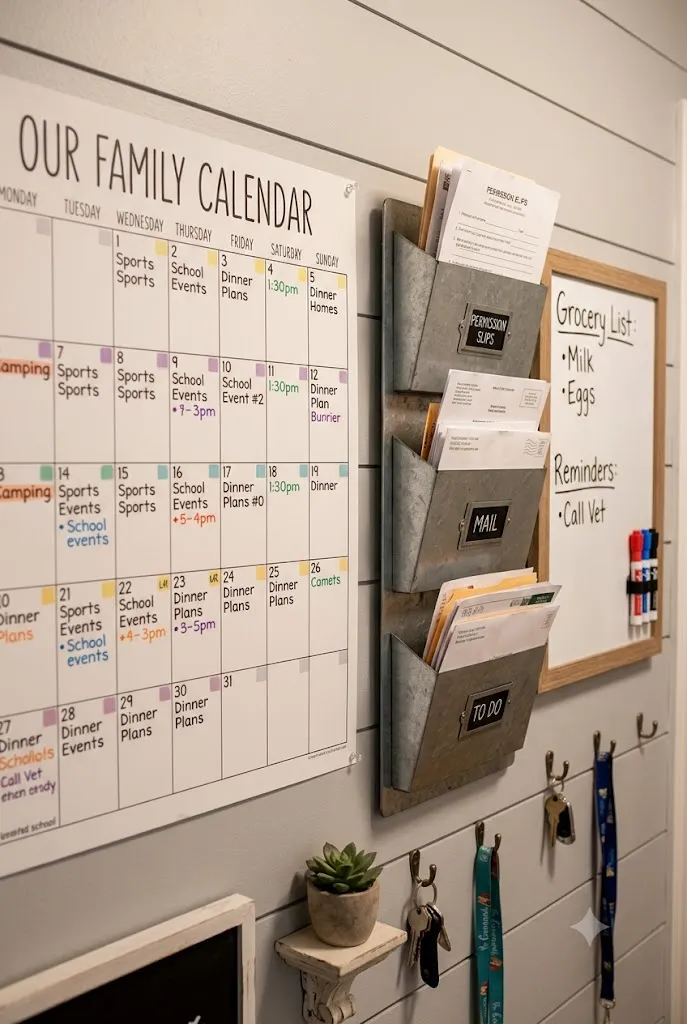
10. Set Up a Family Command Center
A dedicated wall space with a calendar, a spot for permission slips, and a place to post the school schedule keeps everyone in the family on the same page once the year gets underway. Setting this up before school starts means it’s ready to go from the very first form that comes home.
Keep it somewhere high-traffic, like near the kitchen or the door, so nobody has to go looking for it.
11. Plan the First Week’s Outfits
Deciding on outfits for the first several days of school, rather than just the first day, prevents a repeat scramble on day two or three. Lay out or hang the choices together so mornings stay simple during the first, most chaotic week.
Involve your child in choosing, especially if they have any say in personal style — it tends to reduce first-week wardrobe complaints.
12. Review School Logistics (Drop-off, Bus, Schedule)
Confirming drop-off procedures, bus routes and pickup times, and the daily schedule ahead of time prevents confusion on a morning when everyone’s already a little nervous. If it’s a new school, consider doing a practice drive or walk of the route beforehand.
This is especially worth doing carefully for kindergarteners or students starting at a brand-new school.
The Night Before School
The night before is where small preparations pay off the most, turning a potentially chaotic morning into a calm one.
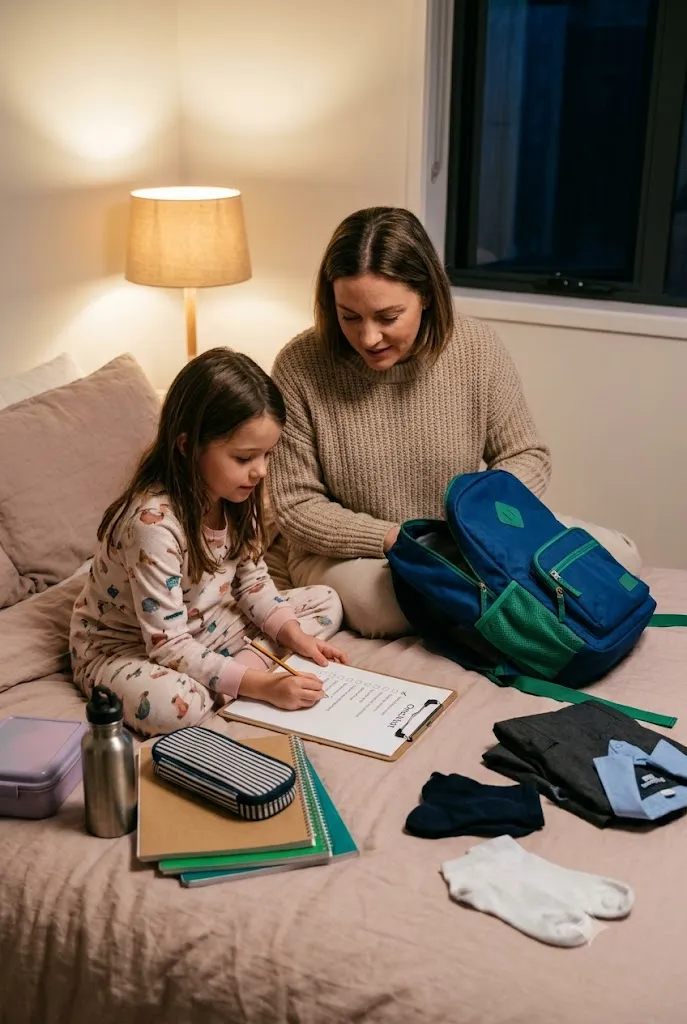
13. Pack the Backpack Together
Packing the backpack together the night before — checking that folders, notebooks, and any signed forms are inside — means nothing gets left behind in a rushed morning search. Let your child do as much of this as their age allows, even if it’s just double-checking the final result.
This is also a natural moment to double-check that any homework or forms due on day one made it into the bag.
14. Prep Lunch & Set Out the Lunch Bag
Packing lunch the night before, or at least prepping what can be made ahead, saves real time on a morning that’s often tighter than expected. Set the finished lunch bag by the door or in the fridge, ready to grab on the way out.
Even partial prep — washing fruit, portioning snacks — makes the morning assembly faster.
15. Lay Out the First-Day Outfit
Laying out the full outfit, including shoes and any accessories, removes one more decision from an already busy morning. This also gives you a chance to catch any last-minute issues, like a missing sock or a stain nobody noticed until now.
For younger kids, laying clothes out in the order they’ll be put on can make dressing themselves easier too.
16. Do a Calming Wind-Down Routine
A predictable, calming bedtime routine — reading, a bath, quiet conversation — helps settle first-day nerves and supports a better night’s sleep. This is also a good time for a brief, low-pressure conversation about what to expect the next day.
Keeping the routine familiar, rather than introducing anything new the night before school starts, tends to work best.
The First Day of School
The big day itself is less about last-minute prep and more about keeping the morning calm and the transition smooth.
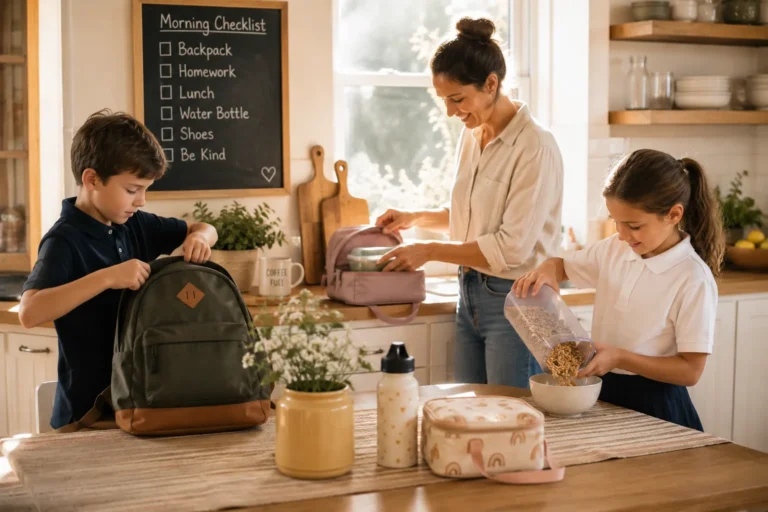
17. Morning Checklist for a Calm Start
Waking up with a little extra time built in, rather than cutting it close, sets a calmer tone for the whole morning. A quick final check — backpack by the door, lunch in hand, shoes on — helps catch anything missed the night before.
Building in buffer time is especially valuable on this particular morning, since delays feel far more stressful on day one than they will later in the year.
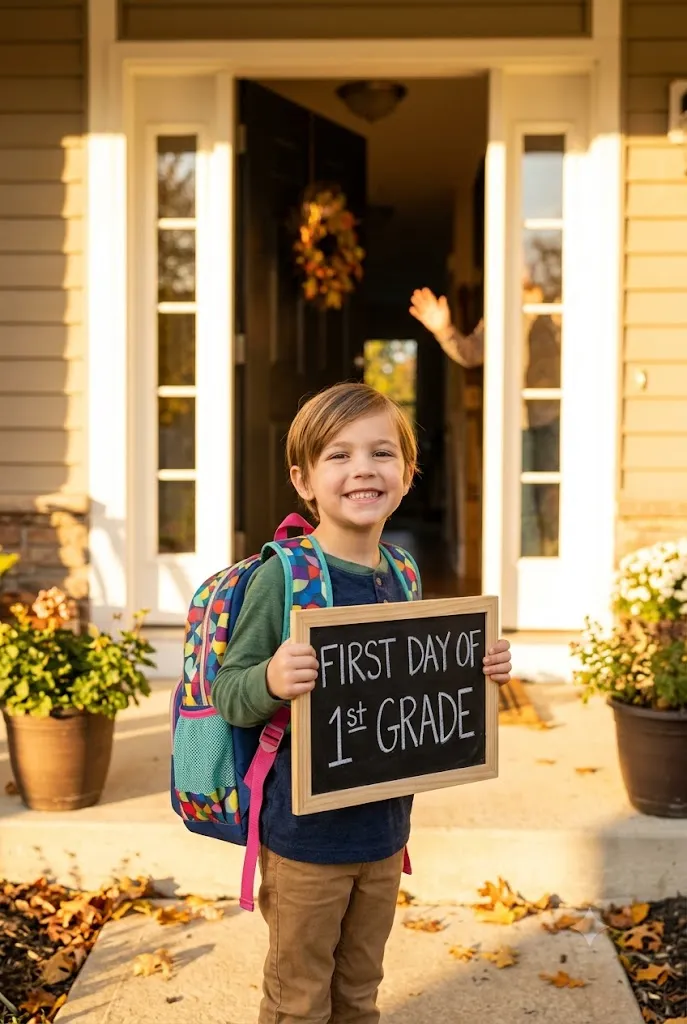
18. First-Day Photo & Memory Tradition
A quick first-day photo, whether it’s a simple front-porch picture or a small sign with the grade and year, is a tradition many families keep up for the whole time their child is in school. It takes barely a minute but becomes a meaningful record over the years.
Keep it simple and low-pressure — this isn’t the moment for an elaborate setup if your child (or you) are already running behind.
19. After-School Check-In Routine
Greeting your child with genuine interest when they get home, and asking open-ended questions about their day, helps you learn how the first day actually went beyond a simple “fine.” Questions like “what was something new you saw today?” tend to get more detail than “how was school?”
This small daily habit, started on day one, sets the tone for ongoing communication throughout the year.
The First Week Follow-Through
Getting through day one is a milestone, but the real test of any system is whether it holds up once the routine actually starts.
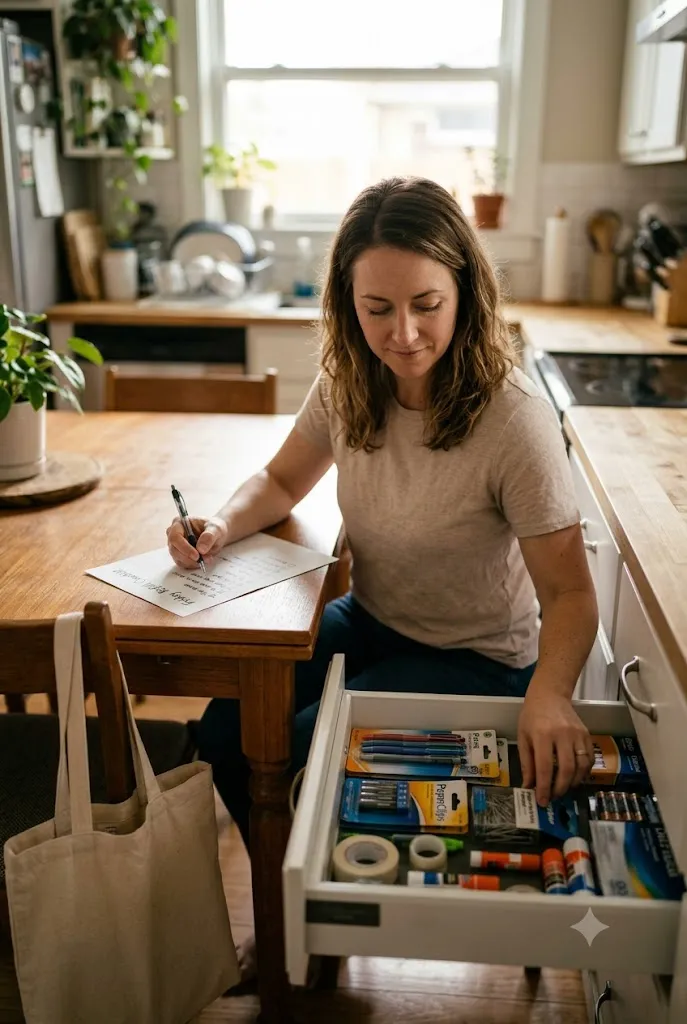
20. End-of-Week Reset & Adjustment Check
At the end of the first week, take stock of what worked and what didn’t — a supply that’s already running low, a routine that felt rushed, a system that needs adjusting. This is also the time to check in with your child about how the week actually felt, beyond the excitement of day one.
A quick Friday reset, repeated through the first month, keeps small issues from becoming bigger ones once the school year is in full swing.
Related : Back to School Ideas: Your Complete Guide for an Organized, Stress-Free School Year
Frequently Asked Questions
How far in advance should back-to-school prep start?
Starting three to four weeks before school begins gives you enough time to spread out tasks like appointments, budgeting, and sleep schedule adjustments without feeling rushed. If you’re starting later than that, most of this checklist can still be compressed into a shorter window — just prioritize the appointments and supply list first.
What are the most commonly forgotten back-to-school items?
Updated emergency contact forms, specific supply requests from individual teachers (rather than just the general school list), and backup supplies for mid-year restocking are among the most commonly overlooked items. Double-checking both the general list and any classroom-specific requests helps catch these gaps early.
How do I keep back-to-school shopping on budget?
Setting a total budget before shopping, reviewing what you already own first, and separating “needs” from “extras” are the most effective ways to avoid overspending. Shopping with a specific list in hand, rather than browsing store displays, also cuts down significantly on impulse purchases.
How can I help an anxious child feel ready for the first day?
Open, low-pressure conversations about what to expect, paired with involving your child in the preparation process, tend to ease first-day anxiety more than reassurance alone. Familiar routines — a predictable bedtime, a practiced morning schedule — also provide a sense of stability during an otherwise new experience.
What should I do if my child forgets something on the first day?
Most schools are used to first-day hiccups and usually have a way to handle a forgotten item, whether that’s calling the office or checking with the teacher. If it happens, treat it as a normal learning moment rather than a big problem — it’s a good opportunity to talk through what might help prevent it next time, like using the backpack checklist from the night before.
Final Thoughts
A smooth back-to-school season isn’t about doing everything perfectly — it’s about spreading the right tasks across the right amount of time so nothing lands all at once. Working through this checklist in order, rather than trying to tackle it all in one weekend, makes the whole process feel far more manageable.
Start with whichever section matches where you are right now, whether that’s the early planning stage or the night-before scramble, and work through the rest as the days count down. By the time the first week wraps up, you’ll have a system in place that carries you well past day one.