35 School Desk Setup Ideas for Every Space, Age & Budget
If you’ve ever tried to find real school desk setup inspiration online, you’ve probably noticed a problem. Half the results are classroom seating charts meant for teachers. The other half are pretty photos with zero explanation of how to actually pull them off at home.
This list is different.
Every idea here is built for real houses — the ones with small bedrooms, shared kids’ rooms, tight budgets, and desks that need to survive an entire school year without falling apart. Whether you’re working with a walk-in closet, a corner of the playroom, or a hand-me-down desk from Craigslist, you’ll find a setup that fits.
Let’s get your kid’s workspace ready.
How to Choose the Right School Desk Setup Ideas for Your Space
Before you start pinning ideas or buying bins, it helps to get clear on two things: your space and your kid.
Measuring your space before you shop or DIY
Grab a tape measure before you fall in love with a Pinterest photo. Measure the width and depth of the area you’re working with, and note where outlets, windows, and doors are.
A desk that looks perfect online can be completely wrong for a 24-inch-deep closet or a room with the door swinging the wrong way. Five minutes of measuring now saves you a return trip to the store later.
Matching the setup to your child’s age and study habits
A kindergartner and a 15-year-old need very different things from a School Desk Setup. Younger kids need open, supervised spaces with big bins and simple systems. Older kids need privacy, better lighting, and room for a laptop and charger.
Keep this in mind as you scroll — the setup that works for one kid in your house might not work for another, and that’s completely normal.
Small Space & Bedroom Corner School Desk Setup Ideas
Not every home has a spare room for a study. These ideas work in tight bedrooms, awkward corners, and rooms with very little floor space to spare.
1. The Closet School Desk Setup Nook
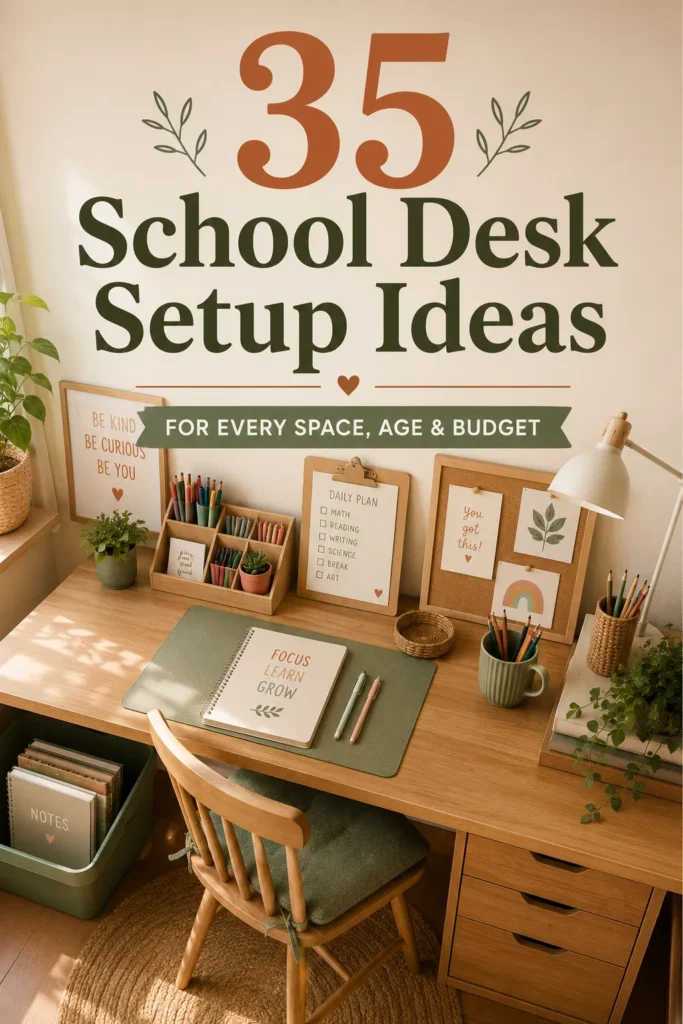
Pull the doors off an unused closet and slide in a small desk, a chair, and a shelf above for books. Keep the closet’s original shelving if it’s still useful for supply storage.
This works especially well in bedrooms with reach-in closets that are too small for hanging clothes anyway. Add a battery-operated puck light or a plug-in sconce since closets rarely have great overhead lighting.
2. Under-the-Window School Desk Setup
Position a slim desk directly under a window to take advantage of natural light — one of the easiest ways to make a study space feel less like an afterthought. Natural light also cuts down on eye strain during homework time.
Skip bulky curtains that block the view and stick with a simple roller shade instead. This setup works especially well in bedrooms where floor space is limited but there’s a full wall of window.
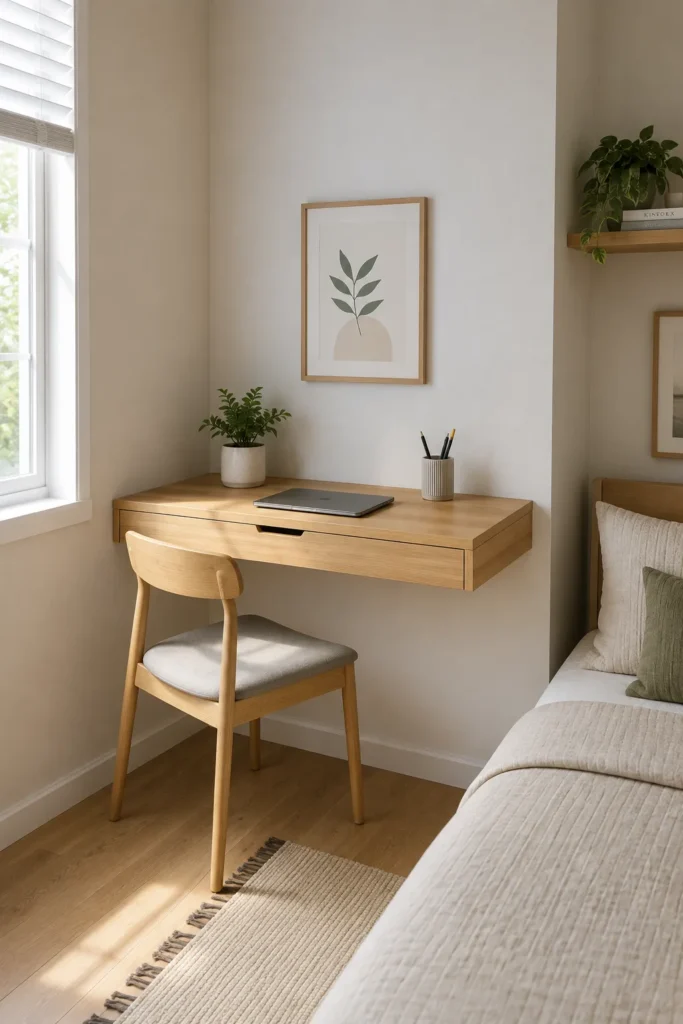
3. Corner Floating School Desk Setup for Tight Bedrooms
Related : 25 DIY Teacher Appreciation Gifts Teachers Will Truly Love
A wall-mounted corner desk uses dead space that would otherwise sit empty, and it leaves the floor completely open underneath. Look for a floating School Desk Setup bracket rated for at least 100 lbs so it can handle books, a laptop, and daily use.
This is one of the best options for shared kids’ rooms where every square foot of floor space matters for play and storage.
4. Wall-Mounted Fold-Down School Desk Setup
A fold-down or “murphy” desk mounts flush to the wall and folds up when it’s not in use, which makes it ideal for very small bedrooms or playrooms doing double duty as a study space. Many models include a small chalkboard or cork panel on the front when folded up.
Keep supplies in a nearby wall-mounted caddy so nothing gets trapped inside when the desk folds closed.
5. Under-the-Loft-Bed Study Station
If your child already has a loft or bunk bed, the space underneath is often wasted. Slide a compact desk into that footprint and you’ve created a study nook without giving up an inch of extra room.
Add a small area rug underneath to define the space and make it feel cozy rather than cave-like.
6. Hallway or Landing School Desk Setup Nook
An unused stretch of hallway or a stair landing can become a surprisingly functional desk spot, especially in homes without a spare bedroom. A shallow console-style School Desk Setup (12–16 inches deep) fits without blocking foot traffic.
This setup works best for quick homework sessions rather than all-day studying, since hallways tend to be busier and noisier.
7. Rolling Cart Desk for No-School Desk Setup Rooms
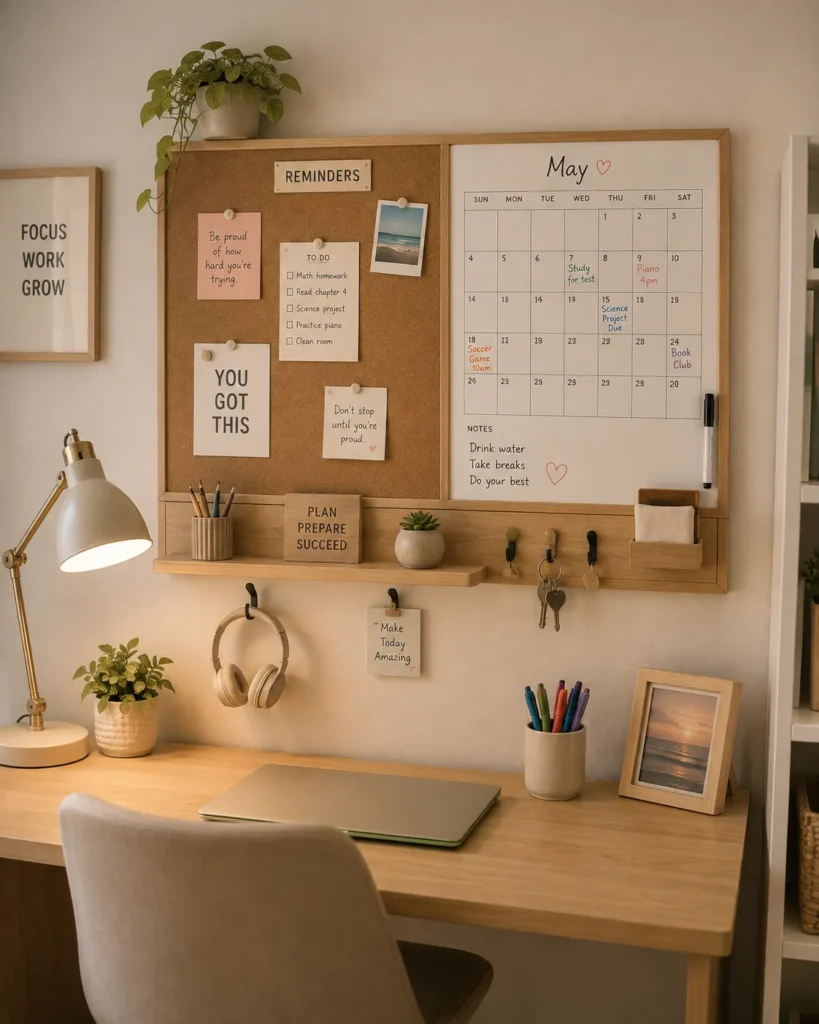
If there’s genuinely no room for a permanent desk, a rolling utility cart with a flat top can act as a mobile School Desk Setup that tucks away in a closet when it’s not needed. Look for a cart with at least one shelf underneath for supply storage.
This is a smart option for families in apartments or smaller homes where flexibility matters more than a fixed setup.
Budget-Friendly & DIY School Desk Setup
You don’t need a big budget to build a workspace your kid will actually use. These setups rely on things you may already own, plus a little creativity.
8. Repurposed Dresser-Top Desk
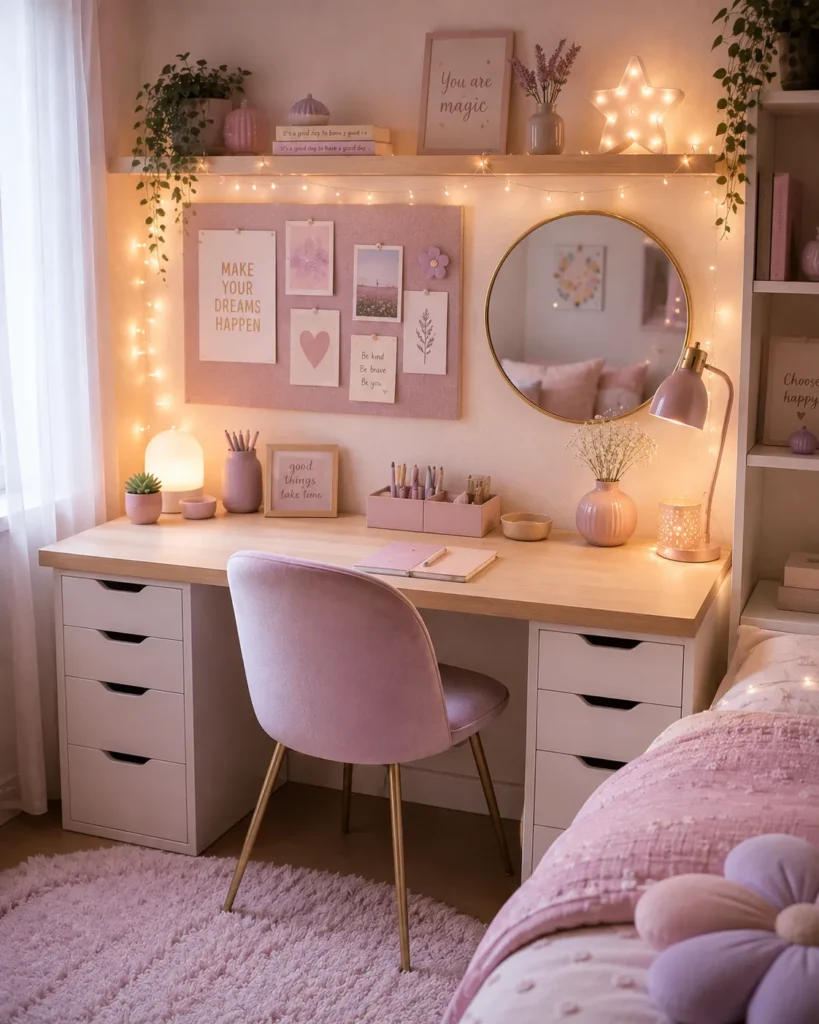
An old dresser can double as a desk with the simple addition of a chair that matches its height (roughly 28–30 inches works for most dressers). The drawers underneath become built-in storage for supplies, so you skip buying separate organizers entirely.
Consider this option first if you already have a dresser sitting unused in a guest room or garage.
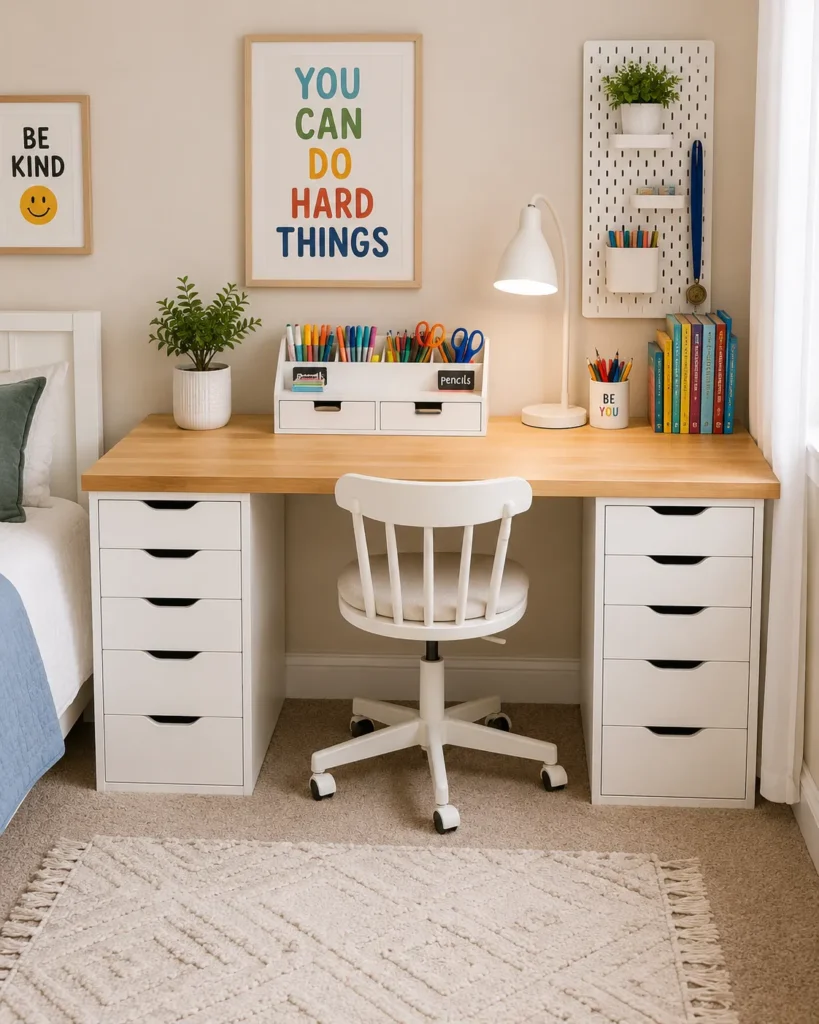
9. IKEA Hack School Desk Setup on a Budget
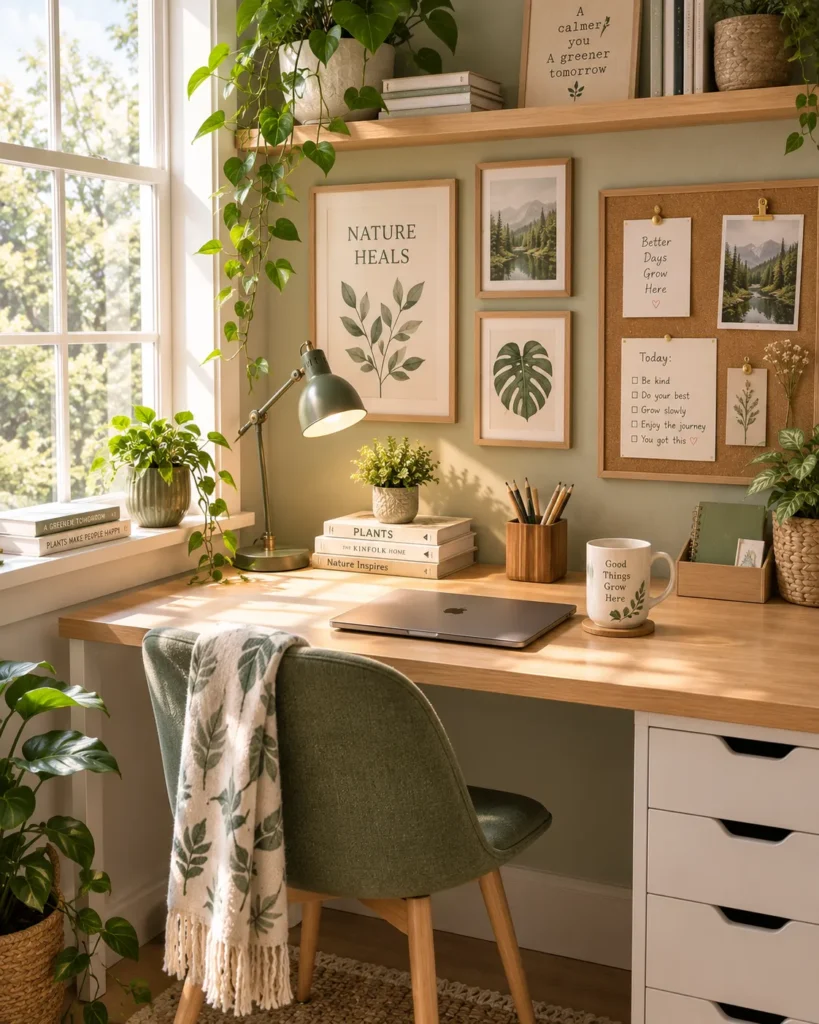
Combine two IKEA ALEX drawer units with a tabletop or a LINNMON top to build a sturdy, storage-packed desk for well under $150. The drawer units alone give you six or more compartments for supplies without buying a single extra organizer.
It’s a popular combination for good reason — easy to assemble, easy to reconfigure later, and durable enough to survive years of daily use.
10. Thrifted Table Makeover School Desk Setup
A secondhand table from a thrift store or yard sale can become a one-of-a-kind desk with a coat of paint and new hardware. Sand the surface lightly, prime it, and use a chalk or mineral paint for the easiest no-fuss finish.
Prioritize solid wood pieces over particleboard — they sand and repaint far better and will last through multiple school years.
11. Plywood & Sawhorse DIY School Desk Setup
For a truly custom size, cut a piece of ¾-inch plywood to fit your space and set it on two adjustable sawhorse legs. This approach is ideal for awkward nooks where standard desk sizes just don’t fit.
Sand the edges smooth and finish with a wipe-on polyurethane so it’s durable enough for daily homework and craft projects.
12. Peel-and-Stick Desk Refresh (No-Sew, No-Paint Upgrades)
If a full DIY build isn’t in the cards, peel-and-stick contact paper can transform a plain desk surface in under an hour. Wood-grain, marble, and solid color options all work well and can be swapped out again later if your child’s taste changes.
This is the fastest, most beginner-friendly way to make a boring desk feel brand new.
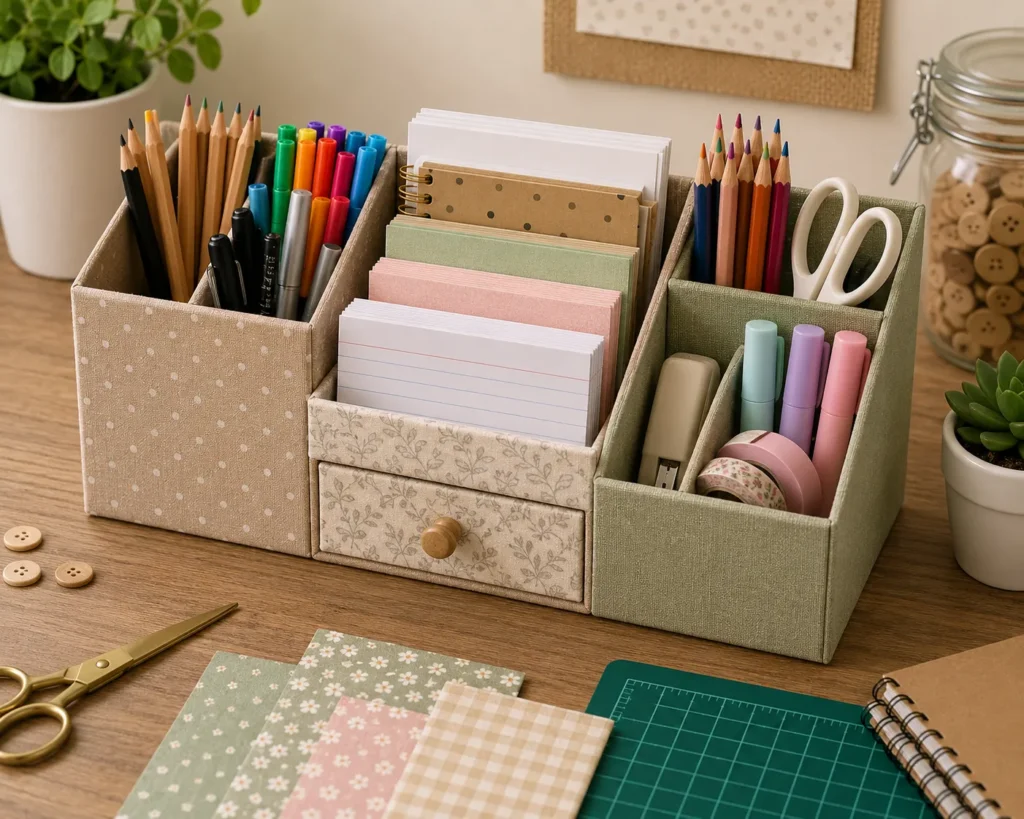
13. Cardboard & Fabric Desk Organizer DIY
Turn cereal boxes or shipping boxes into custom desk organizers by cutting them to size and wrapping them in fabric or contact paper using a hot glue gun. You can build compartments in exactly the sizes your child’s supplies need — no store-bought organizer will ever fit as precisely.
This project also doubles as a fun weekend craft to do together before the school year starts.
14. Dollar-Store Desk Accessory Hacks
Mason jars, small baskets, and plastic bins from the dollar store can be grouped together to organize an entire desktop for under $20. Spray paint the containers in one cohesive color for a pulled-together look that doesn’t scream “budget.”
This is the easiest starting point if you’re not ready to commit to a full desk makeover yet.
Shared Desk Setups for Siblings
When two or more kids need desk space in one room, the goal is giving each child a sense of ownership without needing double the square footage.
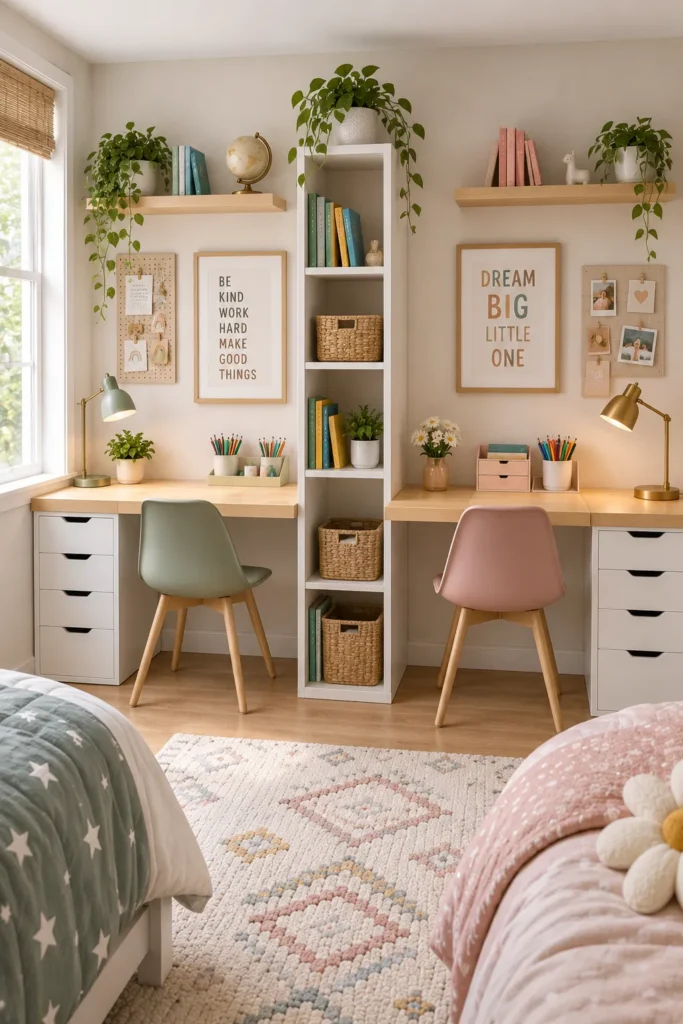
15. Back-to-Back Sibling Desk Layout
Place two desks back-to-back in the center of a shared room so each child faces outward toward their own wall. This setup naturally reduces distraction since siblings aren’t looking directly at each other while working.
It also makes efficient use of a room’s center, which is often wasted space in kids’ bedrooms.
16. Long Shared Desk with Divided Zones
A single long desk or countertop-style surface can serve two kids at once when you add a visual divider, like a small bookshelf or a strip of washi tape marking each child’s half. This works well for twins or siblings close in age who don’t mind sitting side by side.
Assign each child their own drawer or bin so supplies don’t get mixed up or argued over.
17. His-and-Hers Color-Coded Twin Desks
Buy the same desk model twice, then personalize each one with a different accent color for chairs, organizers, and supplies. This keeps the room visually cohesive while still giving each child their own identity within the space.
Color-coding also makes it easy for younger kids to know at a glance which supplies belong to whom.
18. Stackable Bunk-Style Desk System
Some bunk bed and loft systems include a built-in desk on the lower level, which is worth considering if you’re furniture shopping for a shared room. If you already own bunk beds without this feature, a slim desk tucked alongside the frame can achieve a similar effect.
This setup is especially space-efficient for smaller shared bedrooms with two kids and limited floor space.
19. Rotating “Homework Table” for Multiple Kids
Instead of individual desks, some families do better with one central table in a common area, like a kitchen nook or playroom, where kids rotate in for homework time. Store each child’s supplies in a labeled caddy that gets pulled out and put away as needed.
This approach works particularly well for families with three or more kids, where individual desks for everyone just isn’t realistic.
Organization & Storage Ideas for a School Desk
A cute desk that’s constantly buried in loose papers and dried-out markers doesn’t actually help anyone focus. These systems keep things functional long after the back to school edia excitement wears off.
20. The Command Center Wall Above the Desk
Mount a corkboard, magnetic board, or small whiteboard on the wall directly above the desk to hold schedules, reminders, and completed work waiting to be turned in. Keeping this information off the desktop itself frees up actual workspace.
Update it weekly as a quick routine so it doesn’t turn into another cluttered surface.
21. Rolling Drawer Cart for School Supplies
A slim rolling cart with multiple drawers slides under most desks and keeps supplies contained without taking up permanent drawer space. It also pulls out easily for craft projects in another room, then rolls right back into place when you’re done.
This is a great add-on for desks that came without built-in storage, like the DIY plywood or dresser-top options above.
22. Pegboard Organization System
A pegboard mounted above or beside the desk holds scissors, tape, headphones, and other daily-use items on hooks, keeping the desktop itself clear. Paint the pegboard to match your child’s color scheme for a setup that looks intentional rather than utilitarian.
This system also grows with your child — you can rearrange hooks and add baskets as their supply needs change.
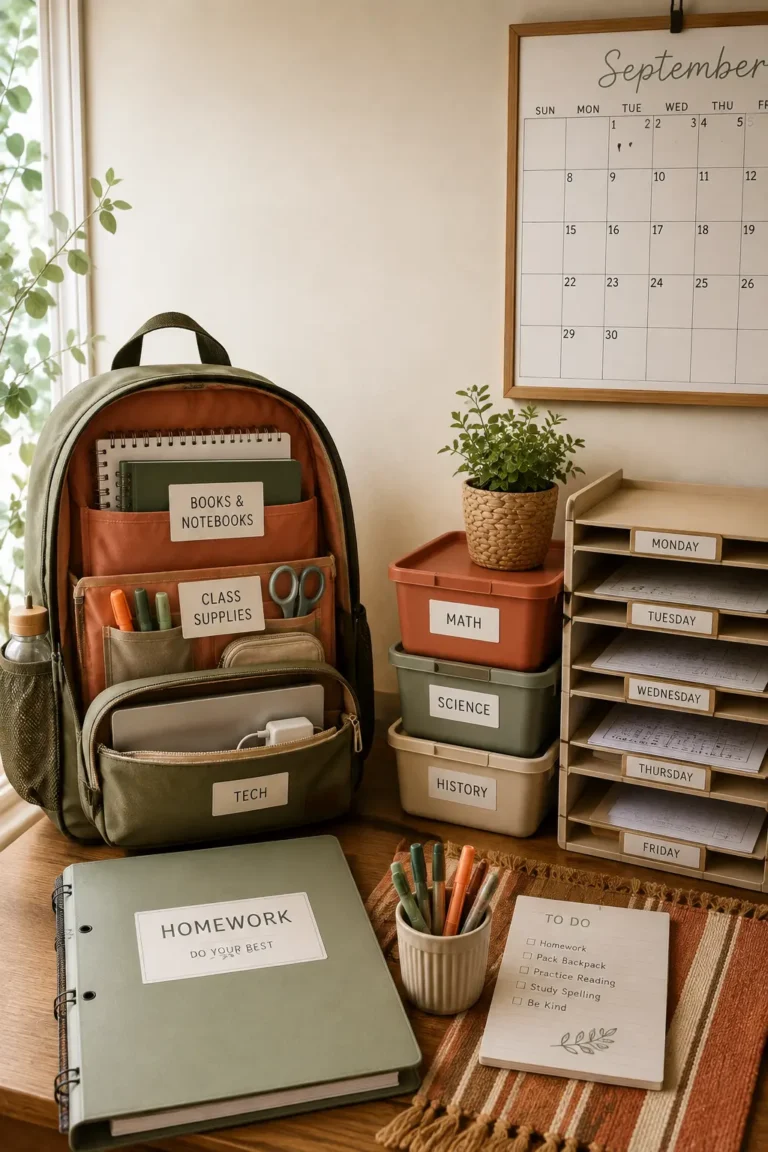
23. Labeled Bin System for Daily Subjects
Assign one small bin per subject (math, reading, art, etc.) so your child can grab exactly what they need without digging through a junk drawer. Clear bins work well for younger kids who rely on seeing contents at a glance.
Label each bin with both words and a simple icon for kids who aren’t strong readers yet.
24. Cord & Charger Management Station
If your child uses a laptop or tablet for schoolwork, a small cord organizer or a drilled grommet hole in the desk keeps charging cables from turning into a tangled mess. A basic under-desk cable tray also works if drilling into the desk isn’t an option.
This small addition prevents one of the most common desk complaints: constantly losing or tangling chargers.
25. Weekly Paper Sorter/Inbox System
A vertical file sorter with five slots — one per school day — helps kids track worksheets, permission slips, and homework without papers piling up loose on the desk. Empty it together each Friday as a simple weekly reset routine.
This system is especially helpful for elementary-age kids who are just learning to manage their own paperwork.
26. Vertical File Organizer for Worksheets
For older kids juggling multiple subjects, a vertical file organizer with labeled folders keeps handouts and study materials sorted by class instead of subject-by-subject bins. This scales better than open bins once workloads get heavier in upper elementary and beyond.
Pair it with a small stapler and hole punch nearby so papers get filed properly instead of shoved in loose.
Cute & Aesthetic Desk Styling Ideas
Once the function is handled, styling is what makes a desk feel like a space your child actually wants to sit down at.
27. Pastel Girl’s Desk Aesthetic
Soft pinks, lavenders, and creams paired with rounded accessories and a small strand of fairy lights create a gentle, calming study spot. Add a fabric-covered bulletin board in a coordinating pastel for pinning up artwork and photos.
This aesthetic works well for elementary-age kids who want their space to feel special without being overly busy.
28. Neutral Boho Study Nook
Woven baskets, a small rattan chair, and warm wood tones create a boho-inspired desk that feels grown-up without being sterile. A macrame wall hanging or a small potted plant finishes the look without cluttering the actual workspace.
This style tends to age well, meaning it won’t feel outdated as your child gets older.
29. Bold Color-Block Desk Design
Paint the wall behind the desk in a bold color-blocked shape, like a large circle or arch, to create a fun focal point without repainting the whole room. Keep the desk and accessories neutral so the color block does all the visual work.
This is an easy weekend project that makes a huge style impact for very little cost.
30. Nature-Themed Desk Setup
Botanical prints, a small faux plant, and green or earthy tones create a calming, nature-inspired study spot. This aesthetic pairs especially well with a desk positioned near a window, tying the indoor and outdoor light together.
Kids who love animals or the outdoors tend to gravitate toward this theme without much convincing.
31. Sports-Themed Desk Setup
Team colors, a corkboard shaped like a jersey number, and a simple trophy shelf turn a desk into a space that feels personal for sports-loving kids. Keep the color palette to two or three team colors max so it doesn’t feel overwhelming.
This theme is an easy way to get reluctant kids excited about sitting down to do homework.
32. Minimalist Scandinavian Desk Style
Clean lines, light wood tones, and a strict “one item per surface” rule create a calm, distraction-free desk that’s especially good for kids who get overstimulated easily. Storage stays hidden in closed drawers or baskets rather than out on display.
This style also happens to be one of the easiest to keep tidy long-term, since there’s simply less to organize.
Desk Setup Ideas by Age Group
Not every setup fits every age. Here’s how to adjust based on where your child is developmentally.
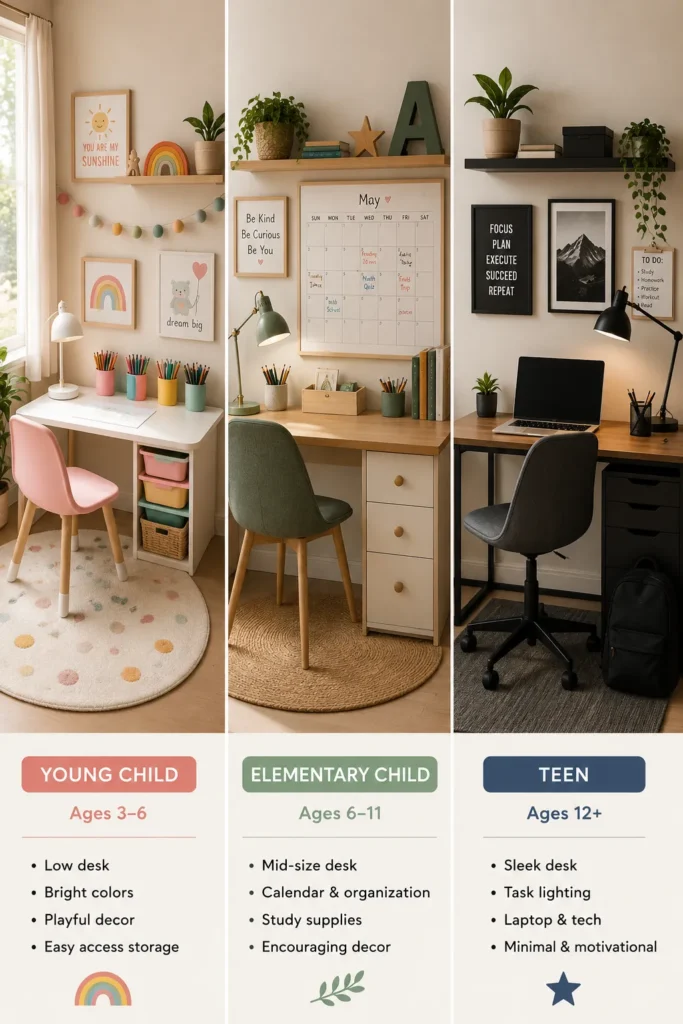
33. Preschool/Kindergarten Desk Setup Essentials
Keep the desk low to the ground, the chair sturdy, and the supplies limited to the basics: crayons, paper, and safety scissors. Open bins work better than closed drawers at this age since little hands need to see what’s inside without asking for help.
Skip anything with small, swallowable parts in nearby organizers, and keep breakable decor out of reach.
34. Elementary-Age Desk Setup Essentials
This is the age where a real desk (versus a kid’s table) starts to matter, along with a dedicated spot for a backpack and a simple homework folder system. A wall calendar nearby helps kids this age start learning to track due dates and school events on their own.
Lighting also becomes more important now, since homework sessions get longer than they were in preschool.
35. Tween & Teen Desk Setup Essentials
Older kids need room for a laptop, good task lighting, and — most importantly — some input into how the space looks. A desk lamp with adjustable brightness supports both daytime and evening study sessions, and a closed storage option (drawer or cabinet) gives teens privacy for personal items.
At this age, function matters more than decoration, so prioritize a comfortable chair and enough surface space for spreading out textbooks or a laptop plus notebook.
Frequently Asked Questions
What should be included in a basic School Desk Setup ?
At minimum, a functional setup needs a desk sized to your child’s age, a supportive chair, good lighting, and a simple system for storing daily supplies. Everything beyond that — organizers, decor, themed accessories — is a bonus, not a requirement.
What’s the best desk height/size for a child?
As a general guide, a child’s desk and chair should let their feet rest flat on the floor with knees at roughly a 90-degree angle. Adjustable desks and chairs are worth the investment if your child is still growing, since they’ll get years of use instead of being outgrown in a single school year.
How do I organize a small desk with no drawers?
Lean on wall space instead of desktop space. A pegboard, floating shelf, or wall-mounted caddy can hold most daily supplies, freeing up the desk surface for actual homework.
What’s a good budget for a DIY School Desk Setup ?
A basic DIY refresh — think contact paper, dollar-store organizers, and a coat of paint — can be done for under $50. A full DIY desk build, like the plywood-and-sawhorse option, typically runs $75–150 depending on the materials you choose.
How can I make a desk setup work in a shared bedroom?
Give each child a clearly defined zone, even if it’s just a different desk color, a divider, or their own labeled storage bin. Kids are far less likely to squabble over shared space when there’s a visible boundary marking what belongs to whom.
How do I keep a kid’s desk from getting cluttered during the school year?
Build in a weekly reset — five minutes every Friday to clear out finished worksheets, restock supplies, and reset the desk for the week ahead. A simple system like this prevents the slow clutter creep that happens when organizing only happens once, at the start of the school year.
Final Thoughts
A great school desk setup doesn’t have to be Pinterest-perfect on day one. It just needs to fit your space, your budget, and your kid’s actual habits — the rest can evolve over time.
Start with one or two ideas from this list, whether that’s a quick dollar-store organization hack or a full weekend DIY build, and build from there. The goal isn’t a magazine-worthy photo. It’s a spot your child will actually want to sit down and use, week after week, all school year long.